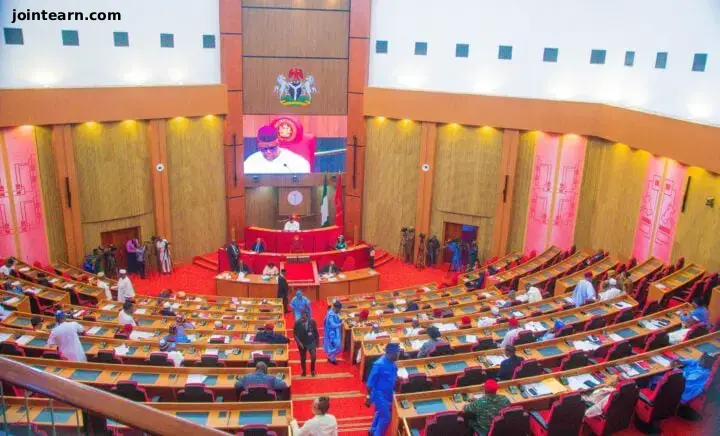
When a motion on the plight of Nigerian women detained in Libyan prisons came before the Senate recently, the nation witnessed an unsettling silence—not from male senators, but from the women whose voices were expected to resonate most.
On October 14, Sen. Natasha Akpoti-Uduaghan (Kogi Central) moved a motion urging government intervention in the reported abuse and sexual exploitation of Nigerian female inmates in Libya. She called for the Nigerian Immigration Service to liaise with Libyan authorities for the repatriation and rehabilitation of the victims.
Yet, when the Senate President, Sen. Godswill Akpabio, called for a seconder, no female senator rose in support. Senate Leader Opeyemi Bamidele (Ekiti Central)—a male colleague—stepped in to second the motion, preventing it from dying on arrival.
The incident exposed a broader issue of women’s solidarity and representation in Nigeria’s legislature. In the 10th Senate inaugurated in June 2023, only four of 109 senators are women—3.7% representation. In the House of Representatives, women make up just 4.7%, a far cry from the African Union’s recommended 30% affirmative action benchmark.
Observers note that of the four female senators—Sen. Ireti Kingibe (LP – FCT), Sen. Idiat Adebule (APC – Lagos West), Sen. Ipalibo Banigo (PDP – Rivers West), and Sen. Natasha Akpoti-Uduaghan (PDP – Kogi Central)—only Natasha has consistently raised issues related to women’s rights, gender-based violence, and vulnerable populations.
Political analysts and civil society advocates argue that the silence was symbolic of a disconnect between women in power and women at the grassroots.
“Representation means nothing if it does not translate to advocacy,” said Mrs. Lilian Brendan, a civil society activist.
“We cannot continue to clamour for more women in leadership if those already in power remain indifferent to the struggles of less privileged women,” noted Dr. Suliman Aliu, political analyst.
The decline in female representation—from eight senators in the 9th Senate (2019–2023) to four in the current assembly—underscores a regression in political inclusivity. At the state level, only 45 out of 991 legislators across Nigeria’s 36 states are women.
By contrast, women in other sectors—entrepreneurs, community leaders, and professionals—have demonstrated unity, courage, and advocacy, highlighting the gap in political spaces.
Gender advocates are calling for a collective rethink ahead of 2027, urging women to hold female politicians accountable and to support candidates who champion women’s welfare and rights. Structured mentorship, funding for credible female candidates, and advocacy networks are seen as essential to transforming representation into meaningful action.
The Senate episode, while fleeting, has left a lasting echo: the fight for women’s inclusion is not only about the seats they occupy, but about the voices they raise in defense of those who cannot.


Leave a Reply