Canberra Targets Taliban Officials for Oppression of Women
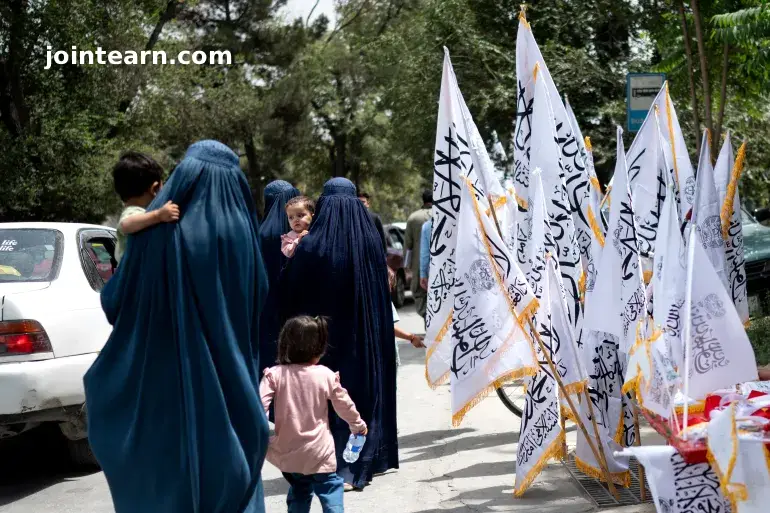
The Australian government has announced financial sanctions and travel bans against four senior officials in Afghanistan’s Taliban-led government, citing serious human rights violations, particularly against women and girls. This marks a significant step by Canberra to hold the Taliban accountable for ongoing oppression.
Australia’s Foreign Minister, Penny Wong, described the sanctions framework as a “world-first” autonomous mechanism for Afghanistan, allowing Australia to impose its own targeted sanctions independently. This framework aims to increase pressure on Taliban leaders to improve governance, protect human rights, and ensure the rule of law.
Details of the Sanctions
The Australian Department of Foreign Affairs and Trade (DFAT) confirmed that the sanctions include:
- Financial restrictions on targeted Taliban officials
- Travel bans preventing sanctioned individuals from entering Australia
- An arms embargo and prohibitions on providing related services or activities to Afghanistan
The officials targeted include:
- Muhammad Khalid Hanafi – Minister for the Propagation of Virtue and the Prevention of Vice
- Neda Mohammad Nadeem – Minister of Higher Education
- Abdul-Hakim Sharei – Minister of Justice
- Abdul Hakim Haqqani – Chief Justice
Minister Wong stated that these individuals were sanctioned for their role in oppressing women and girls and undermining good governance, including restrictions on education, employment, freedom of movement, and participation in public life.
Building on Previous Sanctions
Australia’s new framework complements its existing sanctions regime, which already targets 140 individuals and entities under the United Nations Security Council’s Taliban framework. While the Taliban government has yet to respond publicly, the move signals Australia’s continued commitment to upholding human rights in Afghanistan.
Taliban Human Rights Record
Since returning to power in August 2021, following the withdrawal of U.S. and NATO forces, the Taliban have implemented widespread restrictions on women’s rights, including:
- Banning girls from secondary and higher education
- Preventing women from working in most sectors
- Severely restricting freedoms of movement, expression, and participation in public life
In July 2025, the International Criminal Court (ICC) issued an arrest warrant for Chief Justice Haqqani and Taliban supreme leader Haibatullah Akhunzada for alleged crimes against humanity, highlighting the systematic persecution of Afghan women and girls.
The UN has previously reported that Taliban policies have deprived at least 1.4 million girls of their right to education, effectively cutting off roughly 80% of school-age girls from learning opportunities. These restrictions have also contributed to a worsening humanitarian crisis, leaving much of the population reliant on international aid.
Australia’s Humanitarian Considerations
Despite imposing sanctions, Minister Wong emphasized that the new framework includes a humanitarian permit to ensure continued aid to vulnerable Afghans. She stated:
“Our thoughts are with those suffering under the Taliban’s oppression, as well as the Afghan community in Australia.”
The sanctions reflect Australia’s commitment to protecting human rights while addressing the growing humanitarian challenges in Afghanistan, particularly for women and girls who continue to face systemic discrimination and exclusion.
International Implications
The move by Australia is expected to complement broader international efforts to pressure the Taliban, with sanctions serving as a key tool for promoting accountability and human rights compliance. By targeting specific officials, Canberra aims to influence governance in Afghanistan while minimizing harm to the civilian population.


Leave a Reply