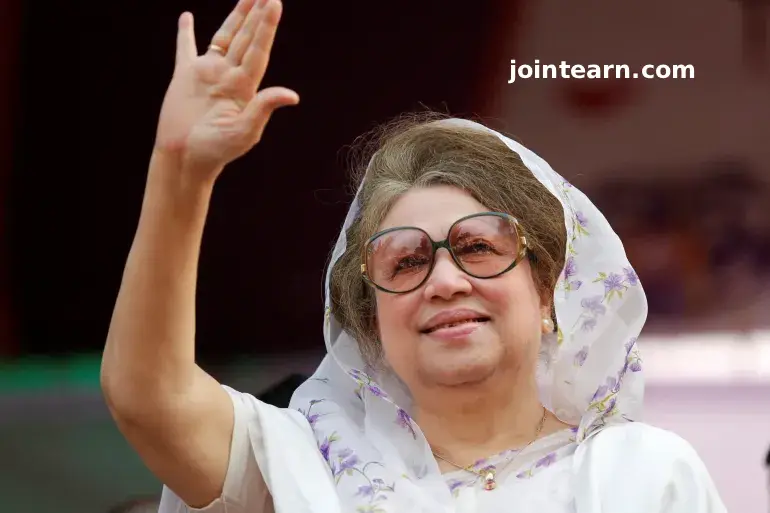
Bangladesh is in deep mourning following the death of Khaleda Zia, the nation’s first female prime minister and one of the most influential figures in Bangladeshi politics. She passed away at the age of 79 after battling a prolonged illness, according to a statement from her political party, the Bangladesh Nationalist Party (BNP).
Khaleda Zia died on the morning of December 30, 2025, at 6am local time (00:00 GMT) at Evercare Hospital in Dhaka, where she had been admitted since November 23 with severe health complications, including a lung infection, advanced cirrhosis of the liver, arthritis, diabetes, and chest and heart problems.
“Our beloved national leader is no longer with us,” the BNP said in a statement. “We pray for the forgiveness of her soul and request everyone to offer prayers for her departed soul.”
State Mourning Declared in Bangladesh
In honor of Khaleda Zia’s service to the country, the government has declared three days of state mourning. Funeral arrangements are scheduled for Wednesday, with prayers to be held in front of the Bangladeshi parliament after midday prayers. She will be laid to rest alongside her late husband, former President Ziaur Rahman, who was assassinated in 1981.
Asif Nazrul, interim law minister, urged citizens to maintain calm during this emotional period, emphasizing the need for orderly observance of all mourning ceremonies. Thousands of supporters gathered outside the hospital where she passed, reflecting the profound impact Khaleda had on the nation.
Tributes from Leaders Across the Region
Bangladesh’s interim leader, Muhammad Yunus, expressed “profound sorrow” at Khaleda’s death, calling her a “symbol of the democratic movement” and “a great guardian of the nation.”
International figures also expressed condolences. Indian Prime Minister Narendra Modi highlighted her significant contributions to Bangladesh-India relations, while Pakistani Prime Minister Shehbaz Sharif described her as a “committed friend of Pakistan,” noting that her legacy will leave a lasting imprint on regional diplomacy and Bangladesh’s growth.
Khaleda Zia: Bangladesh’s First Female Prime Minister
Born on August 15, 1946, in Dinajpur, Khaleda Zia married army officer Ziaur Rahman at the age of 15. After her husband’s assassination in 1981, she unexpectedly took the helm of the BNP and emerged as a political force. Initially underestimated, she successfully mobilized opposition against military ruler Hussain Muhammad Ershad and played a pivotal role in the democratic movement of Bangladesh.
In 1991, Khaleda Zia secured a surprise victory in Bangladesh’s parliamentary elections, becoming the second woman in a predominantly Muslim nation to lead a democratic government, following Pakistan’s Benazir Bhutto. Her leadership marked a significant shift from the presidential to a parliamentary system, granting the prime minister substantial executive power.
During her tenure, she implemented policies to encourage foreign investment, expand education, and strengthen Bangladesh’s economy. Despite her achievements, Khaleda Zia’s political career was also marked by allegations of corruption and fierce rivalry with her counterpart, Sheikh Hasina, forming the iconic “battling begums” narrative that defined Bangladesh’s politics for over three decades.
Rivalry and Political Challenges
Khaleda Zia and Sheikh Hasina dominated Bangladeshi politics through decades of alternating power and deep political polarization. Their rivalry led to political crises, including the 2007 military-backed emergency rule, during which both leaders were detained for over a year. Khaleda’s son, Tarique Rahman, and other aides were later convicted in high-profile corruption cases but were acquitted by the Supreme Court of Bangladesh in 2025.
Despite her health struggles and past imprisonment, Khaleda Zia had committed to participating in upcoming elections in February 2026, demonstrating her unwavering dedication to the Bangladeshi democratic process. Tarique Rahman is now expected to lead the BNP in these elections, potentially continuing his mother’s political legacy.
Legacy of the Mother of Democracy
Tarique Rahman described Khaleda Zia as “the Mother of Democracy” and “a tender and loving mother who devoted her life to the country and its people.” Throughout her life, Khaleda Zia remained steadfast against autocracy and political suppression, earning admiration for her resilience, courage, and uncompromising leadership.
Her passing marks the end of a political era, leaving a profound legacy in Bangladesh’s political history, particularly as a pioneering female leader who fought for democracy under challenging circumstances.
Final Farewell
As Bangladesh prepares to bid farewell to Khaleda Zia, the nation reflects on her achievements, struggles, and enduring influence on its political landscape. Her life story symbolizes the resilience, determination, and leadership of women in South Asia and remains an indelible part of Bangladesh’s modern history.


Leave a Reply