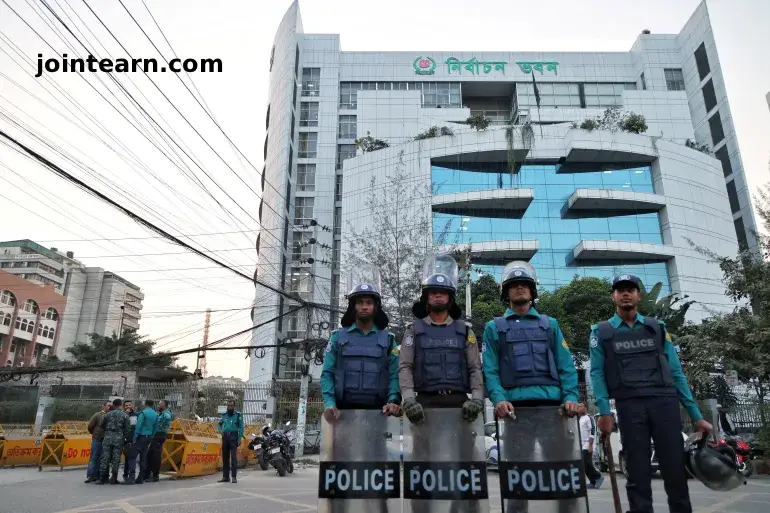
Bangladesh Announces February 12 Parliamentary Election
Bangladesh will hold a parliamentary election on February 12, 2026, marking the first national vote since last year’s student-led uprising that led to the removal of former Prime Minister Sheikh Hasina.
Chief Election Commissioner AMM Nasir Uddin confirmed the date in a televised address, adding that a national referendum on political reforms, known as the “July Charter,” will be held simultaneously.
The announcement comes amid ongoing efforts by the caretaker government, led by Nobel laureate Muhammad Yunus, to stabilize the country’s political landscape after months of unrest and institutional uncertainty.
Interim Government Faces Political Challenges
Since Hasina’s removal, the interim administration has struggled to restore public trust. Demonstrations over delays in promised reforms have persisted, while Hasina’s political party remains excluded from the ballot. Party leaders have warned that unrest could escalate as the election campaign intensifies.
Yunus framed the election as a key milestone for Bangladesh’s democracy:
“Bangladesh’s democratic journey has crossed an important milestone, strengthening the new path the nation has taken after the historic mass uprising.”
Adding to the political turbulence, President Mohammed Shahabuddin announced he would resign after the elections, citing dissatisfaction with the Yunus government.
Voters are focusing on restoring democratic governance, reviving the vital garment-export industry, and recalibrating relations with India, which soured after Hasina fled to India during the upheaval.
Referendum on ‘July Charter’ Reforms
Alongside the parliamentary vote, Bangladeshis will decide on the July Charter, a reform blueprint proposed in the aftermath of the uprising. Election officials report that nearly 128 million voters will cast ballots across more than 42,000 polling stations for 300 parliamentary seats.
The July Charter aims to:
- Reduce executive authority
- Strengthen judicial independence
- Empower the electoral commission
- Prevent political misuse of law enforcement
The referendum will determine whether these reforms form the basis for restructuring state institutions in Bangladesh.
Key Political Players in the Election
The election is expected to be dominated by the Bangladesh Nationalist Party (BNP), led by former Prime Minister Khaleda Zia. The BNP will compete alongside Jamaat-e-Islami, returning to electoral politics for the first time since a 2013 court ruling barred it under the secular constitution.
A new political force, the National Citizen Party, composed of student leaders from the 2024 uprising, is struggling to translate its street-level activism into nationwide electoral support.
The BNP has formally ended its long-standing alliance with Jamaat-e-Islami, positioning itself as a liberal and democratic alternative in post-Hasina Bangladesh.
Election Outlook
As Bangladesh prepares for February 12, the political environment remains highly charged. Observers note that the parliamentary election and the July Charter referendum could reshape the country’s democratic institutions, influence regional relations in South Asia, and determine the trajectory of governance and economic recovery in Bangladesh.


Leave a Reply