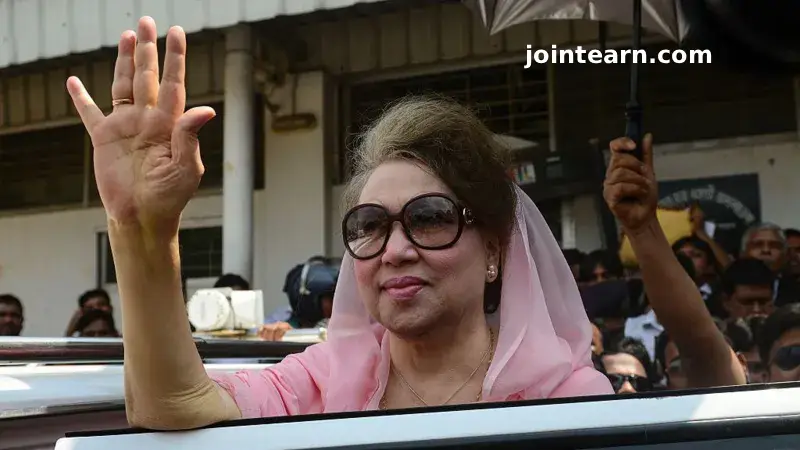
Khaleda Zia, Bangladesh’s first female prime minister and a towering figure in the nation’s political landscape, has died at the age of 80 following a prolonged illness. Her passing marks the end of a dramatic and influential career that spanned decades, defined by political rivalry, resilience, and a commitment to parliamentary democracy.
Zia, a central figure in the Bangladesh Nationalist Party (BNP), had intended to run for a third term in February 2026, in the country’s first general election since the popular revolution of late 2024 that ousted Sheikh Hasina. Despite her declining health, she remained a symbolic leader for opposition forces throughout her final years.
Early Life and Rise to Power
Khaleda Zia entered politics under tragic circumstances, following the assassination of her husband, former President Ziaur Rahman, in 1981. Initially a reserved political presence, Zia rose to prominence to lead the BNP and became Bangladesh’s first female prime minister in 1991. Her emergence broke through a male-dominated political arena, making her one of the country’s most formidable leaders.
Her tenure was marked by efforts to improve women’s education and social development, and she played a pivotal role in restoring parliamentary democracy through constitutional amendments passed with bipartisan support.
Political Career and Rivalry with Sheikh Hasina
Zia’s political journey was defined by her long-standing rivalry with Sheikh Hasina, Bangladesh’s ousted leader. This feud shaped much of the country’s political narrative over the past three decades.
- First Term (1991–1996): Noted for advancing social and educational initiatives for women.
- Short Second Term (1996): Criticized for staging a one-sided election amid disputes over a neutral caretaker government.
- Second Major Term (2001–2006): Her administration faced allegations of corruption and mismanagement, though supporters argue many charges were politically motivated.
Following Hasina’s return to power, Zia endured imprisonment and house arrest, yet remained a key figure in opposition politics. She boycotted the controversial 2014 election, denouncing the elimination of the caretaker government system, designed to ensure electoral neutrality.
Final Years and Illness
Zia was hospitalized for kidney damage, heart disease, and pneumonia, among other ailments, during her final month. Physicians reported her condition as “extremely critical,” and life support measures were limited due to her age and overall health. She passed away at 6am on Tuesday, according to the BNP, who described her as a “source of utmost inspiration for the nation.”
Her death sparked immediate mourning, with crowds gathering outside Evercare Hospital in Dhaka, where she had been admitted.
Legacy and International Reactions
Zia’s career left a profound impact on Bangladesh’s political life. She was celebrated as a champion of democracy, multi-party politics, and the rights of citizens. Interim BNP leader Muhammad Yunus described her as a “symbol of the democratic movement,” while world leaders paid tribute:
- India’s Prime Minister Narendra Modi said her “vision and legacy will continue to guide our partnership.”
- Pakistan’s Prime Minister Shehbaz Sharif called her “a committed friend of Pakistan whose service will leave a lasting legacy.”
- Even her long-time political rival, Sheikh Hasina, acknowledged Zia’s significant contributions, calling her death a “profound loss for Bangladesh’s political life.”
Zia’s family, including her son Tarique Rahman, was by her side during her final moments. The BNP has called for prayers for her soul, emphasizing her enduring role as a political icon.
Political Implications
With Zia’s passing, attention now turns to the BNP’s future leadership, where her son Tarique Rahman is expected to assume a central role. The upcoming February 2026 elections are seen as a critical juncture for the party and for Bangladesh’s broader democratic trajectory.
Zia’s death not only marks the loss of a historic political figure but also underscores the enduring impact of her leadership in shaping Bangladesh’s political, social, and democratic landscape.


Leave a Reply