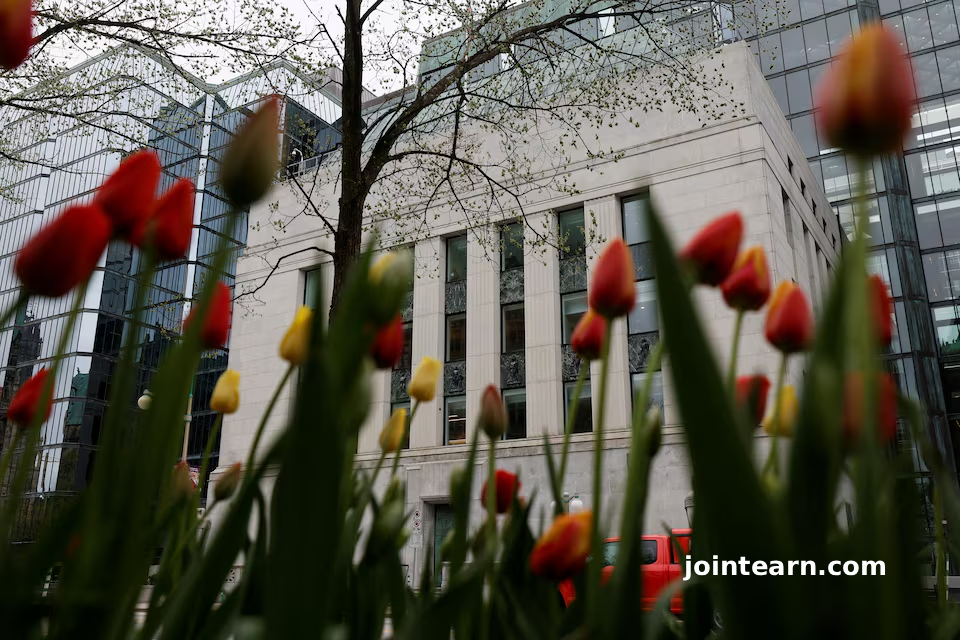
The Bank of Canada (BoC) is widely expected to maintain its key policy rate at 2.25% on Wednesday, reflecting strong economic performance and robust labor market data. After signaling in October that its current interest rate was appropriate, the central bank now appears poised to extend a long period of steady rates, bolstered by stronger-than-expected growth, manageable inflation, and a resilient job market.
Canada’s Economy Defies Expectations
Despite ongoing U.S. tariffs on key sectors including steel, automobiles, and lumber, Canada’s economy has demonstrated notable resilience. In the third quarter of 2025, the Canadian economy expanded by 2.6%, surpassing the Bank of Canada’s October projections by two percentage points.
Inflation, measured by the Consumer Price Index (CPI), has eased slightly, with October figures showing a rate of 2.2%. While underlying pressures persist in the food and shelter sectors, the overall inflation trajectory has remained within the BoC’s target range.
Job Market Surprises Boost BoC Confidence
The strongest indicator of economic strength has come from Canada’s labor market. In November, the unemployment rate fell to a 16-month low of 6.5%, while the economy added 181,000 jobs from September through November. These figures have reinforced expectations that the BoC will stand pat on interest rates during Wednesday’s announcement.
Doug Porter, Chief Economist at BMO Capital Markets, noted:
“There wasn’t much debate on that matter heading into this week, but the strong jobs data makes the bank’s decision very easy.”
Future Rate Expectations
Looking ahead, analysts anticipate that while rates are likely to remain unchanged in the short term, there is potential for rate hikes later in 2026, particularly if inflationary pressures persist. The Bank of Canada’s preferred core inflation measures, which exclude volatile components, have hovered around 3%, near the top end of its 1-3% target range.
A recent Reuters poll of 33 economists indicated unanimous agreement that the BoC would maintain rates at 2.25% on December 10. Of those commenting on monetary policy trajectory, 18 out of 29 predicted the bank would hold rates steady until at least 2027. Meanwhile, money market expectations suggest a potential rate hike in Q4 2026, depending on economic developments.
Market and Investor Implications
Investors will closely monitor Governor Tiff Macklem’s commentary following the rate decision, particularly his views on core inflation trends and GDP growth prospects. The BoC’s decision coincides with the U.S. Federal Reserve’s rate announcement, which is expected to cut rates by 25 basis points, marking the third and final cut for the year.
A steady rate policy by the BoC supports market confidence by providing predictability for businesses, investors, and homeowners, while signaling that the Canadian economy can withstand external pressures without immediate monetary intervention.


Leave a Reply