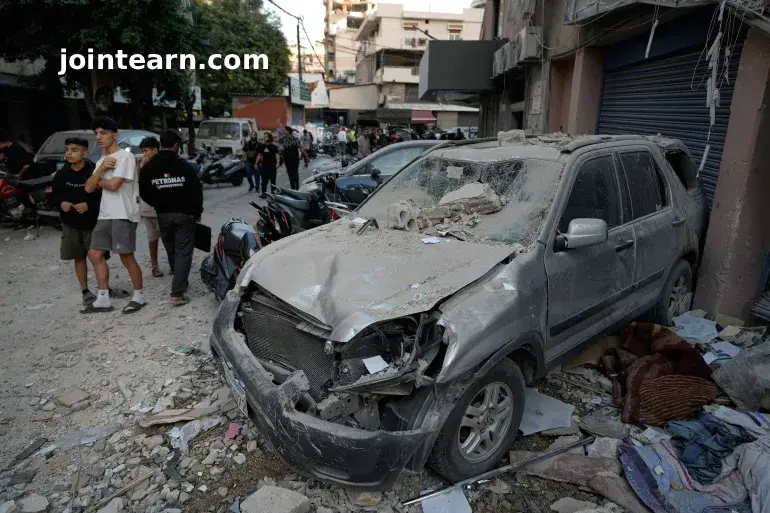
Beirut, Lebanon — Residents of Lebanon are on edge following a recent Israeli airstrike in southern Beirut, which killed a senior Hezbollah operative. The strike, occurring just over a kilometre from the Palestinian refugee camp of Burj al-Barajneh, has raised fears of renewed conflict after last year’s devastating war between Israel and Hezbollah.
Context: Last Year’s Conflict
The ceasefire signed in November 2024 brought a temporary reprieve, but Israel has continued strikes in southern Lebanon and the Bekaa Valley. Last year’s conflict left deep scars:
- Over 4,000 people killed, mostly between September and November 2024.
- More than 1.2 million displaced, many of whom have not returned home.
- World Bank estimates of $11 billion in reconstruction needs.
The war also weakened Hezbollah politically and militarily. In August, under U.S. and Israeli pressure, Lebanon approved a plan for the Lebanese Armed Forces (LAF) to disarm Hezbollah, which the group has rejected, citing Israel’s failure to comply with the ceasefire.
The Latest Attack
Sunday’s strike in Beirut came amid Israeli warnings of escalating military action. Senior Hezbollah official Mahmoud Qomati said the attack crossed a “red line,” prompting the group to consider a response. Analysts, however, caution that retaliation would be strategically risky:
“Retaliation by Hezbollah would be suicide with no military or political value,” said Lebanese analyst Michael Young.
Israel claims Hezbollah is regrouping and blames the Lebanese government for failing to disarm the group. Meanwhile, Hezbollah’s Shia base in Lebanon remains wary, remembering the indiscriminate nature of last year’s Israeli attacks.
Impact on Civilians
For ordinary Lebanese, fear persists:
- Many families in southern towns remain displaced, with some areas “practically empty.”
- Locals in Beirut’s refugee camps recall the trauma of last year’s strikes, where nearby explosions shook entire buildings.
- Despite reconstruction efforts, nighttime anxiety and fear of airstrikes remain widespread.
Residents who have returned and invested in rebuilding their homes are particularly fearful of leaving again, noting that a renewed war could be even more devastating than the previous one.
Political Context
President Joseph Aoun has expressed willingness to enter internationally-sponsored negotiations with Israel, but recent strikes demonstrate the limits of diplomatic efforts. Israeli officials continue to signal that military action may escalate if Hezbollah strengthens, raising tension throughout Lebanon.
Key Takeaways
- Israeli airstrikes in Beirut have killed a senior Hezbollah operative, increasing fears of renewed conflict.
- Lebanon suffered massive casualties and displacement during last year’s war.
- Hezbollah has rejected disarmament calls and is cautious about retaliating.
- Southern Lebanon remains partially inaccessible due to ongoing Israeli presence.
- Civilians who rebuilt after last year’s war remain fearful of leaving home again.
- Diplomatic talks have yet to curb tensions between Israel and Lebanon.


Leave a Reply