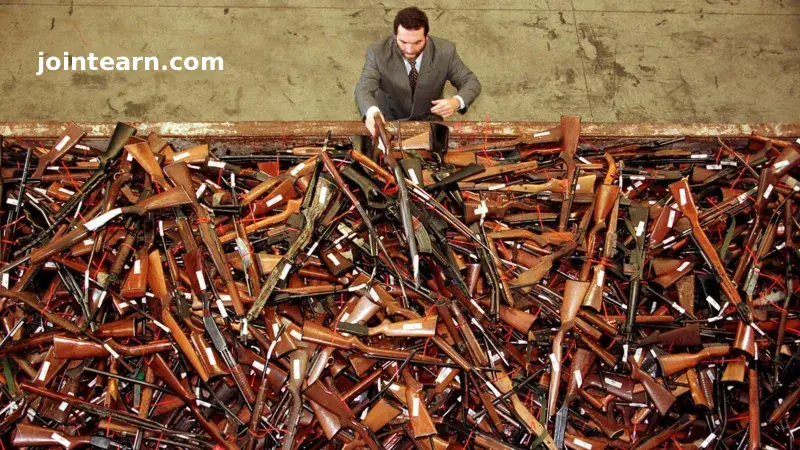
For decades, Australia has been hailed as a global leader in gun control, following sweeping reforms after the 1996 Port Arthur massacre in Tasmania. That tragic event, where a lone gunman killed 35 people with semi-automatic rifles, led to some of the strictest firearms regulations in the world, including a nationwide gun buyback program.
Yet the recent Bondi Beach shooting, which claimed 15 lives during a Jewish Hanukkah celebration, has exposed a more complicated reality. Despite decades of strict regulations, the incident raises questions about the effectiveness of current gun laws and the rising number of firearms in private hands.
Gun Ownership in Australia: A Growing Concern
A 2025 report from the Australia Institute reveals that there are now more than four million privately owned firearms nationwide — nearly double the figure from 20 years ago. This equates to one gun for every seven Australians, with Queensland having the highest total number of registered guns, closely followed by New South Wales (NSW) and Victoria.
Contrary to popular belief, gun ownership is not limited to rural areas. In NSW, about one-third of firearms are in major cities, reflecting widespread urban ownership. Furthermore, the average licence holder now owns more than four firearms, highlighting concerns over the concentration of guns in fewer hands.
Roland Browne, a leading gun control advocate, emphasizes that this situation presents a public safety challenge. Browne, who witnessed the Bondi tragedy unfold from Hobart, argues that there should be stricter limits on the number of firearms an individual can legally own — ideally between one and three per licence.
Current Gun Laws and Loopholes
Australia’s gun laws are not uniform across all states and territories, creating inconsistencies in enforcement. Generally, to obtain a firearm, applicants must:
- Be over 18 years old
- Pass background checks and safety courses
- Demonstrate a “genuine reason” for ownership, such as recreational hunting, target shooting, farm work, or collection
However, loopholes persist. For instance, minors in some jurisdictions can access firearms under supervision, starting from age 10 in the Northern Territory. Additionally, firearms banned in one state may remain legal elsewhere, further complicating enforcement.
Learning from History: Port Arthur and Beyond
After the Port Arthur massacre, then-Prime Minister John Howard implemented landmark reforms, including:
- A mandatory gun buyback program destroying over 650,000 firearms
- Bans on semi-automatic and self-loading rifles and shotguns
- National background checks and cooling-off periods for gun sales
- Removal of self-defense as a legitimate reason for firearm ownership
Similar reforms have been enacted internationally, such as New Zealand’s post-Christchurch mosque shootings. These measures reduced gun-related deaths dramatically. Yet, as the Bondi attack shows, high-powered semi-automatic rifles remain a threat.
The Debate on Gun Reform
In the immediate aftermath of Bondi, NSW Premier Chris Minns emphasized the need for stricter gun control, asking, “If you’re not a farmer, why do you need these massive weapons?”
Prime Minister Anthony Albanese quickly announced a national gun buyback scheme, the first of its scale since 1996, alongside proposals to:
- Limit the number of guns per licence
- Implement “open-ended” licensing restrictions
- Require Australian citizenship for firearm ownership
- Improve intelligence-sharing for licence assessments
- Conduct regular licence holder reviews to prevent radicalisation
While gun advocates like Tom Kenyon argue that tighter laws would not prevent attacks by radicalized individuals, experts like Browne stress that firearm regulation, intelligence sharing, and licensing reforms are essential to reduce mass shooting risks.
Recreational Hunting Under Scrutiny
The role of recreational hunting licenses is also under debate. Sajid Akram, one of the alleged Bondi shooters, held a recreational hunting licence, prompting critics to question whether such licences should remain in place. Gun rights proponents argue that hunting serves environmental and community purposes, controlling feral animal populations and fostering family and social connections.
A Wake-Up Call for Australia
Despite being a relatively safe country, incidents involving firearms continue to occur, ranging from gang-related shootings to domestic disputes. Browne emphasizes that gun control is not just about banning firearms but also ensuring proper licensing, storage, and regulation of high-powered weapons.
The Bondi tragedy is a stark reminder that Australia’s gun laws need to evolve to keep pace with modern risks, technological advancements, and societal changes. As Browne notes, it often takes a catastrophe for policymakers and the public to confront the gaps in existing legislation.
Walter Mikac, who lost his family in Port Arthur, echoed these concerns: “After Port Arthur, Australia made a collective commitment to put community safety first, and that commitment remains as important today as ever.”


Leave a Reply