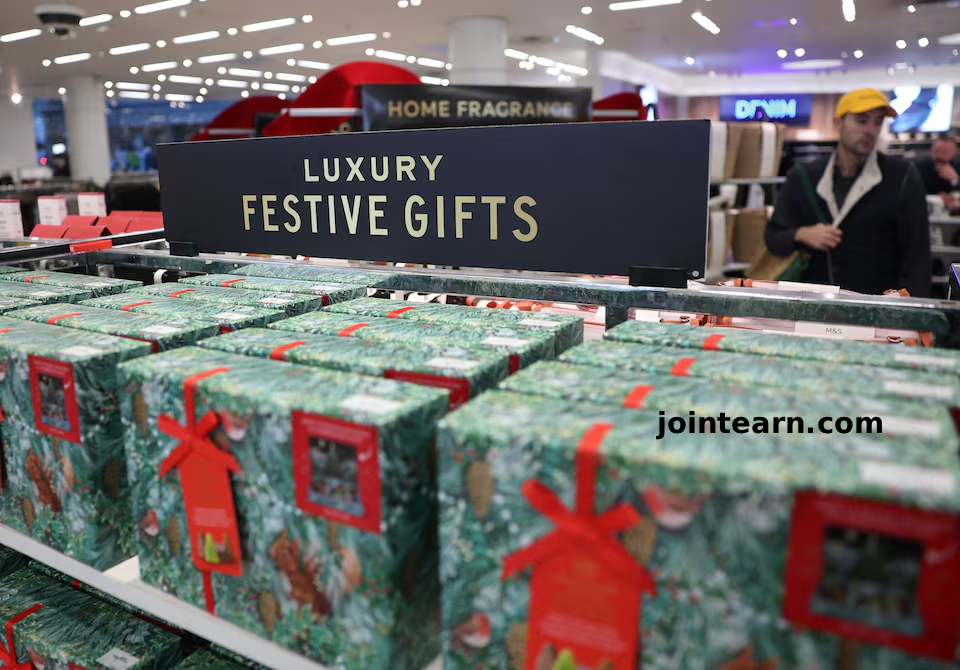
British consumers focused their festive spending on food and groceries over Christmas, while scaling back on clothing, gifts, and other non-essential items. Retailers including Tesco, Marks & Spencer (M&S), and Primark reported strong food sales, but warned of ongoing consumer caution and economic pressures that could weigh on trading in 2026.
Christmas Food Sales Boost Retailers
Tesco, the UK’s largest food retailer, saw a 3.2% rise in underlying UK sales over the six-week festive period, describing the Christmas season as “strong.” The company’s market share hit a decade high, driven largely by premium food items and seasonal favorites.
CEO Ken Murphy noted that many consumers were willing to “trade up” to premium ranges, citing popular sales figures including:
- 21 million pigs in blankets sold from Tesco’s Finest range
- 2.5 million bottles of Prosecco
- 22% growth in party food sales
Despite the strong sales, Tesco’s growth fell slightly below summer figures (4.6%) and marginally under analyst forecasts, causing shares to dip 5.5%. Overall gains over the past year remain at 16%, reflecting continued resilience in the food sector.
Clothing and Non-Food Sales Remain Weak
In contrast, Marks & Spencer saw its food sales jump 5.6% in the Christmas quarter, while clothing, home, and beauty sales fell 2.9%. Analysts attributed the decline to weaker demand and the residual impact of last year’s cyber attack, highlighting a clear consumer preference for essentials over discretionary items.
Similarly, Associated British Foods (ABF), the owner of Primark, described the UK clothing market as “difficult” over the festive season. Shares dropped 12% following warnings of falling sales in continental Europe and challenges in its US food businesses. ABF also projected lower profits in the 2025/26 financial year, reflecting ongoing pressures on international retail operations.
Fast-Food Chains Feel the Pressure
Even major fast-food chains are seeing the effects of cautious consumer spending. Greggs, Britain’s largest fast-food chain, reported flat profit guidance for 2026. CEO Roisin Currie expressed caution, noting subdued consumer confidence as a key challenge. Greggs’ shares fell 7%, extending losses over the last year to 38%, highlighting broader stress across the UK retail sector.
Consumers “Counting Every Penny”
Tesco’s CEO emphasized the mixed nature of UK consumer behavior:
“You are seeing consumers whose household budgets are in pretty good shape and then you’re seeing a lot of people that are really counting every penny.”
Retailers have observed that Britons are eating more at home to save money while also seeking healthier food options for weekday meals, but still indulging on weekends. The trend of premium and indulgent products, like party foods and festive drinks, continues to drive sales for supermarkets.
Murphy also noted potential new dynamics in food spending, such as the rising popularity of GLP-1 weight-loss drugs, though their impact on grocery purchases remains uncertain.
Employment and Economic Pressures
UK consumer confidence remains fragile amid rising unemployment, which recently hit its highest level since early 2021. Retailers are concerned about how job market pressures, coupled with inflation, regulation, and automation, will affect household spending in 2026.
Fashion retailer Next reported better-than-expected Christmas sales but warned that growth could slow this year. CEO Simon Wolfson highlighted employment pressures as a key factor likely to influence consumer behavior moving forward.
Outlook for 2026
While food sales provided a temporary boost to retailers over Christmas, analysts caution that 2026 may present a challenging trading environment. Factors influencing retail performance include:
- Rising living costs and household budget constraints
- Weak demand for clothing and discretionary items
- Ongoing inflation and regulatory pressures
- Shifts in consumer preferences toward home dining and healthy eating
Retailers are expected to continue adapting product offerings and pricing strategies to meet evolving consumer priorities in a cautious economic climate.
Key Takeaways
- UK consumers prioritized food spending over gifts and clothing during Christmas 2025.
- Tesco and M&S saw strong food sales, while clothing and home goods lagged.
- Primark and Greggs reported challenging trading conditions, signaling broader economic caution.
- Household budgets are under pressure, with many Britons “counting every penny.”
- Employment pressures, inflation, and regulatory challenges are expected to shape UK retail in 2026.


Leave a Reply