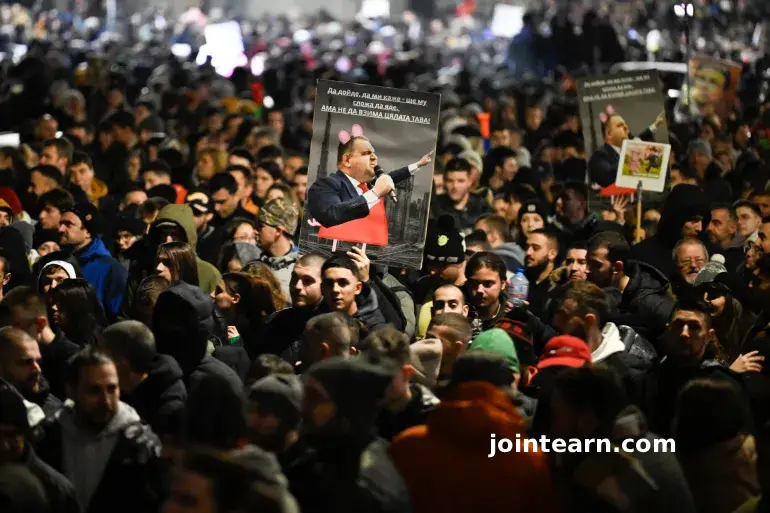
Bulgaria’s government has officially withdrawn its proposed 2026 budget following massive nationwide protests, as citizens demanded an end to corruption and opposed planned tax hikes that critics said would fuel inflation without meaningful benefits.
The government’s announcement came on Tuesday, December 2, 2025, after tens of thousands of demonstrators took to the streets in Sofia and other major cities. The protests, largely youth-led, marked the latest chapter in Bulgaria’s ongoing political unrest as the country prepares to adopt the euro in 2025/26.
Protests Sparked by Tax Hikes and Corruption Concerns
The withdrawn budget included planned increases in taxes and social security contributions, which protesters argued would disproportionately affect workers and businesses. Citizens also criticized the plan as a mechanism to funnel money into state institutions perceived as corrupt. Bulgaria is consistently ranked among the most corrupt countries in the European Union, according to Transparency International.
Ventsislava Vasileva, a 21-year-old student participating in the protests, told reporters:
“We are here to protest for our future. We want to be a European country, not one ruled by corruption and the mafia.”
The demonstrations featured slogans such as “we will not allow ourselves to be robbed” and “Generation Z is Coming,” emphasizing widespread frustration among younger Bulgarians with entrenched political corruption.
Escalation of Unrest
While organizers called for peaceful demonstrations, clashes erupted between a small group of protesters and police in Sofia. Rocks and firecrackers were thrown, police vehicles were damaged, and officers responded with pepper spray. At least 10 people were detained, and several were hospitalized with injuries.
The protests highlight deep-seated dissatisfaction with the Bulgarian government, which has experienced years of instability, including seven snap elections and numerous short-lived administrations since 2020.
Economic and Eurozone Implications
Opponents of the withdrawn budget argued that higher public spending, financed through increased taxes and rising public debt, would stoke inflation without improving public services. The government defended the plan, stating it was necessary to comply with eurozone budget deficit rules, which require a deficit of under 3 percent of GDP.
Public opinion is divided over adopting the euro in Bulgaria, with about half of citizens expressing concern that the currency changeover from the lev to the euro could erode national sovereignty and allow retailers to raise prices.
Next Steps
With the budget formally withdrawn, the Bulgarian government has pledged to draft a new proposal in consultation with parliament and stakeholders. Officials have emphasized the importance of balancing fiscal responsibility with public acceptance as the country continues its preparations for joining the eurozone.


Leave a Reply