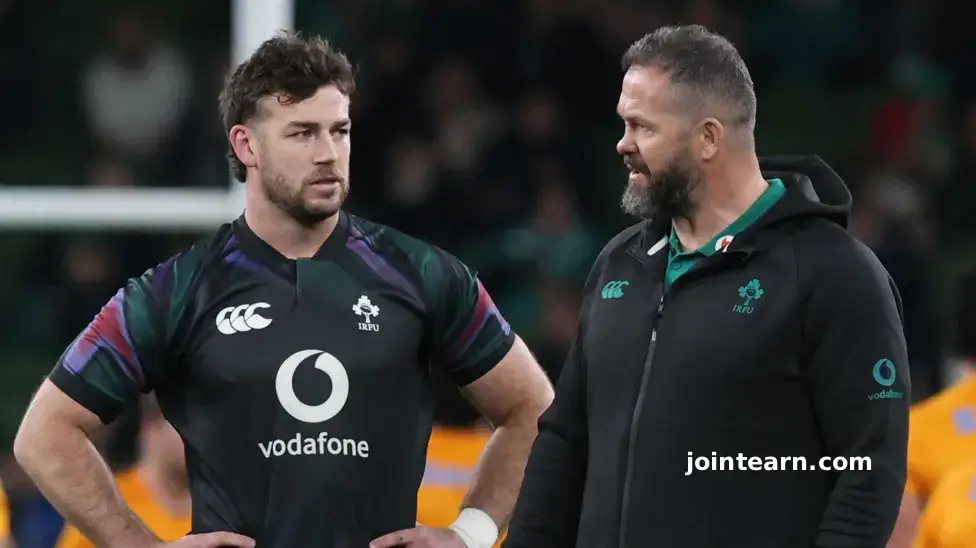
After a challenging 2025, questions are mounting over whether Andy Farrell’s Ireland rugby team can regain momentum in 2026. Following a period of decline since their 2023 peak, Farrell and his squad face a pivotal year ahead of the 2027 Rugby World Cup in Australia.
2025 in Review: Challenges and Decline
Ireland began 2025 strongly with Six Nations wins over England and Scotland, but home defeats to France and inconsistent performances elsewhere raised concerns. The team’s November campaign further highlighted issues, with losses against New Zealand and South Africa emphasizing a gap between Ireland and the world’s top teams.
“After another quarter-final defeat in Paris two years ago – against arguably the finest Ireland side sent to a World Cup – there has been a moderate but undeniable decline,” writes Jonathan Bradley, BBC Sport NI senior journalist.
Age is also a factor: fifteen players called up for November were over 30, with four more reaching that milestone before the 2027 World Cup. While experience is invaluable, the squad may need fresh talent to regain its competitive edge.
Youth and Emerging Talent
Several uncapped or recently capped players could inject both physicality and depth into the team:
- Munster forwards Edwin Edogbo and Brian Gleeson
- Ulster centre Jude Postlethwaite
- Leinster props Paddy McCarthy and Tom Clarkson
- Ulster lock Cormac Izuchukwu
The inclusion of these players could rejuvenate the squad during the 2026 Six Nations, offering Farrell options to refresh a largely settled matchday team while maintaining the experience necessary for big games.
Tactical Adjustments
Ireland’s style, once heavily reliant on long phase play, has been less effective under evolving interpretations of defensive breakdowns. Farrell will likely continue to tweak the gameplan, blending seasoned campaigners with younger, dynamic players.
How the team adapts tactically, particularly in scrums and contact situations, will be key to bridging the gap with top-tier sides like France, New Zealand, and South Africa.
Women’s Rugby: Building Momentum
Ireland’s women’s team, under Scott Bemand, is also looking to build on recent successes. After promotion to the top-tier of WXV and strong performances at the 2025 World Cup, momentum is key for 2026.
Historic fixtures include:
- Scotland in Dublin (final round of Six Nations, May 2026)
- Italy in Galway
- Wales in Belfast
The team will aim for a three-win Six Nations campaign, while new challenges in the restructured WXV competition provide further opportunity for growth.
Rising Stars
Ireland’s women also benefit from international club experience:
- Aoife Wafer debuted for Harlequins
- Brittany Hogan with Sale Sharks
- Niamh O’Dowd with Gloucester-Hartpury
These players’ development in the Premiership Women’s Rugby league will be critical for national success in 2026.
Outlook for 2026
Both Ireland men’s and women’s teams face a year of opportunity and pressure:
- Men’s team: Revitalise squad, integrate youth, tweak tactics, and close the gap with global leaders.
- Women’s team: Build on World Cup momentum, develop international club experience, and target strong Six Nations and WXV performances.
With experience, emerging talent, and tactical adjustments, 2026 could be a turning point for Irish rugby ahead of the 2027 World Cup.


Leave a Reply