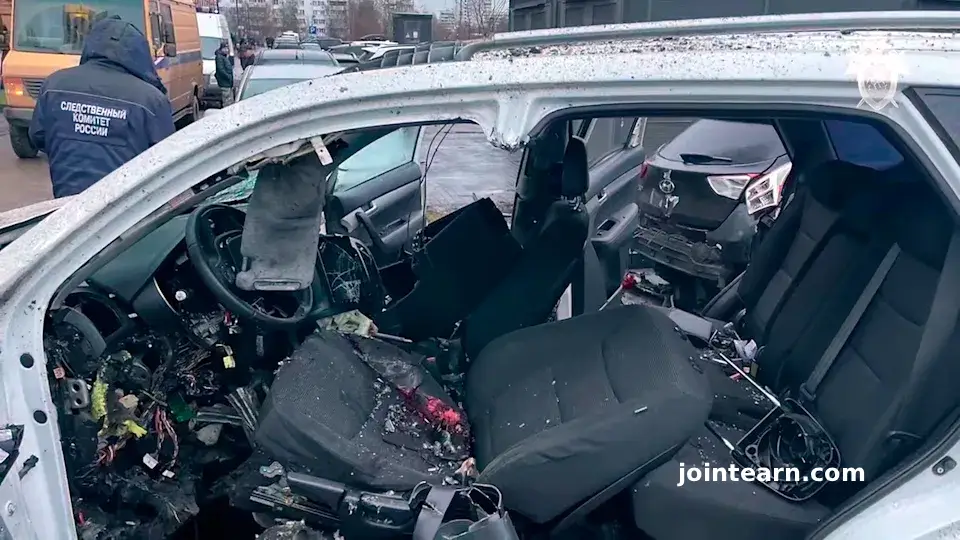
A car bomb in Moscow killed Lt. Gen. Fanil Sarvarov, the head of the Operational Training Directorate of the Russian Armed Forces’ General Staff, on Monday. This marks the third assassination of a senior Russian military officer in the past year, raising tensions and concerns over targeted attacks on high-ranking officials.
Details of the Attack
According to Svetlana Petrenko, spokesperson for Russia’s Investigative Committee, the explosive device was placed under Sarvarov’s car. He succumbed to his injuries at the scene. Investigators are exploring multiple leads, including the possibility that the attack was orchestrated by Ukrainian intelligence services.
The Kremlin confirmed that President Vladimir Putin was immediately informed of the incident. Russian authorities have consistently attributed similar assassinations to Ukraine since Moscow’s military intervention in Ukraine began nearly four years ago, though Ukraine has not commented on Sarvarov’s killing.
Career and Military Background
Lt. Gen. Sarvarov had an extensive military career, including active service in Chechnya and participation in Russia’s military campaign in Syria. His leadership role in the Operational Training Directorate placed him among the top military planners in Russia.
Previous Targeted Killings
Sarvarov’s death follows two other high-profile attacks on Russian generals in the past year:
- Lt. Gen. Igor Kirillov, chief of the military’s nuclear, biological, and chemical protection forces, was killed by a bomb hidden on an electric scooter outside his apartment. Ukraine’s security service claimed responsibility, and an Uzbek man was arrested for carrying out the attack.
- Lt. Gen. Yaroslav Moskalik, deputy head of the main operational department in the General Staff, was killed by an explosive device placed in his car near his apartment. A suspect was arrested soon after the attack.
These incidents highlight a troubling pattern of targeted assassinations of Russian military leaders amid the ongoing war in Ukraine.
Reactions and Implications
Kremlin officials have expressed concern about the repeated breaches in security, emphasizing the need for improved protective measures for senior officers. President Putin previously described the killing of Lt. Gen. Kirillov as a “major blunder” by Russian security agencies and called for reforms to prevent future attacks.
Analysts warn that the assassinations not only affect military morale but also demonstrate the increasing reach of covert operations and intelligence activities linked to the Ukraine conflict.
International Context
Ukraine’s President Volodymyr Zelenskyy previously acknowledged that his intelligence agencies were targeting top Russian military officials, describing such actions as “justice inevitably comes,” though without specifying individuals. These attacks reflect the ongoing escalation in hybrid warfare and intelligence operations between Russia and Ukraine.
The continued targeting of Russian generals in Moscow underscores the high stakes of the conflict, the vulnerabilities of senior officials, and the intensifying asymmetric tactics being employed in modern warfare.


Leave a Reply