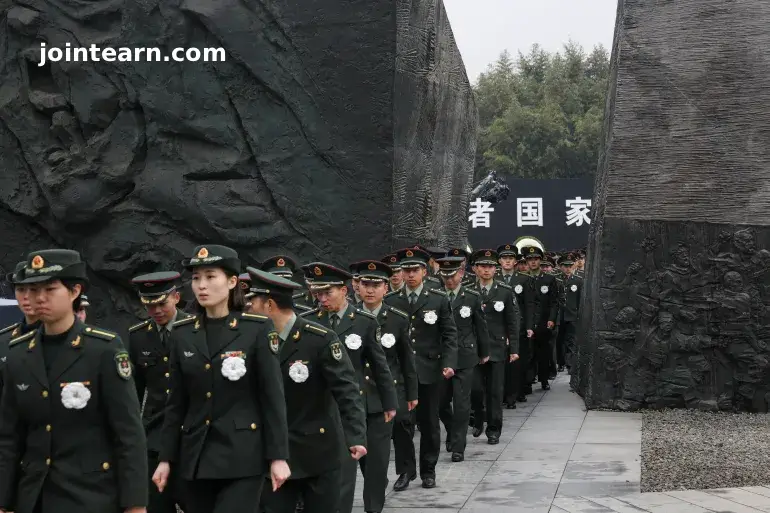
Nanjing, China – China marked the 88th anniversary of the 1937 Nanjing Massacre with a subdued memorial ceremony at the Nanjing Massacre Museum amid escalating tensions with Japan over Taiwan. President Xi Jinping did not attend the event.
Memorial Highlights
The ceremony, attended by police officers and schoolchildren, lasted less than half an hour. Doves were released over the national memorial center, symbolizing peace. Shi Taifeng, head of the Communist Party’s organization department, spoke at the event, warning that any attempt to revive militarism or undermine international peace would fail.
China marks the massacre, during which Japanese troops killed tens of thousands of civilians, as a key historical memory. While post-World War II tribunals estimated 142,000 deaths, Beijing claims up to 300,000 people were killed. Some conservative Japanese politicians have denied the massacre, fueling long-standing tensions between the two nations.
Japan-China Diplomatic Row
Tensions have risen in recent months over Taiwan. Last month, Japanese Prime Minister Sanae Takaichi suggested Japan could respond militarily if China attacked the self-governed island, angering Beijing.
Japan’s Defence Minister Shinjiro Koizumi announced plans to deploy a Type 03 missile system on Yonaguni, Japan’s westernmost island near Taiwan. China criticized the move as a deliberate provocation, while Japan described it as defensive.
Both nations have accused each other of aggressive military actions. Japan claimed Chinese fighter jets locked fire-control radar on Japanese aircraft, while China demanded that Japan restrain its frontline actions. Beijing also renewed bans on Japanese seafood, suspended cultural events, and urged citizens to avoid traveling to Japan.
Background
China considers Taiwan part of its territory, while Taipei maintains sovereignty over its own future. The Nanjing Massacre memorial has become a recurring point of reflection and nationalist messaging, particularly amid growing regional tensions with Japan.


Leave a Reply