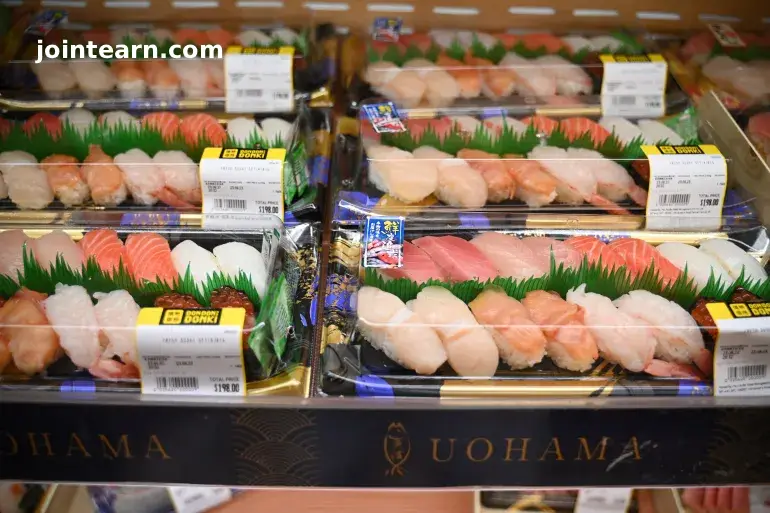
China is reportedly preparing to reinstate a full ban on Japanese seafood imports, marking a renewed escalation in the already fragile diplomatic relationship between Beijing and Tokyo. The move comes just weeks after China lifted earlier restrictions imposed in response to Japan’s release of treated Fukushima wastewater, and arrives amid a fresh war of words triggered by comments from Japanese Prime Minister Sanae Takaichi on Taiwan.
China Reimposes Seafood Ban After Brief Reprieve
Japanese public broadcaster NHK and Kyodo News reported on Wednesday that Beijing has notified Tokyo of its decision to once again suspend all imports of Japanese marine products. The new restriction follows China’s previous ban implemented in 2023, when Japan began releasing treated radioactive water from the crippled Fukushima Daiichi nuclear plant into the Pacific Ocean.
Kyodo, citing government sources, said Chinese officials claimed the renewed ban was necessary to conduct “further monitoring” of water quality and environmental impact. However, analysts note that the timing of the decision aligns closely with a rapidly intensifying diplomatic dispute unrelated to seafood safety.
Tokyo–Beijing Relations Hit New Low After Takaichi’s Taiwan Comments
The seafood ban coincides with a widening rift over remarks delivered by Prime Minister Sanae Takaichi on November 7. The Japanese leader told parliament that a potential Chinese military attack on Taiwan—if it endangered Japan’s national survival—could trigger a Japanese military response.
Beijing denounced the statement as provocative and unlawful, sparking a wave of condemnation from Chinese officials and state-run media. In the days that followed, Japan issued warnings advising its citizens in China to avoid crowded areas and remain alert.
The situation further deteriorated when Xue Jian, the Chinese consul general in Osaka, posted a threatening message on social media platform X, writing that he would “cut off that dirty neck” — widely interpreted as a reference to Takaichi. The post was later deleted, and Tokyo summoned China’s ambassador to lodge a formal protest.
Diplomacy Fails to Cool Tensions
Efforts to defuse the dispute appear to have yielded little progress. Japan’s top Asia-Pacific diplomat, Masaaki Kanai, met with his Chinese counterpart Liu Jinsong in Beijing on Tuesday in an attempt to reaffirm Tokyo’s longstanding position on Taiwan: that peace and stability in the Taiwan Strait are essential to regional security.
According to Chinese Foreign Ministry spokesperson Mao Ning, China lodged a “strong protest” during the talks, calling Takaichi’s remarks “erroneous,” “dangerous,” and a violation of international norms. Mao argued that the statements “fundamentally damage the political foundation” of China-Japan relations.
Al Jazeera’s Beijing correspondent Katrina Yu reported that the meeting ended on a frosty note. Video footage showed Liu Jinsong refusing to shake Kanai’s hand, with his hands in his pockets as the two diplomats parted. Liu later told Chinese media he was “very dissatisfied” with the talks.
Economic and Cultural Fallout Widens
Before the latest ban, China accounted for over 20 percent of Japan’s total seafood exports, making it one of Tokyo’s most important markets. Renewed restrictions could deliver a heavy blow to Japan’s fishing industry, particularly shellfish and high-value seafood producers.
The diplomatic feud has also spilled into cultural exchange and media. China Film News, operating under the state-backed China Film Administration, announced that two upcoming Japanese film releases would be indefinitely postponed. According to the review platform Douban, the movies were originally slated for release on December 6 and November 22.
The broader dispute adds pressure to a bilateral relationship already strained by territorial disagreements, maritime encounters, and diverging approaches to regional security — particularly around the Taiwan Strait.


Leave a Reply