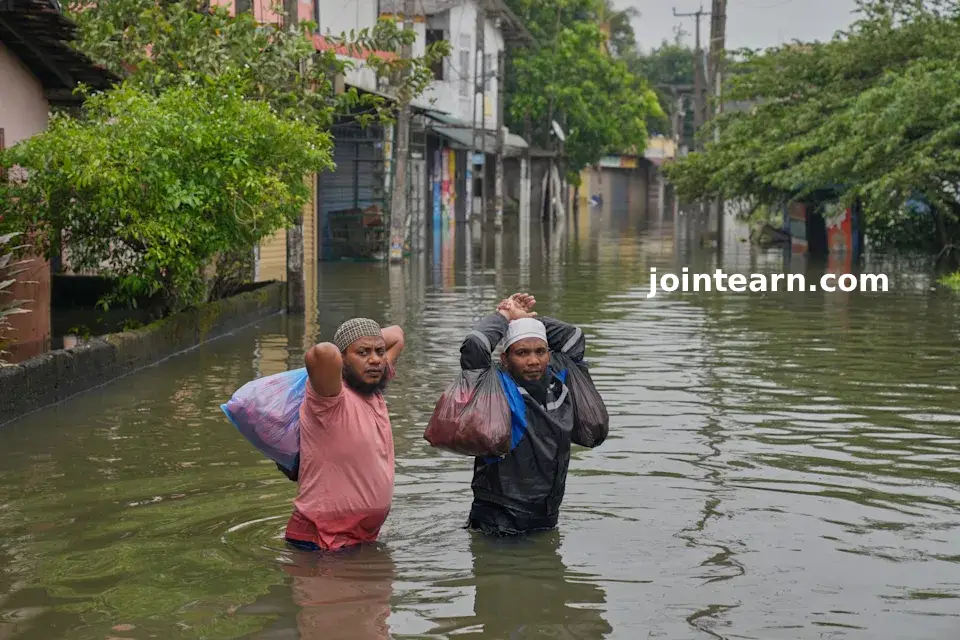
BENGALURU, India — Recent deadly floods and landslides across Southeast Asia have been linked to ocean warming caused by human-driven climate change, according to a rapid analysis released Wednesday by World Weather Attribution (WWA). The study focused on extreme rainfall from cyclones Senyar and Ditwah, which affected Malaysia, Thailand, Indonesia, and Sri Lanka in late November and early December.
The storms have claimed more than 1,600 lives, with hundreds still missing, making them among the deadliest natural disasters in the region this year. The cyclones, fueled by unusually warm sea surface temperatures, also caused widespread property damage and disruption.
Warmer Oceans Amplify Storm Intensity
WWA researchers found that sea surface temperatures over the North Indian Ocean were 0.2°C (0.3°F) higher than the 30-year average. Without the influence of climate change, temperatures would have been approximately 1°C (1.8°F) cooler. The warmer waters supplied extra heat and moisture to cyclones Senyar and Ditwah, intensifying rainfall and contributing to severe flooding and landslides.
Mariam Zachariah, a co-author of the study and expert at Imperial College London’s Centre for Environmental Policy, explained:
“When the atmosphere warms, it can hold more moisture. As a result, it rains more in a warmer atmosphere compared to a world without climate change.”
Global surface temperatures are currently about 1.3°C (2.6°F) higher than pre-industrial levels, according to NOAA data, demonstrating the broader warming trends that influence extreme weather events worldwide.
Human Factors Increase Vulnerability
In addition to climate-driven factors, rapid urbanization, high population density, and infrastructure built on low-lying floodplains increased human exposure to flood hazards in the affected countries. This combination of climate change and socio-economic factors amplified the human and economic toll of the cyclones.
“The human toll from cyclones Ditwah and Senyar is staggering,” said Maja Vahlberg, technical adviser at the Red Cross Red Crescent Climate Centre. “Unfortunately, the most vulnerable populations bear the brunt and face the longest path to recovery.”
Jemilah Mahmood, of the Malaysia-based Sunway Centre for Planetary Health, highlighted the broader context:
“Economic development has historically been prioritized over climate stability, creating a planetary debt that now manifests as intensified floods, typhoons, and landslides.”
Rapid Climate Attribution Studies
WWA is a collaborative network of climate scientists who use rapid attribution methods to determine the role of climate change in extreme weather events. By quickly releasing findings, the WWA aims to inform communities about the causes behind catastrophic weather events. While the study could not quantify the exact contribution of climate change to these specific cyclones due to limitations in regional climate models, researchers emphasized that global warming acts as a “powerful amplifier” of extreme rainfall and floods.
Residents of affected areas, such as Shanmugavadivu Arunachalam, a schoolteacher in Sri Lanka’s Central Province, described the devastation:
“It rains a lot here but never like this. Every region of Sri Lanka has been affected, and our region has been the worst impacted.”
As climate change continues to drive more frequent and intense storms, experts warn that adaptation measures, improved early warning systems, and sustainable infrastructure planning are critical to reducing future human and economic losses in Asia and globally.


Leave a Reply