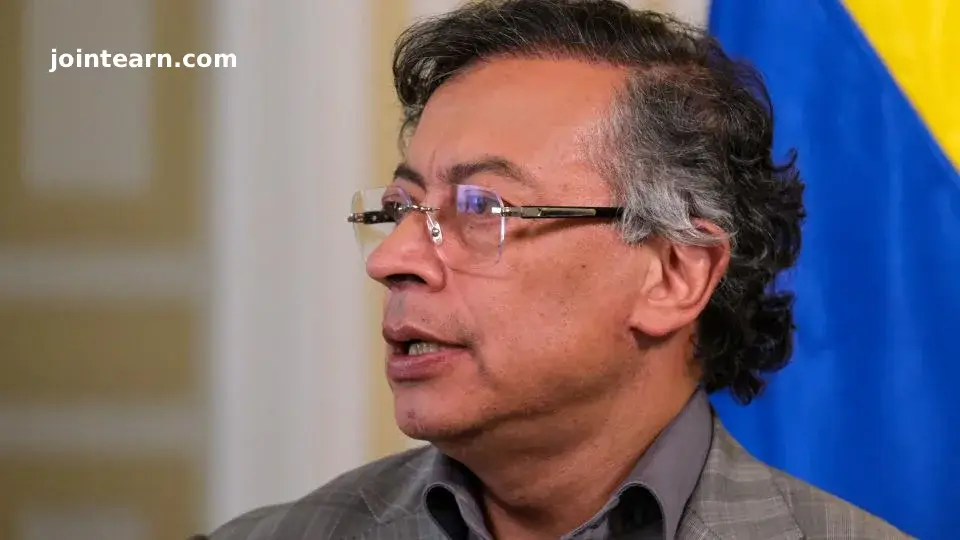
Colombian President Gustavo Petro has accused the Trump administration of prioritizing Venezuela’s oil over fighting drug trafficking, in a wide-ranging interview with CNN. The president, whose tenure has seen increasing tensions with Washington, argued that Venezuela’s oil reserves—considered the largest in the world—are central to U.S. foreign policy in the region.
“Oil is at the heart of the matter,” Petro told CNN, asserting that the U.S. strategy is less about promoting democracy or combating narcotics than securing energy resources. He added that Venezuela is not a significant drug producer and that only a small portion of global drug trade passes through the country.
Petro’s Criticism of U.S. Policies
Petro has repeatedly clashed with the Trump administration on multiple issues, including:
- Immigration policies affecting Colombia and Latin America
- Support for Israel in Middle East conflicts
- Military activity in the Caribbean and Pacific
In a recent statement, Petro accused the U.S. of attempting to impose its will on neighboring countries, drawing comparisons to imperialist behavior. “The United States cannot be considered an empire, but one of the nations among others,” he said.
Tensions Between Petro and Trump Administration
Petro’s remarks come amid several confrontations with U.S. authorities:
- Visa Revocation: His visa was revoked by the U.S. State Department after he urged American soldiers to disobey Trump orders and “not point their rifles at humanity” during the UN General Assembly in September 2025.
- Treasury Sanctions: In October 2025, the U.S. Treasury sanctioned Petro, accusing him of involvement in the global illicit drug trade—a claim he strongly denies.
- Funding Cuts: Trump announced halts to U.S. payments and subsidies to Colombia, claiming Petro was failing to control drug production in the country.
Despite these tensions, Petro emphasized that Colombia has seized more cocaine than any other country in history, noting that crop growth has been surpassed by the volume of drugs seized.
Venezuela and Drug Trafficking Claims
Petro also challenged U.S. allegations against Venezuelan President Nicolás Maduro, arguing that the core issue is democracy in Venezuela, not drug trafficking. Petro cited reports from the UN Office on Drugs and Crime (UNODC) indicating that Venezuela is not a major cocaine producer, with over two-thirds of global coca production originating in Colombia.
U.S. Drug Enforcement Agency (DEA) reports support this claim, noting that 84% of cocaine seized in the U.S. comes from Colombia. Petro stressed that historical links between officials and drug traffickers existed long before his administration.
Allegations Against Colombian Officials
Recent Colombian reports suggested that military and intelligence officials shared intelligence with dissidents of the former FARC guerrilla group, helping them acquire weapons and evade military oversight. Petro denied any involvement but acknowledged that such networks existed prior to his presidency.
The U.S. State Department has called on Colombian authorities to investigate these allegations thoroughly. Despite these controversies, U.S.-Colombia relations remain strong, with Secretary of State Marco Rubio emphasizing that issues are with Petro personally, not with Colombia’s institutions or defense forces.
Looking Ahead
President Petro’s remarks highlight growing tensions between Colombia and the U.S. over policy toward Venezuela and regional security. While the administration maintains cooperation with Colombian institutions, the focus on Petro as an individual underscores the challenges of personal diplomacy in Latin American geopolitics.
Analysts suggest that the debate over oil, sovereignty, and drug trafficking will continue to shape U.S.-Colombia-Venezuela relations in 2025 and beyond.


Leave a Reply