FIS President Voices Concerns About Snow Production
Concerns have emerged regarding snow levels at key skiing venues for the 2026 Winter Olympics in Italy, with International Ski Federation (FIS) president Johan Eliasch highlighting potential challenges. Eliasch expressed worries over the production of artificial snow, citing delays in funding from the Italian government as a primary obstacle.
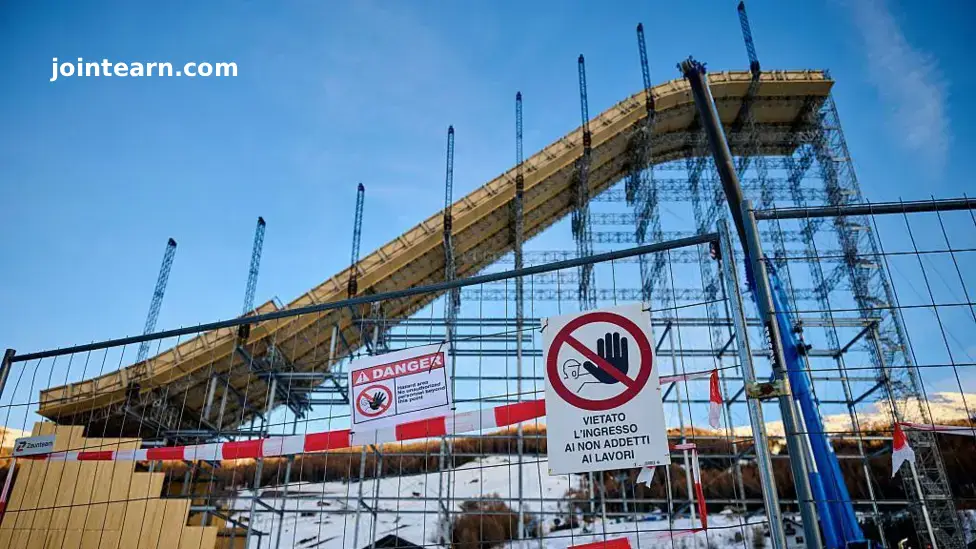
The Livigno Snow Park and Aerials and Moguls Park are critical venues for the Winter Games, hosting multiple freestyle skiing and snowboarding events, with a total of 26 gold medals at stake. Ensuring sufficient snow coverage for these venues is essential to guarantee the safety and quality of Olympic competition.
“It is unfortunate to find ourselves in a situation we should never have been in,” Eliasch said. “We have a plan B, a plan C, and a plan D. We call them three times a day—morning, noon, and night.”
Local Officials Assure Adequate Snow Levels
Livigno’s mayor, Remo Galli, responded to the concerns, attributing the delays to a technical issue rather than funding problems.
“We’ll have all the snow we need to have a great Olympics. In fact, we’ll have much more,” Galli told the Italian news agency Ansa.
“It was necessary to replace a valve, but it was done within the timeframe, and all the snow guns have been operating for a few evenings. We’re doing well, for Livigno and for Italy. In the next few days, temperatures will drop further, even to 20 below zero, so I’m not at all worried.”
The Livigno resort, located on the Swiss-Italian border, is a small alpine town that relies heavily on artificial snow production to prepare halfpipes, jumps, and freestyle skiing tracks. The local government and organizers are confident that the necessary snow coverage will be in place well before the Winter Games begin in February 2026.
Challenges of Artificial Snow Production
Artificial snow is essential for Olympic freestyle skiing and snowboarding events, especially given unpredictable winter conditions. Producing high-quality snow for halfpipes, moguls, and aerial jumps requires a combination of technology, manpower, and cold temperatures.
Eliasch criticized the delays in funding as “inexplicable”, stressing the importance of timely preparation:
“But I hope it will all work out. We have contingency plans ready, but the delays are not ideal.”
The situation has drawn international attention, as organizers work to ensure that Olympic-standard snow levels are met across all venues.
Wider Winter Olympics Concerns
Snow production issues come amid other pre-Games challenges. Earlier this month, NHL deputy commissioner Bill Daly warned that ice quality problems could prevent NHL players from participating in the 2026 Winter Olympics if not resolved. These developments highlight the complexity of organizing major winter sporting events, where weather conditions, infrastructure, and logistics must align perfectly.
With the Games just weeks away, officials remain confident that Livigno and other venues will be ready to host safe and competitive skiing and snowboarding events, ensuring that athletes can perform at their highest level.


Leave a Reply