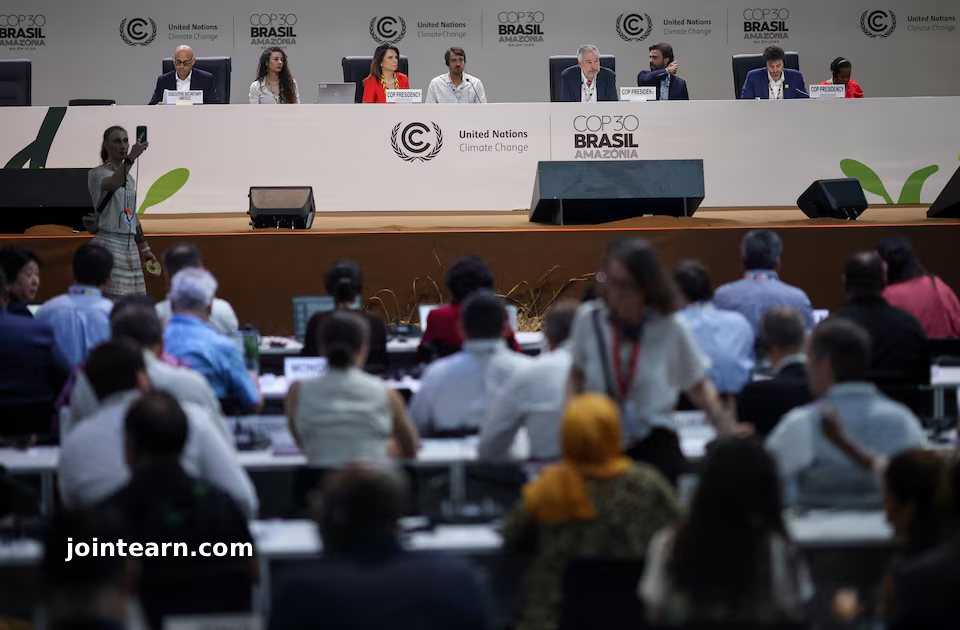
Belem, Brazil – November 22, 2025 – The COP30 United Nations Climate Change Conference in Brazil entered extended negotiations on Saturday after a critical impasse emerged over a proposed climate agreement. The European Union (EU) blocked the deal, arguing that it would not make sufficient progress in reducing global greenhouse gas emissions and addressing the climate crisis.
Originally scheduled to conclude on Friday, the two-week summit was meant to demonstrate that nations could unite on climate action even without the participation of the United States. However, disagreements over the final deal forced negotiators into overtime, with discussions continuing through the night in an effort to reach a consensus among the 200 attending countries.
EU and Arab Group Objections Stall Progress
The Brazilian COP30 presidency worked to broker a compromise that most nations were willing to accept, but the EU raised concerns that the agreement was unbalanced and lacked concrete mechanisms for emissions reduction. In addition to the EU, the Arab Group of countries also voiced strong objections, particularly over the timeline and responsibilities for transitioning away from fossil fuels.
The standoff has made it unlikely that the conference will approve a deal outlining detailed commitments for phasing out fossil fuels. Instead, negotiators are considering the establishment of a voluntary “Global Implementation Accelerator”, a forum in which countries could coordinate and discuss strategies to advance their emissions-cutting efforts.
Financing for Developing Nations
A draft of the proposed final agreement, seen by Reuters, included ambitious goals for climate financing. It called for tripling financial support to help developing nations adapt to climate change by 2035. While the EU signaled it could consider increasing climate finance beyond its comfort zone, it emphasized that stronger clauses on reducing planet-warming emissions would need to be incorporated.
The negotiations at COP30 highlight the persistent tension between climate finance and climate action. Developing nations often require financial support to implement green energy projects and adaptation measures, while developed nations are pushing for accountability and stronger emission-reduction commitments.
Looking Ahead
As COP30 enters overtime, the global spotlight remains on Brazil to facilitate a compromise that can satisfy both financial and environmental goals. The summit reflects the ongoing challenge of achieving international consensus on climate action, balancing the urgency of cutting greenhouse gas emissions with the need for equitable support to nations most vulnerable to climate impacts.
The conference continues to underscore the importance of global cooperation in addressing climate change, demonstrating that while political disagreements remain, nations are still striving for a unified approach to mitigate planet-warming emissions and secure a sustainable future.


Leave a Reply