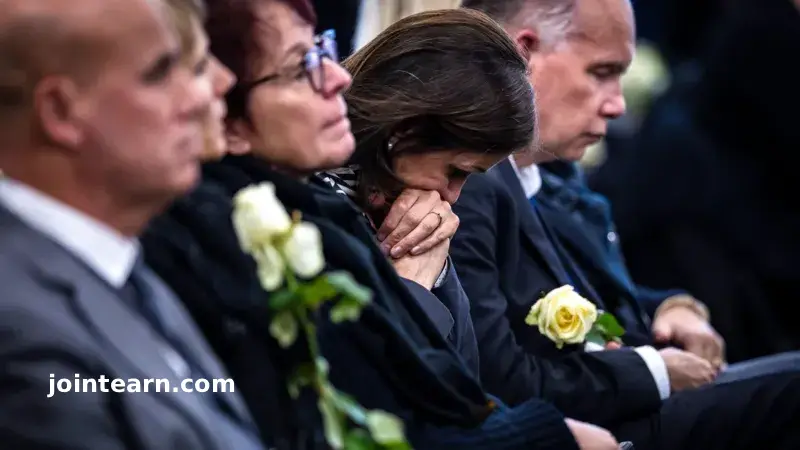
Switzerland is grappling with grief and outrage following the catastrophic fire at Le Constellation bar in Crans-Montana, which claimed the lives of 40 young people and injured more than 100 others. The New Year’s Eve tragedy has sent shockwaves through the nation, prompting a day of national mourning, a criminal investigation into the bar owners, and intense scrutiny of local authorities’ safety oversight.
National Day of Mourning and Memorials
On Friday, church bells tolled across Switzerland to honor the victims of the fire, marking a formal day of mourning. Thousands attended memorial services, including a major ceremony in Martigny, where survivors and families of the deceased gathered. White roses were laid, and hands were held in shared grief, underscoring the deep emotional impact on the community.
The president of Valais, Matthias Reynard, and Switzerland’s federal authorities reaffirmed their commitment to a “strict and independent investigation,” promising accountability for all relevant political and safety officials.
Arrest of Bar Owners and Ongoing Investigation
Swiss prosecutors have detained Jacques Moretti, one of the French co-owners of Le Constellation, citing a potential flight risk. Both Jacques and his wife, Jessica Moretti, are under investigation for manslaughter by negligence, bodily harm by negligence, and arson by negligence.
The couple has been called in for questioning by authorities, with Jacques Moretti now in custody. Jessica Moretti made her first public statement, expressing sorrow for the tragedy and apologizing for what occurred in her establishment.
The Fire and Its Causes
Investigations and video evidence suggest that the fire began when a sparkler, attached to a champagne bottle, brushed against soundproofing foam on the ceiling, which had never been safety tested. The foam ignited rapidly, creating a fiery inferno in the basement bar.
As panic erupted, many attendees were trapped on stairways while emergency exits were reportedly blocked. Mobile phone footage from six years prior shows that staff had already recognized the flammable risk of the ceiling material, indicating that the danger was long known but never addressed.
The fire has been described as “apocalyptic” by witnesses. Marie, a young woman present nearby, recalled:
“The images we faced were unbearable. A scene worse than a nightmare. Screams ringing out in the icy cold, the smell of burning. It was apocalyptic.”
International Attention and Accountability
Several foreign nationals were among the victims, including six Italians, prompting Italy to open its own investigation. Italy’s prime minister, Giorgia Meloni, emphasized that the fire was not an accident but the result of neglected responsibilities, asking why the music was not cut immediately and why proper emergency procedures were not followed.
Both France and Italy have sent officials to Switzerland to monitor the investigation, reflecting the tragedy’s international dimensions and the cross-border impact on families of the victims.
Local Authorities Under Fire
Local authorities in Crans-Montana admitted that mandatory safety inspections had not been conducted for five years, including checks that could have prevented this tragedy. The mayor, Nicolas Feraud, offered no clear explanation, sparking national outrage and calls for structural reform.
The incident highlights weaknesses in Switzerland’s devolved system of local governance, where municipalities are responsible for a wide range of duties, including fire safety, but may lack resources or oversight capacity.
Emergency Response and Hospital Care
Despite the preventable nature of the disaster, Swiss emergency services responded swiftly. Firefighters, ambulance crews, and helicopters arrived within minutes, managing the initial chaos efficiently.
The regional hospital in Sion received the first wave of victims, including patients with severe burns. Many doctors faced the added emotional stress of treating casualties who were the same age as their own children. Some patients required transfer to specialized burns centers in Switzerland and across Europe, and many remain in critical condition.
Professor Eric Bonvin, director of the Sion hospital, emphasized the long road to recovery for survivors:
“First the body needs to be protected, like the foetus in a mother’s womb. Then they will have to re-enter the world and find their identity. It will take a lot of work and resilience.”
Survivors also face emotional trauma, with some experiencing survivor’s guilt as they cope with the loss of friends and peers.
Community Response and Ongoing Mourning
In Crans-Montana, tributes continue to grow near the ruins of the bar, protected from harsh winter elements. Families, friends, and residents come to leave flowers, stand in silent reflection, and remember the lives lost.
The tragedy has united the community, while simultaneously raising urgent questions about fire safety, governance, and accountability. Calls are growing to centralize fire-safety inspections under cantonal rather than municipal authorities to prevent future disasters.
The Path Forward
As Switzerland mourns, the nation faces deep introspection. The fire at Le Constellation is a stark reminder of the consequences of neglecting safety regulations, even in a country known for order and efficiency. Families, citizens, and authorities demand answers, justice, and systemic reform to ensure such a tragedy is never repeated.
The Crans-Montana fire has not only left a scar on the victims and their families but also on Switzerland’s national psyche, challenging the country to balance local autonomy with the moral obligation to protect its people.


Leave a Reply