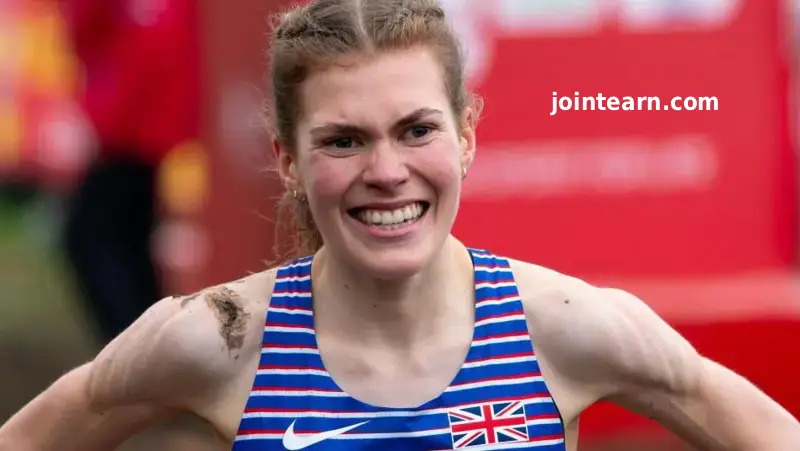
Megan Keith, one of Britain’s leading distance runners, knows the appeal of running through muddy hills and boggy ditches. For most of her career, cross country has been her first love, but the sport’s declining profile at the elite level has forced her to shift focus to the track to secure funding and professional opportunities.
After winning the European Under-23 Cross Country title in 2023, Keith realized that pursuing cross country alone would limit her prospects. “Pretty much until the end of secondary school, I didn’t have any interest in the track. My entire running sphere revolved around cross country,” Keith told BBC Sport. “But sponsors and British Athletics put their main focus on the track, so I’ve had to become a track runner and view cross country differently.”
Despite these challenges, Keith has continued to excel in cross country, winning European individual and team silver medals last month, and will lead the British team at the World Cross Country Championships 2026 in Tallahassee, Florida, broadcast live on the BBC.
The Decline of Elite Cross Country
Cross country running, once a prestigious and highly competitive discipline, has seen its status diminish dramatically. Participation at the World Cross Country Championships has dropped from over 800 athletes at the turn of the century to around 500 in recent years. Many nations now send skeleton teams, prioritizing spring road races or summer track events instead.
Tim Hutchings, the last British man to win a World Cross Country medal (silver in 1989), highlighted the financial challenges facing the sport:
“There were several winters where I was among the best cross-country runners in the world… now, there just isn’t any money in it.”
Funding structures have shifted focus to Olympic and Paralympic disciplines, leaving cross country largely unsupported. British Athletics now prioritizes track and road performances, which influences athletes like Megan Keith to concentrate on summer track events to secure sponsorship and funding.
The Popularity Gap: Why Cross Country Struggles
While marathons, park runs, and trail races flourish, cross country remains unloved by the general public. School-day memories of running through freezing fields in ill-fitting kit have contributed to its negative reputation.
Even at the elite level, African dominance has affected perception, with no non-African male runner reaching the World Cross Country podium for over 20 years and no non-African woman for 12 years.
However, grassroots participation remains strong. Last year, over 5,000 athletes competed in the English National Cross Country Championships, and regional leagues consistently attract over 1,500 competitors per race. Courses are unique, and distances vary, though the World Championships standardized at 10km from 2019.
Cross Country as a Stepping Stone
For many top athletes, cross country is now viewed primarily as preparation for track and road events. Paula Radcliffe, former marathon world record holder, won successive World Cross Country titles in 2001 and 2002, but today the sport is rarely treated as a standalone career path outside Africa.
Megan Keith acknowledges the balance required: “It’s where my passion still lies, but there are expectations for me in the summer, so I can’t put all my eggs into being in peak form in the winter.”
Could Cross Country Join the Winter Olympics?
There may be hope for the sport’s resurgence. World Athletics president Lord Coe has advocated for cross country to be included in the Winter Olympics, potentially as soon as the 2030 Games.
The UK is also planning to host multiple international cross-country championships in the coming years. The last major UK event was the 2008 Edinburgh World Cross Country Championships. Eamonn Martin, secretary of the English Cross Country Association, explained the potential impact:
“If we did host more competitions, it would be a bit of a game-changer. And if there’s then an Olympic medal at the end of it, it changes everything.”
Keith shares this optimism, suggesting greater exposure could attract more elite track athletes to cross country:
“If cross country got the respect it once had and deserves, I would be really happy. It’s the purist form of distance running for me. There’s so much potential.”
The Future of Cross Country
Cross country is at a crossroads. Its grassroots appeal remains strong, yet at the elite level, lack of funding, media coverage, and international participation threatens its relevance. The introduction of Olympic recognition and more high-profile UK events could revive the sport and encourage the next generation of athletes to embrace the mud, hills, and grit that define true distance running.
For athletes like Megan Keith, cross country remains both a passion and a challenge—a reminder that the sport’s value lies not just in medals, but in the joy of running over open terrain.


Leave a Reply