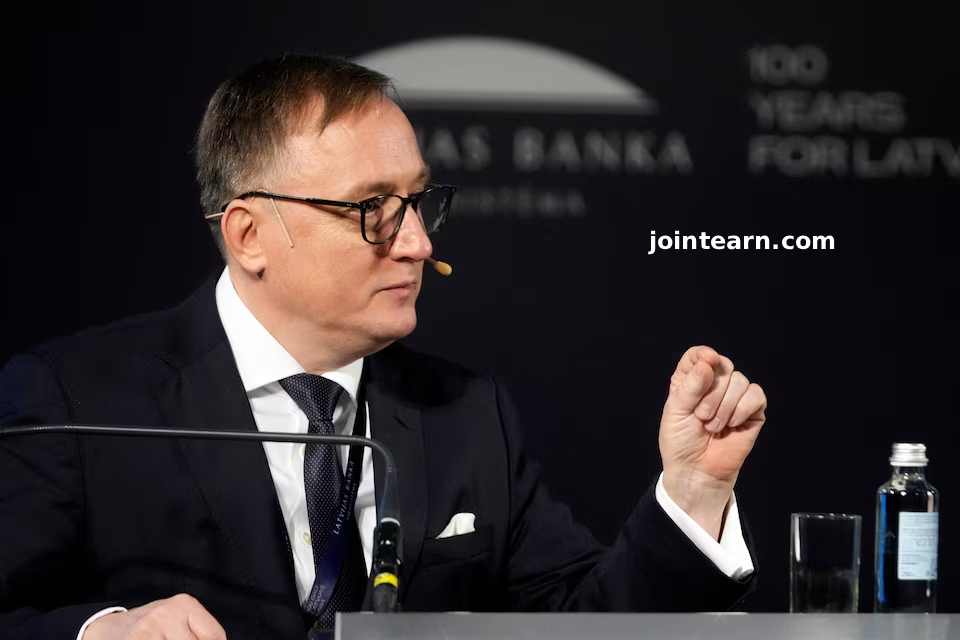
The European Central Bank (ECB) must remain vigilant in the face of rising global risks, including the U.S. administration’s recent attack on the Federal Reserve (Fed), ECB policymaker Martins Kazaks said on Thursday. The comments highlight potential challenges for European monetary policy amid market volatility and geopolitical tensions.
U.S. Fed Controversy Raises Global Concerns
Fed Chair Jerome Powell has faced threats of a criminal indictment related to statements he made about renovations to the Fed’s headquarters. Kazaks warned that this unprecedented pressure could undermine the independence of the world’s most powerful central bank, with potential knock-on effects for global markets and economic stability.
“Risks to inflation and growth are on both sides, and there’s no room for complacency,” Kazaks said in an interview. “We’ve seen a lapse into emerging market politics in the United States, and there are risks from an AI-hype-driven valuation in the U.S. financial markets.”
Kazaks, who serves as Latvian central bank governor and is a candidate to become the ECB’s next vice-president, noted that any erosion of the Fed’s independence could ultimately affect U.S. consumers through higher inflation, potentially forcing the Fed to raise interest rates to restore stability.
Artificial Intelligence Bubble and Market Risks
Kazaks also highlighted the risk of a potential financial bubble in artificial intelligence (AI). He warned that inflated valuations in the AI sector, particularly in U.S. financial markets, could pose systemic risks that ripple into Eurozone financial stability.
“There are risks from an AI-hype-driven valuation in the U.S. financial markets,” he added, stressing the importance of monitoring speculative bubbles as part of the ECB’s macroprudential oversight.
China’s Trade and Industrial Policies
Another concern on the ECB’s horizon is China’s aggressive trade strategy, which Kazaks described as potentially inconsistent with World Trade Organization (WTO) rules. Key issues include:
- Subsidies supporting domestic industries
- Export restrictions on rare earth materials
- Exchange-rate policies limiting yuan appreciation
Kazaks called for European responses, including both long-delayed structural reforms and targeted industrial policy if necessary, to maintain competitiveness in global markets.
ECB Rates and Eurozone Inflation
Despite the risks, Kazaks maintained that ECB interest rates remain at appropriate levels. He also highlighted positive trends in eurozone inflation, with even core inflation measures—which exclude volatile items like energy and food—moving closer to the ECB’s 2% target.
“Eurozone inflation is delivering good news, and the ECB remains vigilant in ensuring price stability while monitoring external risks,” Kazaks said.
Key Takeaways for Investors and Policymakers
- The ECB must balance domestic price stability with global uncertainties, including U.S. Fed pressures and market speculation in AI.
- China’s trade and industrial policies pose structural risks that could affect European competitiveness.
- Eurozone inflation is stabilizing, with core measures approaching the ECB’s target, providing room for measured policy decisions.
- Policymakers must remain alert to systemic risks that could disrupt financial markets and inflation trajectories.
Kazaks’ comments underscore the delicate interplay between monetary policy, global geopolitics, and market speculation, emphasizing that the ECB cannot afford complacency as external shocks—from AI market hype to U.S. political developments—pose potential risks to the eurozone economy.


Leave a Reply