The European Central Bank (ECB) has maintained its policy interest rates steady, while simultaneously revising upward its growth and inflation forecasts for the eurozone. The move signals a potential end to further interest rate cuts in the near term, reflecting a stronger-than-expected economic performance across the region.
Steady Policy Rates Amid Stronger Growth
At its latest monetary policy meeting, the ECB opted to leave interest rates unchanged, as widely anticipated by markets. Recent data indicate that eurozone growth has exceeded the ECB’s expectations. Exporters have successfully navigated U.S. tariffs, while domestic spending has offset weaknesses in the manufacturing sector.
Inflation has remained close to the ECB’s 2% target, primarily driven by rising costs in the services sector. Analysts expect this moderate inflation level to persist in the near future, further supporting the case for stable monetary policy.
ECB Signals Caution on Rate Changes
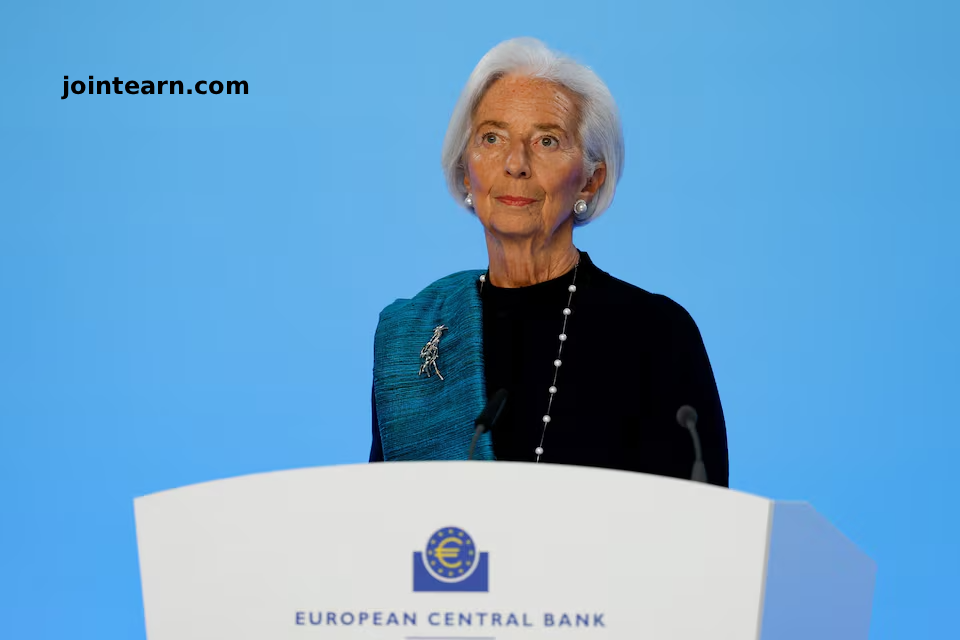
ECB President Christine Lagarde emphasized that all policy options remain on the table. “With the degree of uncertainty we are facing, we simply cannot offer forward guidance,” she said, highlighting geopolitical tensions in Europe, the risk of a U.S. tech bubble, and other global uncertainties.
While some market observers speculate about a potential rate hike in late 2026 or early 2027, most economists forecast that rates will remain stable through at least 2027. This approach aligns with other central banks, such as the U.S. Federal Reserve and the Bank of England, which are also approaching the end of their rate-cut cycles.
Revised Inflation and Growth Forecasts
The ECB’s updated projections reflect an improved economic outlook for the eurozone. Key highlights include:
- Inflation: Expected to dip below 2% in 2026 and 2027, primarily due to lower energy costs, before returning to target in 2028. Services sector inflation may decline more slowly due to wage pressures.
- Growth: Eurozone output growth is forecast at 1.4% in 2025, 1.2% in 2026, and 1.4% in both 2027 and 2028. This growth is supported by robust exports, domestic investment, and a relatively tight labor market.
Economists note that the German government’s planned investments in infrastructure and defense, combined with wage growth catching up post-pandemic, will provide additional support to the economy.
Market Reactions and Future Outlook
Financial markets are beginning to price in modest chances of a rate hike in late 2026 or early 2027, although most experts expect the ECB to maintain its current policy stance for the foreseeable future. Core inflation forecasts for 2026-2027 were also revised higher, partly due to adjustments in the European Union’s carbon trading scheme.
External factors, such as the euro’s relative strength against the U.S. dollar and Chinese yuan, could influence competitiveness and inflationary pressures, further underscoring the ECB’s cautious, data-driven approach to monetary policy.
Conclusion
The ECB’s decision to hold rates steady, coupled with revised growth and inflation projections, suggests that the eurozone is experiencing a more resilient economic recovery than previously anticipated. While uncertainties remain, including global geopolitical risks and currency fluctuations, the central bank appears committed to a measured, flexible approach that prioritizes stability and sustainable growth.


Leave a Reply