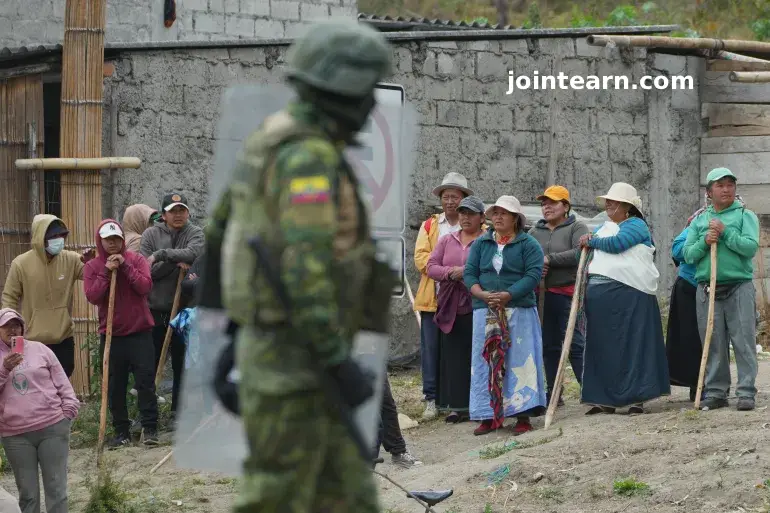
A court in Ecuador has sentenced 11 soldiers to 34 years in prison for their role in the abuse and disappearance of four children in Guayaquil, capping a yearlong investigation into one of the country’s most shocking cases of enforced disappearances.
The children—Steven Medina, Nehemias Arboleda, and brothers Ismael and Josue Arroyo—were last seen on 8 December 2024, walking toward a neighborhood sports field. Their charred bodies were discovered weeks later, on 31 December, in a swampy rural area of Taura.
Five soldiers who collaborated with prosecutors received lighter sentences of two and a half years.
Details of Abuse
Several soldiers told prosecutors that the boys were beaten, subjected to mock executions, and forced to strip before being abandoned naked in the remote, dangerous area.
“The patrol abandoned the minors in that area, knowing it was dangerous, desolate, and abandoned,” Judge Jovanny Suarez stated in the ruling.
The soldiers were acquitted of killing the boys, with the defense arguing that the military patrol had left the minors alive and lacked proper training for the operation.
The military initially claimed the children were criminals, detained them, and released them alive, contradicting evidence from the investigation.
National Outrage Over Militarized Crime Strategy
The case sparked widespread outrage and criticism of President Daniel Noboa’s “Phoenix Plan”, which deployed the military to combat escalating gang violence across Ecuador.
Amnesty International has condemned the plan, stating that it has led to an increase in enforced disappearances while failing to reduce crime rates. Ana Piquer, the organization’s Americas director, said:
“Enforced disappearances are multiplying in Ecuador while the government insists on a militarized strategy that not only has not reduced crimes, but has increased human rights violations.”
Since Noboa took office in 2023, 43 people have been reported missing by the armed forces, according to Amnesty, which also accused the military of obstructing investigations.
The sentencing represents a rare instance of accountability in Ecuador, highlighting the risks of militarized responses to domestic crime and the need for greater oversight of military operations.


Leave a Reply