Egypt has officially declared that it shares identical views with Saudi Arabia regarding the ongoing conflicts in Yemen and Sudan, signaling a strong regional alignment at a time of growing instability in the Middle East. This announcement comes amid widening differences between Saudi Arabia and the United Arab Emirates (UAE), who were previously close allies in shaping regional politics.
Egyptian-Saudi Coordination on Regional Crises
During high-level discussions in Cairo, Egyptian President Abdel Fattah el-Sisi met with Saudi Foreign Minister Prince Faisal bin Farhan Al Saud, reaffirming the two nations’ unified stance on resolving conflicts in the region through peaceful means. According to a statement from the Egyptian presidency, both leaders emphasized their “identical” positions on reaching peaceful solutions to regional crises, highlighting the importance of stability, sovereignty, and unity.
The statement also specifically mentioned Sudan, Yemen, Somalia, and the Gaza Strip as critical areas where diplomatic solutions are essential to preserve state integrity and prevent further regional destabilization.
Yemen Conflict: Saudi-Egyptian Support Amid STC Advances
The situation in Yemen remains complex, with Saudi Arabia and the UAE supporting rival factions within the internationally recognized government. While Riyadh backs a coalition opposed to the Iran-aligned Houthis, Abu Dhabi has been supporting the separatist Southern Transitional Council (STC), which recently captured two strategic provinces, escalating tensions with Saudi Arabia.
In response to the STC’s advances, Saudi Arabia proposed hosting an inclusive conference for southern Yemeni groups aimed at reducing tensions and promoting a Yemeni-led political settlement. Egyptian officials, including Foreign Minister Badr Abdelatty, welcomed the initiative, stressing the importance of de-escalation and dialogue to end the military escalation and foster long-term stability in Yemen.
The STC, led by Aidarous al-Zubaidi, is expected to send a delegation to Saudi Arabia in the coming days to discuss potential peaceful resolutions, following Riyadh’s call for dialogue.
Sudan: Aligning With Saudi Arabia Against UAE Influence
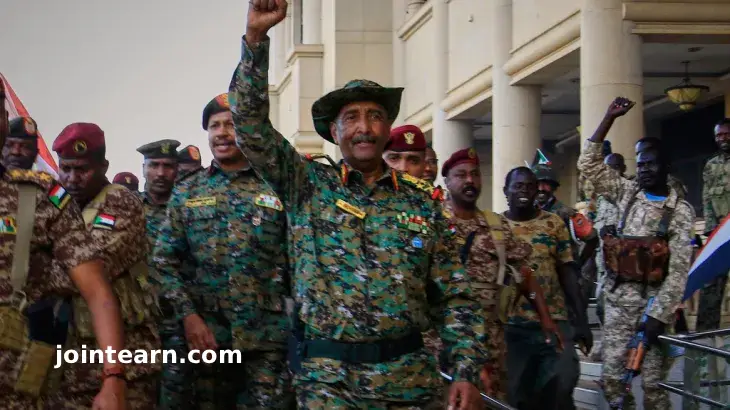
Sudan represents another key flashpoint in the region. Egypt and Saudi Arabia have aligned themselves with Sudan’s de facto leadership, while the UAE has been accused of supporting the Rapid Support Forces (RSF), a paramilitary group responsible for escalating violence in the country. This division underscores the growing strategic rivalry between Saudi Arabia and the UAE in the Horn of Africa.
The competition in Sudan and beyond extends to the Horn of Africa, a region of high strategic importance along global shipping routes. Saudi Arabia has strengthened ties with Somalia’s federal government, whereas the UAE has cultivated close relations with Ethiopia and Somaliland, a self-declared independent region that separated from Somalia in 1991.
Israel’s recent recognition of Somaliland has further heightened regional sensitivities, with the move welcomed by Abu Dhabi but opposed by Riyadh, highlighting the complex interplay of diplomacy, strategic interests, and regional power dynamics.
Implications for Middle East Stability
The renewed Egyptian-Saudi alignment signifies a shift in regional alliances, particularly in response to the UAE’s increasingly divergent foreign policy. Analysts note that these developments could influence the resolution of ongoing conflicts in Yemen and Sudan, as well as broader regional stability in the Middle East and the Horn of Africa.
Egypt’s stance underscores its desire to mediate and stabilize regional conflicts, leveraging its historic ties with Saudi Arabia while maintaining a neutral position regarding rival factions. For Saudi Arabia, the partnership reinforces its influence in Yemen and Sudan while countering the UAE’s regional ambitions.
The situation remains fluid, and international observers continue to monitor how this Egyptian-Saudi alignment will impact the future of peace efforts in Yemen, Sudan, Somalia, and the Gaza Strip.


Leave a Reply