Former England captain Michael Vaughan has urged restraint in the wake of England’s latest Ashes struggles, warning against sweeping changes to the playing group even if defeat in Australia is confirmed once again.
With Ben Stokes’ side on the brink of another heavy Ashes loss after slumping to 213 for eight on day two of the third Test in Adelaide, Vaughan believes English cricket must resist its traditional urge to tear everything down and start again.
Instead, he argues that continuity, experience, and long-term planning are the only realistic path to future success in Australia.
Ashes Defeat Looms as England Falter Again
England’s Ashes hopes are hanging by a thread after another fragile batting display at the Adelaide Oval. Despite dismissing Australia for 371 on the second morning, England collapsed to 42 for three and then 71 for four in near-perfect batting conditions.
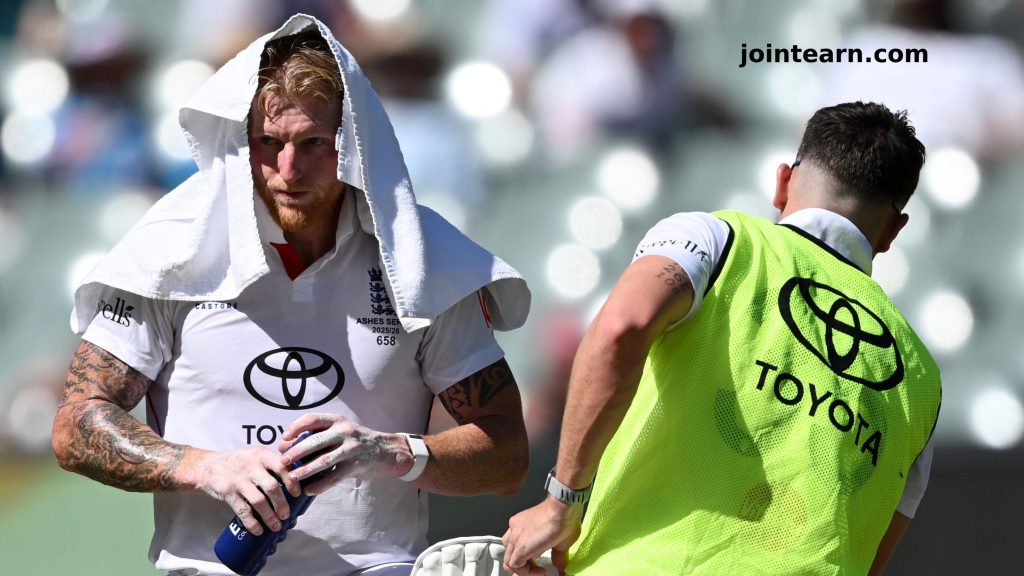
Only a defiant innings of 45 not out from captain Ben Stokes, spanning 151 balls, prevented England from being forced to follow on before the close of play.
Should England lose the third Test, it would:
- Seal a fourth consecutive Ashes series defeat in Australia
- Extend England’s winless Test run in Australia to 18 matches
- Mark a fourth straight away Ashes series in which England have fallen 3–0 down after three Tests
Historically, such defeats have often triggered sweeping overhauls in personnel and selection policy.
Vaughan’s Warning: Don’t Start Again From Scratch
Speaking on the Ashes Debrief on BBC iPlayer, Vaughan cautioned against the familiar post-Ashes reaction of mass change.
Drawing on his own experience from the 2002–03 Ashes tour, when England were thrashed 4–0 before salvaging pride with a win in Sydney, Vaughan said that one victory proved invaluable in shaping the side that went on to reclaim the Ashes in 2005.
“English cricket often works in four-year cycles — home and away Ashes series,” Vaughan said.
“One or two players need to go because they aren’t good enough at this level, but a number of them have enough talent.”
Vaughan stressed that development, not disposal, should be the priority.
“If they are coached and managed correctly, and given the right preparation, they can be competitive in four years’ time.
Bad experience is better than no experience.”
Building for 2029–30, Not Reacting to 2025
Looking ahead to the next Ashes tour of Australia in 2029–30, Vaughan believes many of the current squad should still be part of England’s plans.
Among the current group:
- Ben Stokes (34) is unlikely to tour again due to age and workload
- Joe Root, who will be almost 39, may also be a doubt
- Opener Ben Duckett will be 35, making him the next oldest player
However, Vaughan sees significant value in retaining the rest of the squad, arguing that exposure to Australian conditions is irreplaceable.
“There are a lot of players in this England side that should still be coming in four years’ time,” he said.
“One or two will fall by the wayside, and a couple of senior pros might disappear — but you don’t just put everyone in the bin.”
Experience in Australian Conditions Is Crucial
Vaughan’s central argument is that repeated failure in Australia should not be treated as proof of permanent inadequacy. Instead, it should be viewed as part of a learning curve — one England have often failed to complete.
“What I don’t want English cricket to do is think ‘all these players have failed, we’ll start again’,” Vaughan said.
“You want more players hardened by playing in these conditions.”
Australia’s pitches, climate, and relentless bowling attacks have historically exposed England’s weaknesses. Vaughan believes that without sticking with players through these difficult tours, England will never develop a group capable of competing down under.
Melbourne and Sydney Still Matter
With Tests still to come in Melbourne and Sydney, Vaughan insists England must treat the remainder of the series as an opportunity rather than a formality.
“England can’t think there is nothing to gain from the next two games,” he said.
“If this goes wrong — and it looks like it may — Melbourne and Sydney are still opportunities to learn.”
That mindset, Vaughan argues, was central to England’s eventual success two decades ago.
“I learned a lot from winning that one game in Sydney in 2003. Those lessons helped shape the next few years.”
Long-Term Thinking Over Short-Term Panic
As the Ashes once again appear set to remain in Australian hands, Vaughan’s message is clear: meaningful progress will not come from panic-driven selection changes.
Instead, England must identify which players genuinely lack the quality for Test cricket, remove only those necessary, and commit to developing the rest — even through painful defeats.
In a series defined by harsh lessons, Vaughan believes the biggest mistake England could make would be refusing to learn them.


Leave a Reply