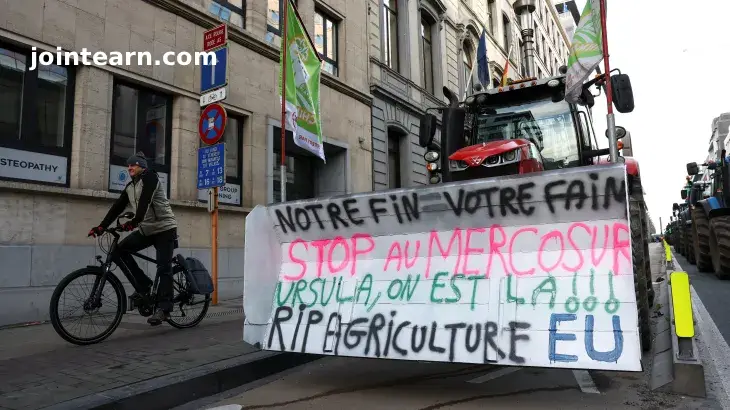
The European Union (EU) has postponed the signing of its long-awaited free-trade agreement with the Mercosur bloc—comprising Argentina, Brazil, Bolivia, Paraguay, and Uruguay—until January 2026, following protests by farmers and last-minute opposition from key member states, including France and Italy.
The deal, which had taken 25 years to negotiate, would create the world’s largest free-trade area and is expected to significantly boost exports of European vehicles, machinery, wine, and spirits to Latin America.
Political Opposition and Delayed Signing
European Commission President Ursula von der Leyen had planned to travel to Brazil to finalize the agreement but required the support of a broad EU majority. Opposition from French President Emmanuel Macron and Italian Prime Minister Giorgia Meloni forced the EU to postpone the signing.
Macron emphasized the need for additional concessions and discussions, citing challenges faced by European farmers, while Meloni reportedly asked Brazilian President Luiz Inácio Lula da Silva for patience, signaling Italy’s eventual support in January.
The delay was confirmed by European Commission spokesperson Paula Pinho, signaling the agreement will now be revisited in the new year, allowing more time to secure backing from hesitant EU nations.
Farmer Protests in Brussels
The postponement came amid large-scale farmer demonstrations in Brussels. Tractors blocked streets, protesters set off fireworks, and threw vegetables while waving banners that read messages such as:
“Our end = Your hunger, Stop Mercosur, Ursula, RIP EU agriculture.”
Police used tear gas and water cannons after clashes, and some European Parliament staff were evacuated due to damage caused during the protests. Farmers from across Europe—including Spain and Poland—joined the demonstrations to voice concerns that cheap imports from Mercosur countries would undercut European agricultural products such as beef and poultry.
Economic Stakes and Member State Divisions
While Germany, Spain, and Nordic countries strongly support the deal, arguing it will expand exports and reduce dependence on China, France and Italy remain concerned about the impact on their powerful farming sectors.
The trade pact would also involve reforms to the Common Agricultural Policy (CAP), which farmers fear could reduce subsidies and funding available for EU agriculture.
Brazil initially reacted with a “now-or-never” ultimatum but has accepted the EU’s request to delay, aiming to ensure all member states can support the agreement.
Next Steps
The EU-Mercosur trade deal is now expected to be revisited in mid-January 2026, allowing negotiators time to resolve disputes and secure the backing of holdout nations. Observers note that negotiations will remain tense, given the powerful forces on both sides of the debate.


Leave a Reply