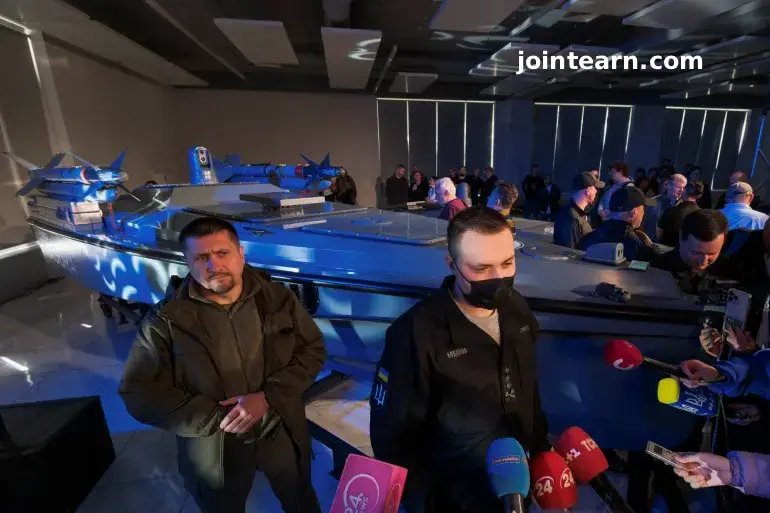
European nations are accelerating naval rearmament programs, leveraging Ukraine’s battlefield experience and co-production agreements with Kyiv to develop unmanned systems, drones, and precision-guided weapons. The shift comes amid renewed concerns over Russian aggression and the uncertain outcomes of ongoing peace negotiations led by the United States.
Ukraine Leads Maritime and Aerospace Innovation
In mid-November 2025, Ukrainian President Volodymyr Zelenskyy visited Greece, France, and Spain, announcing a series of co-production agreements:
- In Athens, Ukraine and Greece committed to developing maritime unmanned systems.
- In Paris, Ukraine signed deals to co-produce Rafale fighter jets and interceptor drones with France.
- In Madrid, Zelenskyy called for co-production of precision-guided missiles with Spain.
Additional agreements have been signed with Denmark, Germany, and the United Kingdom, integrating Ukraine into European defense production chains.
Experts say these moves are a strategic response to Russian war threats and the perceived inadequacy of US-led peace plans.
“The whole point of the Russian proposals is to leave Ukraine defenceless against the next round of Russian attacks,” said Eurasia expert Keir Giles.
Ukraine’s Technological Edge
Ukraine is using its conflict experience to test and refine unmanned systems, including aerial, ground, and naval platforms. Notably:
- On December 31, 2024, Ukraine downed enemy helicopters using Magura unmanned surface vessels (USVs) armed with air-to-air Sidewinder missiles.
- On May 2, 2025, Magura USVs successfully downed two Russian Sukhoi jets.
- Recent experiments include FPV drones launched from Magura vessels for reconnaissance and strike missions.
The Ukrainian Security Service (SBU) has extended Magura USVs’ operational range to 1,500 km and increased payload capacity to 2 tonnes, making them highly adaptable for European co-production projects.
European Defense Industry Response
European defense industries are taking note:
- Greece’s Skaramangas Shipyards is developing unmanned reconnaissance and 12-meter armed USVs using composite and carbon-fiber materials.
- UK startup Expedition Zero is exploring military applications of EcoMinera, a volcanic-rock-derived material resistant to heat, abrasion, and fire, suitable for hulls and fuel protection.
“It could easily have a military application, because a lot of these vehicles operate in harsh environments,” said Expedition Zero CEO Andrew Cowen.
The combination of Ukrainian combat-tested technology and European industrial capacity could transform naval defense capabilities across the continent.
Funding Rearmament: RearmEU Initiative
European funding for defense innovation has surged since the Ukraine war:
- €150 billion ($170 billion) from the European Commission.
- €650 billion ($750 billion) from national budgets.
- An additional $164 billion could come from frozen Russian assets.
Prior to the war, European defense innovation lagged, with limited procurement and political support. Companies like Greece’s Barracuda built unmanned surface vessels (USVs) for NATO exercises, but political hesitation prevented mass production.
“If the Hellenic Navy in 2021 had procured Multi Mission 747, I would have built an unmanned underwater vehicle by now,” said Barracuda founder Tasos Hatzistefanou.
Now, European budgets and Ukrainian battlefield insights may finally allow long-delayed innovations to materialize.
Implications for European Security
Experts suggest these developments could:
- Strengthen Europe’s maritime defense capabilities.
- Provide rapid deployment of unmanned systems in conflict scenarios.
- Enhance autonomous strike and reconnaissance capacity, deterring potential Russian aggression.
The Ukraine war has accelerated Europe’s technological, financial, and strategic recalibration in defense, marking a new era in naval rearmament.


Leave a Reply