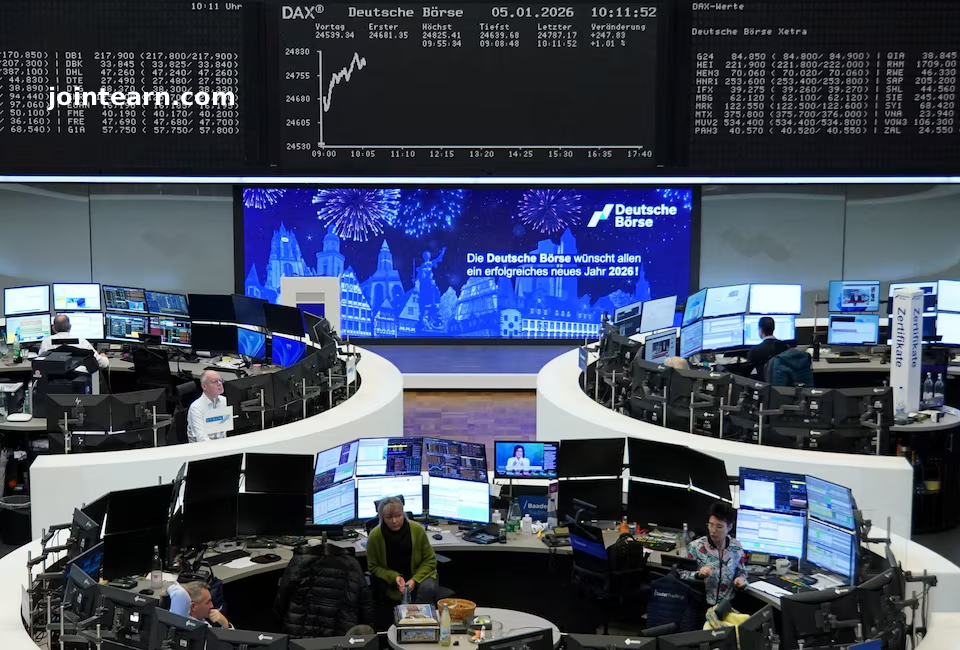
European equity markets lost some of their earlier momentum on Wednesday, January 7, 2026, as investors took a cautious pause after a series of record‑breaking closes and turned their attention to global geopolitical developments and incoming economic data. The European stock market rally, which had lifted major indices to fresh highs, showed signs of stalling as traders digested the implications of a significant new crude oil agreement involving Venezuela and braced for a wave of key macroeconomic reports.
STOXX 600 Index Remains Steady After Recent Gains
The broad European STOXX 600 index, which had been on an upward trajectory, hovered around the flatline in early trading. This slight pullback came a day after the index recorded one of its highest closing levels ever. Investors appeared to adopt a “wait‑and‑see” approach, balancing optimism from previous gains with the need to reassess market fundamentals in light of shifting geopolitical factors and economic indicators scheduled for release.
Venezuela Crude Oil Deal Shakes Up Energy Stocks
A major factor influencing market sentiment was news that the United States reached a US$2 billion deal to import Venezuelan crude oil, a move expected to increase global oil supplies and affect energy prices. Following the announcement, crude oil prices declined, leading to notable pressures on European energy majors. Shares of Shell and BP, two of the UK’s largest energy companies, fell significantly, dragging down the broader European energy sector.
This development has heightened investor focus on how expanded Venezuelan oil flows could soften energy markets and dampen sector profitability — at least in the near term — especially as Europe continues to navigate the uncertain economic impact of lower crude prices.
Mixed Performance Across Major European Markets
Although the STOXX 600 plateaued, individual European indices showed varied performance:
- Germany’s DAX index climbed modestly, reflecting some resilience among exporters and industrial stocks.
- Spain’s IBEX 35 and Italy’s FTSE MIB were largely unchanged after reaching record highs in the previous session.
- In France, the CAC 40 index eased slightly, pulled lower by profit‑taking in sectors hit by recent profit warnings and recall news from major corporations.
Amid these movements, certain standout performers bucked the broader trend. For example, shares in French corporate group Pluxee climbed sharply after reporting solid organic sales growth for its latest quarter, while major chip equipment producer ASML saw a pullback after snapping a multi‑day winning streak.
Economic Data in Focus: JOLTS, Unemployment, Retail Sales
Investors were also watching a key set of U.S. economic data releases, including the Job Openings and Labor Turnover Survey (JOLTS). This report — which tracks labor demand — could offer fresh insight into the strength of the U.S. job market and help shape expectations for Federal Reserve monetary policy and interest rates.
In Europe, new data revealed that Germany’s unemployment rate rose somewhat less than expected in December, providing a modest upside surprise. However, German retail sales fell unexpectedly, raising concerns about consumer spending in Europe’s largest economy. Meanwhile, French consumer confidence improved, offering a mixed but nuanced picture of broader European economic conditions.
Broader Market Takeaways
The current market pause does not necessarily signal a full‑scale reversal of the recent rally. Many analysts view the slowdown as a healthy consolidation, allowing traders to reassess global catalysts before committing further capital. As one market commentator noted, investors have tended to look beyond geopolitical headlines in recent years and stay focused on earnings trends and macroeconomic fundamentals.
With oil prices sliding, expectations of increased Venezuela crude supplies, and fresh economic data on the horizon, equity markets remain positioned in a state of tentative balance. Traders appear poised to react swiftly once key indicators such as the U.S. labor market reports and inflation data offer clearer signals about global economic momentum.


Leave a Reply