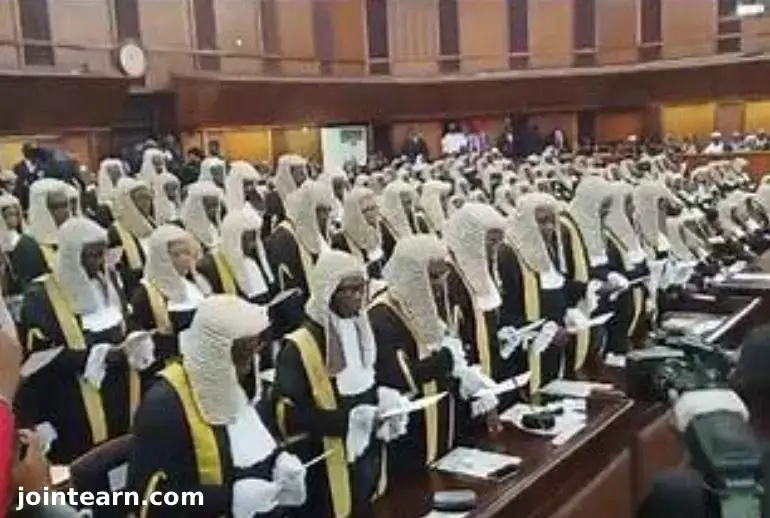
Public concerns over corruption in Nigeria’s judiciary have intensified following President Bola Tinubu’s address at the All Nigeria Judges Conference, where he acknowledged the perception that “justice is for sale” and warned that judicial corruption threatens the nation’s democracy.
The alarm echoes a similar warning from retired Supreme Court Justice Musa Dattijo Muhammad, who in 2023 decried the deterioration of the judiciary he once served, calling it “something else” and far from the institution he joined.
Legal practitioners, activists, and former judicial officers attribute the judiciary’s compromised integrity to several factors:
- Executive financial control: Judges’ dependence on the executive for budgets, houses, cars, and other perks undermines independence, creating opportunities for political influence. Experts argue that true judicial autonomy requires direct funding and control of resources by the judiciary.
- Politicized appointments: The executive’s control over judicial appointments fosters loyalty among judges, further eroding impartiality.
- Societal factors: Corruption in society at large contributes to the judiciary’s decay, and reforms must extend beyond institutional adjustments to broader cultural and societal transformation.
- Lack of accountability: The National Judicial Council (NJC) and other oversight mechanisms must be empowered to investigate and sanction erring judges transparently and effectively.
Experts stress that financial autonomy, merit-based appointments, lifestyle audits, and strict anti-corruption measures are essential. Many argue that judges should no longer accept houses, cars, or other benefits from the executive, as such practices compromise impartiality.
Advocates also highlight the critical role of civil society and media in demanding reforms and holding both politicians and judicial officers accountable. They warn that without urgent, structural, and cultural reforms, Nigeria’s democracy and public trust in the judiciary will continue to erode.
As Mr. Polycarp Aande, former NBA Secretary, noted, separation of powers and judicial independence are crucial, stating that the judiciary must be free from executive influence for justice to be delivered fairly.


Leave a Reply