Minnesota officials have said that the Federal Bureau of Investigation (FBI) blocked their participation in the probe into the fatal shooting of Renee Nicole Good, a 37-year-old woman killed by a US Immigration and Customs Enforcement (ICE) agent in Minneapolis.
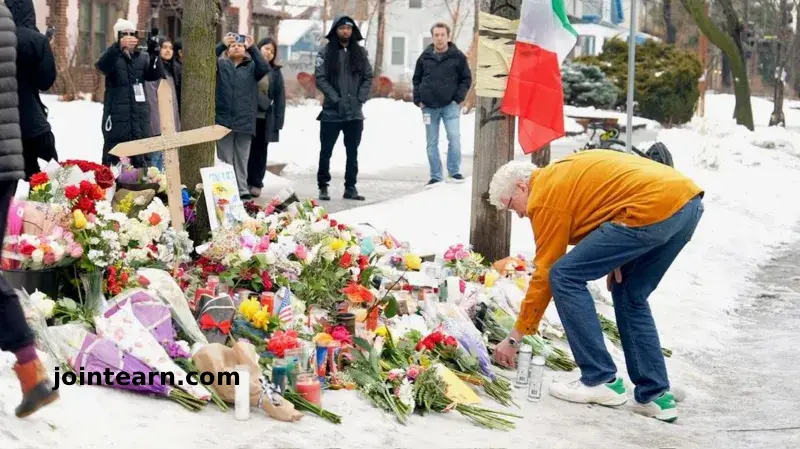
The incident, which occurred on Wednesday, sparked widespread protests and public outrage. Residents and community members gathered at the scene to honor Good, leaving candles, flowers, and tributes in her memory.
Conflicting Accounts of the Shooting
Authorities have given differing explanations of the incident. The Trump administration and Homeland Security Secretary Kristi Noem claimed that the ICE agent acted in self-defense, alleging that Good tried to run over the officer in her vehicle.
State officials, however, maintain that Good posed no immediate threat. Minnesota Governor Tim Walz criticized the federal government, saying that the state has been effectively excluded from the investigation. “It feels very, very difficult that we will get a fair outcome,” Walz said.
Videos circulating from the scene show ICE agents approaching Good’s vehicle, attempting to open the driver-side door, and firing multiple shots as the car drove away and crashed into a street barrier.
FBI Denies State Access
Minnesota’s Bureau of Criminal Apprehension (BCA) initially planned a joint investigation with the FBI. However, the federal agency later denied state authorities access to evidence and materials, prompting the BCA to withdraw from the case, according to Superintendent Drew Evans.
Vice President JD Vance emphasized that the investigation is a federal matter, arguing that state involvement would contradict precedent. Legal experts warn that the exclusion of state authorities could undermine public trust and fuel suspicions about accountability.
Community Response and Protests
The Minneapolis community has responded with grief and protests. Hundreds of residents gathered at the site of the shooting, and later at a federal building, expressing anger at ICE while remaining largely peaceful. Many called for accountability and justice for Good.
Community members remembered Good as a poet and guitarist who had recently moved to Minneapolis. Her mother described her as “extremely compassionate” and “loving,” while neighbors highlighted her contributions to the local community.
“I was horrified,” said one witness, describing the scene and the visible blood at the crash site. Others, including Somali immigrant Nimco Ahmad, emphasized the impact of the shooting on Minneapolis’s welcoming community, vowing to ensure justice is sought.
Legal and Criminological Implications
Experts say the FBI’s refusal to grant Minnesota authorities access may have both political and legal implications. Edward Maguire, a criminology professor at Arizona State University, stated that jurisdictional conflicts in high-profile cases often serve to influence the investigation’s outcome.
However, the state retains the authority to file criminal charges against federal officers later, according to Bryna Godar of the University of Wisconsin Law School.
Broader Context
The case has highlighted growing tensions between federal immigration enforcement and state/local authorities. ICE, which enforces US immigration laws, has come under increased scrutiny for its use of force, particularly in high-profile incidents.
The shooting has raised questions about transparency, accountability, and the role of federal agencies in local communities. Public pressure continues to build as protests and calls for reform grow across Minneapolis and other US cities.


Leave a Reply