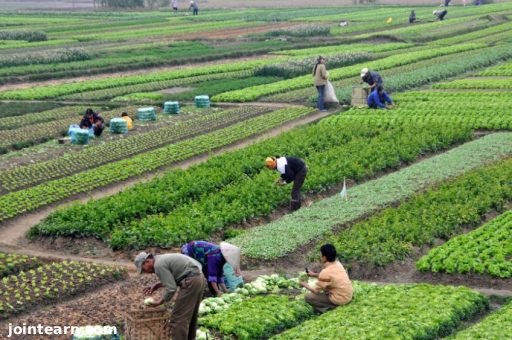
The Federal Government has announced plans to make large-scale investments across the agricultural value chain, focusing on land management, mechanisation, irrigation, farm inputs, processing, and logistics. The initiative aims to reposition agriculture as a key driver of economic growth, job creation, and private sector investment.
Minister of Agriculture and Food Security, Senator Abubakar Kyari, revealed the strategy on Tuesday in Abuja during the Ministerial Sectoral Retreat of the Federal Ministry of Agriculture and Food Security. The retreat brought together senior officials to outline strategies for transitioning Nigeria from subsistence farming to a commercially viable, investment-led agricultural economy.
Kyari highlighted mechanisation partnerships with international equipment manufacturers from Belarus, Brazil, and global firms such as John Deere and Origin. These collaborations aim to address Nigeria’s long-standing tractorisation gap, reduce production costs, increase yields, and attract private capital into farming and agro-processing.
The government is also expanding Public-Private Partnerships (PPPs) through the creation of Special Agro-Industrial Processing Zones, Agro-Industrial Estates, Agro-Processing Centres, and Cottage Processing Mills nationwide. “These facilities are designed to boost value addition, reduce post-harvest losses, and deepen agro-industrial activities across the country,” Kyari said.
He underscored agriculture’s strategic importance for economic stability, foreign exchange conservation, and national sovereignty, noting that food sufficiency is now a top national priority. President Bola Tinubu had earlier declared a state of emergency in agriculture, elevating food and water security to the highest level of government attention.
To stabilize markets and reduce price volatility, the ministry is implementing a National Food Reserve Programme to purchase excess produce during peak seasons, ensuring a steady supply and predictable pricing for farmers and consumers. Complementary initiatives include Commodity Market Hubs, Farmers’ Markets, and Rural and Cooperative Markets to improve farmers’ access to profitable outlets.
The ministers also stressed programs targeting youth and women in agribusiness as vital to harnessing Nigeria’s demographic dividend and stimulating rural economies.
Minister of State for Agriculture and Food Security, Senator Aliyu Abdullahi Sabi, said the ministry is being restructured to support private sector participation, data-driven decision-making, and performance management. New departments—including Agricultural Mechanisation, Agricultural Data and Analytics, Agricultural ICT, Horticulture, Plant Health, and Development Partners Projects—are designed to sharpen focus and improve efficiency.
The ministry is strengthening financing windows through the Bank of Agriculture and the National Agricultural Development Fund to support farmers, processors, and agribusiness investors. Improved coordination of agricultural inputs such as fertilisers, agrochemicals, and certified seeds has already led to a 30% reduction in commodity prices, according to Sabi.
Both ministers emphasized that agriculture is being repositioned not merely as a social intervention, but as a competitive sector capable of driving GDP growth, export expansion, rural industrialization, and poverty reduction. They stressed the need to integrate research, innovation, industry, and policy to convert food systems into economic empowerment and sustainable livelihoods.
The retreat aims to produce actionable plans to accelerate implementation, ensure accountability, and consolidate agriculture as a cornerstone of Nigeria’s economic diversification agenda.


Leave a Reply