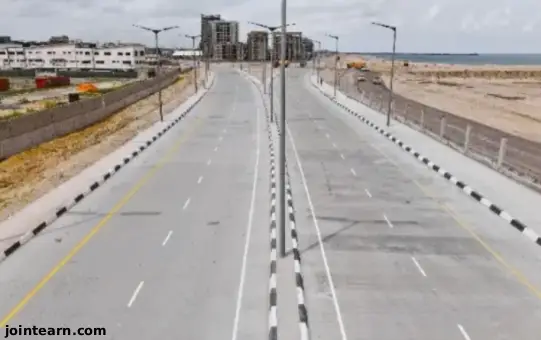
The Federal Government has temporarily opened Section 1 of the Lagos-Calabar Coastal Highway, a crucial infrastructure project aimed at easing the transportation burden along Nigeria’s southern coast. This section, which spans 47 kilometers, stretches from the Ahmadu Bello Way junction to the Eleko village junction in Lagos State.
The announcement was made by the Minister of Works, Dave Umahi, during a special event in Lagos, attended by government officials, traditional rulers, and other key stakeholders. The opening of this section of the highway is expected to bring significant relief to commuters, especially those traveling along the congested Lekki-Ajah corridor, which has long been notorious for heavy traffic.
Key Highlights:
- Section 1 of the highway, now open, offers a smooth driving experience for road users, fulfilling the government’s promise to ease traffic congestion in the Lekki-Ajah corridor.
- The Minister confirmed that the Federal Government had met its commitment to opening Section 1 between December 12 and 17, 2025, with April 2026 set for the full completion of Section 1.
- The Lagos-Calabar Coastal Highway is an ambitious project that will span nine coastal states and cover about 700 kilometers, connecting Lagos and Cross River State. The road is expected to pass through Edo, Delta, Rivers, Akwa Ibom, Ondo, Bayelsa, and Ogun states.
Construction Timeline & Costs:
- The project was approved by the Federal Executive Council (FEC) in February 2024, and construction began on the Lagos axis shortly after.
- President Bola Tinubu officially launched the multimillion-naira project in May 2024, which is set to cost ₦4 billion per kilometer.
- The project has faced scrutiny over its high cost, but Umahi emphasized that it will be completed within eight years.
Future Impacts:
- The Lagos-Calabar Coastal Highway is expected to be a transformative project that enhances regional connectivity and economic integration along Nigeria’s southern coast.
- The full completion of the highway is anticipated to improve trade and travel, reduce transportation costs, and promote economic development in the coastal states.
With this development, the Federal Government continues to focus on expanding critical infrastructure to foster socio-economic growth and alleviate transportation challenges across the nation.


Leave a Reply