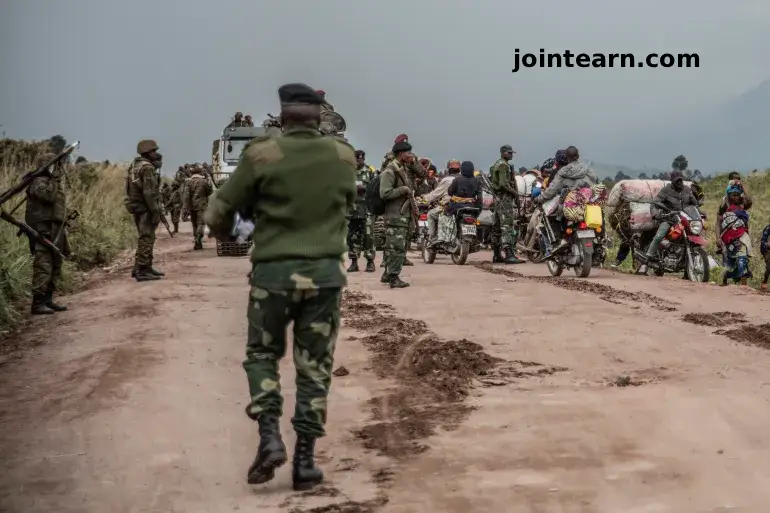
Democratic Republic of the Congo, December 5, 2025 – Renewed fighting broke out in eastern DR Congo between the M23 rebel group and government forces just a day after a high-profile peace deal was signed in Washington D.C., aimed at ending decades of conflict in the resource-rich region.
The clashes erupted despite the presence of US-brokered agreements intended to stabilize the area, highlighting the fragility of the peace process. Both sides blamed each other for the flare-ups, with M23 claiming that 23 people were killed and numerous others injured in bombardments by Congolese forces.
Rebel Claims and Military Clashes
M23 spokesperson Lawrence Kanyuka reported that government forces and allies attacked “densely populated areas in North Kivu and South Kivu using fighter jets, drones, and heavy artillery.” The group also alleged that two bombs originating from Burundi struck near Kamanyola town, resulting in four deaths and two serious injuries.
Earlier this year, the Rwandan-backed M23 seized the eastern cities of Goma and Bukavu, and the group is not legally bound by the recent US peace agreement. A senior rebel official, speaking on condition of anonymity, confirmed that M23 had retaken the town of Luberika and shot down a Congolese army drone.
The DRC army confirmed that clashes continued along the Kaziba, Katogota, and Rurambo axis in South Kivu, causing population displacement in Luvungi. The army accused the Rwandan Defence Force of indiscriminate bombardment. Rwanda’s officials did not immediately comment.
Peace Deal and Diplomatic Context
The renewed violence occurred just a day after DRC President Felix Tshisekedi and Rwandan President Paul Kagame met in Washington to reaffirm commitments to the US-brokered peace deal signed in June. The agreement was designed to stabilize eastern Congo and attract Western investment in mining operations.
US President Donald Trump, who hosted the ceremony, described the deal as an effort to “settle a war that’s been going on for decades.” Analysts note that while US diplomacy has temporarily slowed escalations, the agreement has yet to address the root causes of the conflict, and commitments by both DRC and Rwanda remain unfulfilled.
Humanitarian Impact
The recent clashes prompted a mass displacement of civilians, with more than 700 Congolese nationals, primarily women and children, fleeing to Rwanda. Local authorities in Rusizi district reported that the refugees were being temporarily housed in transit centers and provided with basic supplies, including food and bedding.
Footage circulated on social media shows families moving along the Bugarama-Kamanyola border, carrying belongings and livestock. Between July and October 2025, over 123,600 people were displaced in the DRC due to armed clashes, land conflicts, and natural hazards, according to the United Nations Office for the Coordination of Humanitarian Affairs (OCHA).
Ongoing Challenges
The renewed fighting underscores the challenges in implementing peace in eastern DRC. Analysts warn that without genuine enforcement mechanisms and accountability for armed groups, cycles of violence will likely continue. The M23 rebellion remains a significant threat to stability, while government forces struggle to assert control over remote provinces.
Humanitarian agencies continue to monitor the crisis closely, urging urgent action to protect civilians, provide aid, and reinforce commitments to lasting peace in the region.


Leave a Reply