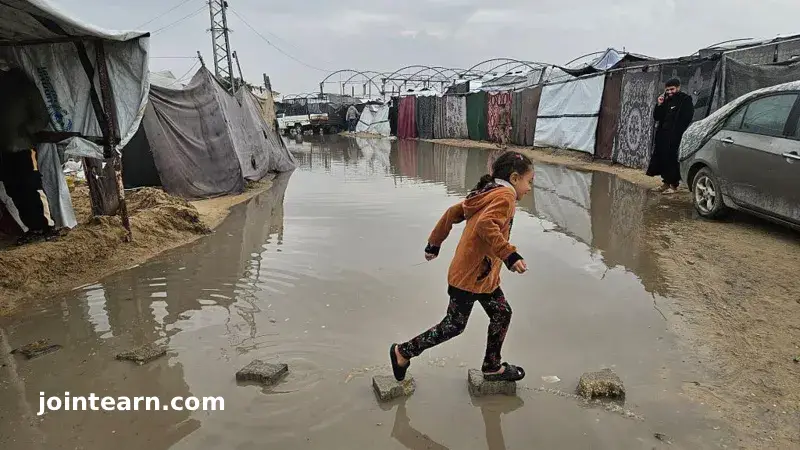
Heavy winter storms have swept through the Gaza Strip, putting more than 800,000 people at risk of flooding, according to the UN. Camps for displaced Palestinians have been deluged, and some buildings have collapsed, worsening living conditions for families still waiting for reconstruction after the war.
“Here we are, living a life of humiliation. We want caravans. We want our homes rebuilt. We long for concrete to keep us warm,” said Ghadir al-Adham, a displaced mother of six in Gaza City.
Stalled Peace Plan
Two months into an American-brokered ceasefire under Donald Trump’s peace plan, Gaza remains in the first phase: territory is divided, people remain displaced, and rubble surrounds many homes.
Plans for new housing and governance are frozen while searches continue for Israel’s last remaining hostage, Ran Gvili, captured during the October 2023 Hamas attacks. Israel insists that all hostages must be returned before moving to the next stage.
Gvili’s parents, Talik and Itzik, remain hopeful but frustrated:
“They stole our kid, they stole him. They know where he is. They just try to hide or keep him,” said his father.
Hamas denies holding back information, accusing Israel of avoiding the agreement.
Challenges to Progress
Both sides face major concessions in the next stage:
- Hamas would have to hand over weapons and some power.
- Israel would need to withdraw forces further and allow an international stabilization force.
Retired Israeli General Israel Ziv notes that both sides are hesitant:
“Hamas doesn’t want to lose control, and the Israeli side… prefers to stay in Gaza, as nobody wants to explain to their base that they have to withdraw.”
Time is considered critical, as Hamas is reorganizing and regaining strength, and delays risk undermining the plan’s effectiveness.
US Push for Progress
President Donald Trump has expressed eagerness to move the process forward, announcing plans for a Board of Peace for Gaza to be created next year.
Meanwhile, Israel is reportedly beginning rubble clearance and temporary housing projects in Israeli-held areas like Rafah. These shelters could house tens of thousands of Gazans willing to submit to Israeli security checks, though many refuse to live under Israeli control.
The floods highlight the humanitarian urgency, while political and security hurdles continue to stall progress in the second stage of the peace plan.


Leave a Reply