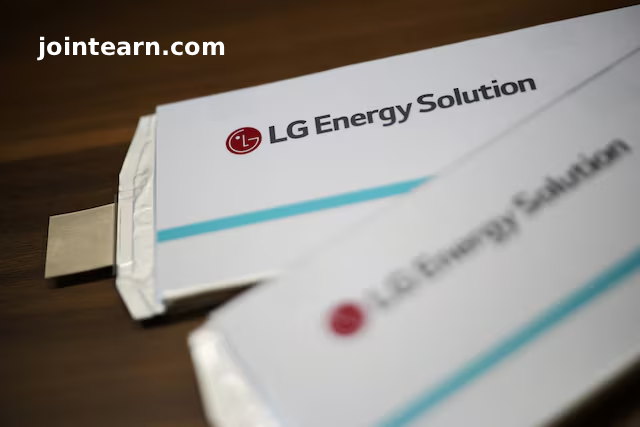
Ford Motor Company has terminated its electric vehicle (EV) battery supply agreement with South Korea’s LG Energy Solution (LGES), a deal valued at approximately $6.5 billion (9.6 trillion won), following shifts in production plans and EV demand outlook.
LG Energy Solution confirmed the termination in a regulatory filing, stating that the notice came after Ford decided to halt production of certain EV models due to evolving policy changes and market conditions.
Background on the Deal
The original agreement, signed in October 2024, involved LGES supplying batteries for Ford’s EV models in Europe, starting in 2026 and 2027. The cancellation represents a significant setback for LGES, one of the world’s leading EV battery manufacturers, and highlights the challenges automakers face in the rapidly evolving EV sector.
Ford announced that it would take a $19.5 billion writedown and discontinue several EV models, citing weakening EV demand and changing U.S. policies as key factors influencing its decision.
Industry-Wide Implications
The termination of the LGES deal follows a similar move by South Korea’s SK On, which ended its joint venture with Ford for battery production in the United States. SK On and Ford had invested $11.4 billion in U.S.-based battery factories in 2022, underscoring the scale of investment being affected by shifts in the EV market.
Analysts suggest that the retreat from EV models reflects broader challenges in the auto industry, including:
- Changing government policies and incentives affecting EV adoption.
- Slower-than-expected consumer demand for electric vehicles.
- High production and raw material costs for battery manufacturing.
Impact on LG Energy Solution
LGES has indicated it will take steps to protect intellectual property and mitigate potential losses from the deal cancellation. While the termination is a blow, the company continues to explore partnerships and battery supply agreements in Europe, North America, and Asia to capitalize on long-term EV growth trends.
Outlook for Ford
Ford’s withdrawal from certain EV models reflects a strategic recalibration in response to market pressures. While the company remains committed to electrification, it appears to be prioritizing profitability and operational efficiency over aggressive expansion in EV production in the near term.
Industry experts note that automakers must carefully balance consumer demand, regulatory changes, and supply chain investments to succeed in the competitive EV market.


Leave a Reply