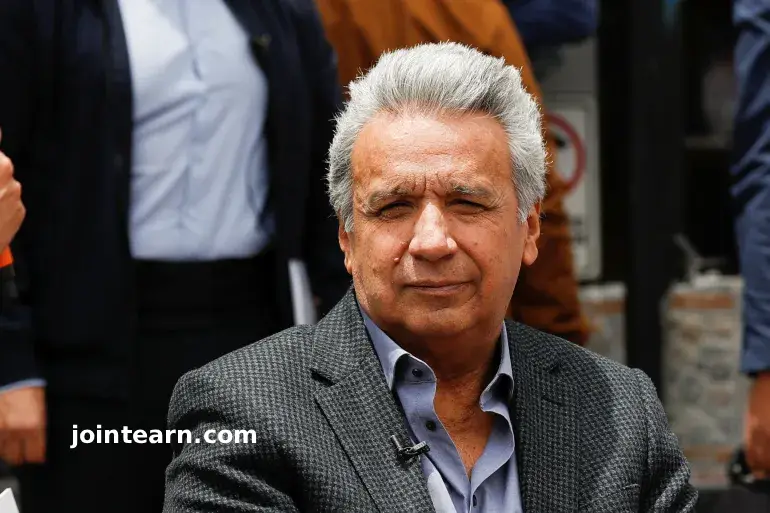
Former Ecuadorian President Lenin Moreno, who served from 2017 to 2021, will face trial over allegations of bribery connected to the construction of the Coca Codo Sinclair hydroelectric power plant, the largest in the country. The decision to proceed with the trial was announced Monday by Judge Olavo Hernandez, who ruled that the prosecution’s case could move forward.
“This judge resolves to bring citizen Lenin Moreno to trial as the direct perpetrator of the crime of bribery,” Hernandez stated.
Moreno has denied any wrongdoing and currently resides in Paraguay. In a social media video addressing the charges, he said:
“I have presented all the evidence to the attorney general’s office, and they have not been able to prove that I received a single cent. Let’s not allow such a great injustice to be committed.”
Background: The Coca Codo Sinclair Bribery Allegations
The bribery case stems from a years-long investigation into whether Moreno improperly favored the Chinese construction company Sinohydro in the development of the Coca Codo Sinclair hydroelectric project.
According to prosecutors, the alleged illicit actions date back to Moreno’s tenure as vice president from 2007 to 2013. Moreno is accused of leveraging his influence to ensure Sinohydro secured government contracts for the project, which began operations in 2016. In return, the company allegedly provided bribes totaling approximately $76 million between 2009 and 2018.
Former Ecuadorian Attorney General Diana Salazar claimed that Moreno’s family had business connections to Sinohydro and helped establish a corruption network with “interstate and transnational reach.” The network allegedly used false consulting and representation services, channeling bribes through gifts, checks, and transfers.
Controversy Over Project Funding and Construction
The Coca Codo Sinclair plant has faced scrutiny since its inception. Ecuador borrowed nearly $19 billion from China to finance Coca Codo Sinclair and other infrastructure projects, a significant sum for a country whose GDP in 2024 was approximately $124.7 billion, according to the World Bank.
Technical problems have also plagued the plant, including structural cracks, raising further concerns about oversight and project integrity.
Political Context: Moreno and “Correismo”
Moreno initially rose to prominence as vice president under left-wing leader Rafael Correa, the founder of Ecuador’s PAIS Alliance and the pro-Correa political movement known as “correismo.” Moreno succeeded Correa as president in 2017 after Correa was barred by law from running for a fourth term.
However, Moreno’s administration soon pursued center-right economic reforms, deviating from Correa’s platform and sparking tension between the two former allies. Moreno has described the bribery investigation as politically motivated persecution orchestrated by Correa loyalists.
“I am the victim of terrible persecution,” Moreno stated, attributing the charges to forces aligned with correismo.
Legal Proceedings Ahead
The case against Moreno highlights broader concerns over corruption in Latin American infrastructure projects, especially those involving significant foreign investment. The trial is expected to draw regional attention given Moreno’s status as a former head of state and the ongoing scrutiny of Sinohydro’s involvement in Latin American projects.
The upcoming proceedings will determine whether Moreno will face criminal penalties for the alleged bribery scheme, potentially reshaping Ecuador’s political landscape and accountability measures for public officials involved in high-value contracts.


Leave a Reply