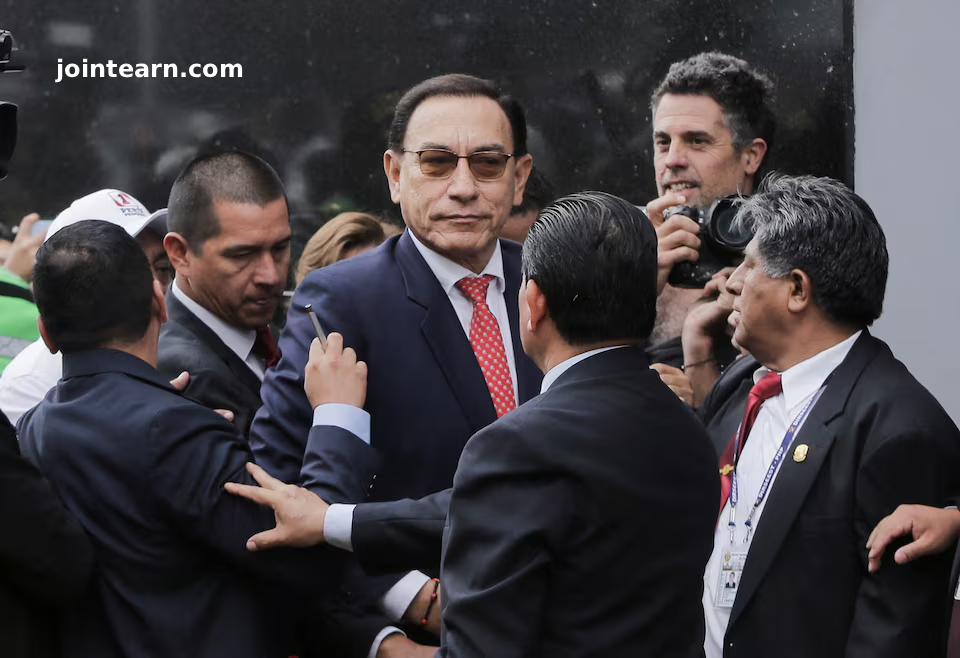
LIMA, Peru – In a landmark ruling that has drawn international attention, a Peruvian court has sentenced former President Martin Vizcarra to 14 years in prison for corruption. The verdict, delivered on Wednesday, confirmed that Vizcarra accepted bribes during his tenure as governor of the southern Moquegua region, long before assuming the presidency in 2018. This sentencing adds Vizcarra to a growing list of former Peruvian leaders jailed for graft, reflecting the country’s ongoing struggle with political corruption.
Bribes During Governorship
According to the court’s findings, Martin Vizcarra received bribes totaling $676,000 from construction companies in exchange for awarding public works contracts between 2011 and 2014. These projects were part of his responsibilities as governor of Moquegua, a key southern region in Peru. The accusations date back several years, demonstrating that corruption cases often span long periods before reaching judicial conclusions.
Throughout the trial, which began in October 2024, Vizcarra consistently denied all charges, claiming the legal process was politically motivated. He maintained that he was a victim of political persecution, asserting that the judicial actions were designed to tarnish his reputation. Despite his defense, the court ruled against him, citing credible evidence from multiple witnesses and documentation from the construction projects.
Political Fallout and Public Response
Vizcarra, who took office as president in 2018 following the resignation of his predecessor, was himself removed from power two years later by Congress amid graft investigations. Reacting to his sentencing, he wrote on social media platform X:
“This is not justice, it is revenge. But they will not break me.”
The ruling also includes a nine-year ban from holding public office, further limiting Vizcarra’s political career. His legal team has confirmed that it will appeal the decision, keeping the case alive in Peru’s judicial system.
Meanwhile, Vizcarra’s family remains active in politics. His older brother, Mario Vizcarra, intends to run in the April 2026 presidential elections under the “Peru First” party. Martin Vizcarra has reportedly served as a key adviser to his brother’s campaign, indicating that the former president’s influence continues despite his incarceration.
Historical and Regional Context
Vizcarra’s conviction is part of a broader crackdown on corruption tied to the Lava Jato scandal, a massive international investigation into kickbacks and bribery orchestrated by Brazilian construction giant Odebrecht (now Novonor). The scandal has implicated numerous political leaders across Latin America, including Peru, Brazil, and other neighboring countries.
Peru has faced persistent political instability, having cycled through six presidents since 2018, largely due to impeachments, resignations, and corruption scandals. Previous leaders such as Alejandro Toledo, Ollanta Humala, and Pedro Castillo have all faced prison sentences or legal proceedings, reflecting systemic issues in the country’s governance.
Legal Defense and Controversies
Vizcarra’s lawyer, Erwin Siccha, argued that the trial relied heavily on testimony from executives of companies previously denounced by Vizcarra for corruption. Siccha claimed that the prosecution’s approach represented biased evidence, though the court ultimately found the arguments insufficient to overturn the charges.
Authorities have indicated that Vizcarra will be transferred to a Lima prison, joining other former presidents who are serving sentences for corruption and related offenses. This high-profile case underscores the Peruvian justice system’s commitment to pursuing accountability at the highest levels of government, even as political tensions continue to simmer.
Conclusion
The sentencing of former President Martin Vizcarra highlights the ongoing challenges of governance and accountability in Peru. With a 14-year prison sentence and a nine-year ban from public office, Vizcarra’s political career appears effectively halted. Yet, with his family remaining active in politics and an appeal underway, the story of one of Peru’s most controversial modern leaders is far from over.


Leave a Reply