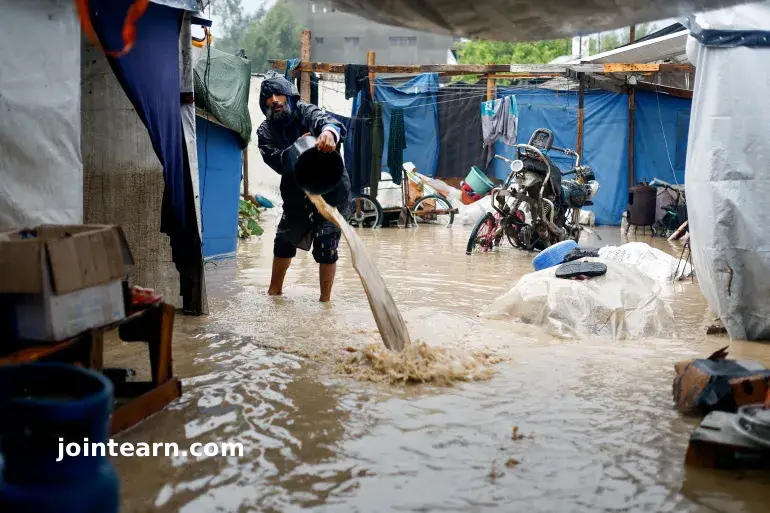
Storm Byron has battered the Gaza Strip, claiming at least 14 lives and injuring numerous others, as torrential rain, strong winds, and collapsing structures devastate communities already displaced by Israel’s recent military offensive. The Gaza Ministry of Interior and National Security confirmed the fatalities, which include children and newborns, highlighting the vulnerability of civilians living in makeshift shelters.
Collapsing Homes and Fatalities
The Ministry reported that five people were killed overnight in Bir an-Naaja, northern Gaza, after a house sheltering displaced families collapsed. Additional fatalities occurred when walls fell onto tents in Gaza City’s Remal neighborhood and in the Shati refugee camp, while infants succumbed to freezing temperatures in al-Mawasi and Khan Younis.
Medical staff at al-Shifa Hospital reported alarming deaths from exposure to cold and structural collapses. Among the victims were nine-year-old Hadeel al-Masri and baby Taim al-Khawaja, highlighting the severe impact of the storm on children. Families displaced by Israeli airstrikes have been forced into roofless, damaged buildings, making them particularly susceptible to extreme weather.
One grandfather recounted the death of his eight-month-old grandson Rahaf Abu Jazar in Khan Younis after rain flooded their temporary tent. “His temperature remained dangerously low, affecting all his organs. His brain began to deteriorate, and that was the end,” he said.
Widespread Damage and Humanitarian Crisis
Al Jazeera reporters in Gaza describe Storm Byron as turning fragile shelters into deadly traps. Ibrahim al-Khalili reported from al-Mawasi in southern Gaza that heavy rain, floods, and hail threaten nearly 850,000 people, many of them children, across 761 emergency shelters.
Coastal erosion has also worsened conditions, with shoreline collapses endangering tents pitched just meters from the sea. “Families have nowhere to go. The tents are collapsing; the cold is unbearable. This is a new wave of displacement even after the war has stopped,” Al-Khalili said.
Hind Khoudary from Gaza City reported that at least 10 homes have collapsed in the past 24 hours, with more at risk. Many civilians remain in damaged buildings due to the lack of tents, tarpaulins, or alternative shelter, as Israel continues to block winterization and emergency aid supplies.
Rescue Efforts Amid Severe Constraints
Civil defence and police teams, despite having limited equipment and fuel, have conducted ongoing rescue operations. The Ministry of Interior received more than 4,300 distress calls since the storm began and reported at least 12 collapses of homes previously damaged by Israeli airstrikes. Emergency teams have retrieved bodies and rescued injured children, but thousands remain at risk beneath collapsed structures.
The Ministry called on the international community to pressure Israel to allow critical aid, including shelter materials, into Gaza. “What is happening now is a wake-up call for everyone to face up to their responsibilities,” the Ministry stated.
Hamas Statement and Ongoing Humanitarian Disaster
Hamas spokesperson Hazem Qassem described the storm-related deaths as a continuation of the “war of extermination” that Israel’s military campaign has inflicted on Gaza. He emphasized that collapsing homes, flooded tents, and exposure to the cold demonstrate the catastrophic conditions left in the wake of the bombardment.
“The children drowning in flooded tents show that the war of extermination continues, albeit with changed tactics,” Qassem said, calling for urgent international action to halt the humanitarian crisis and provide adequate shelter materials. He criticized existing aid supplies as insufficient to protect families from rain, flooding, and freezing temperatures.
Broader Implications
Storm Byron underscores the compounded vulnerability of Gaza’s population, already suffering from the effects of repeated Israeli military assaults. Experts warn that without immediate international intervention and unrestricted access to humanitarian aid, additional deaths and displacement are inevitable.
The storm’s impact highlights the urgent need for comprehensive relief efforts and long-term solutions to address the ongoing humanitarian crisis in Gaza, including infrastructure repair, adequate shelter, and protection of civilian lives in accordance with international law.


Leave a Reply