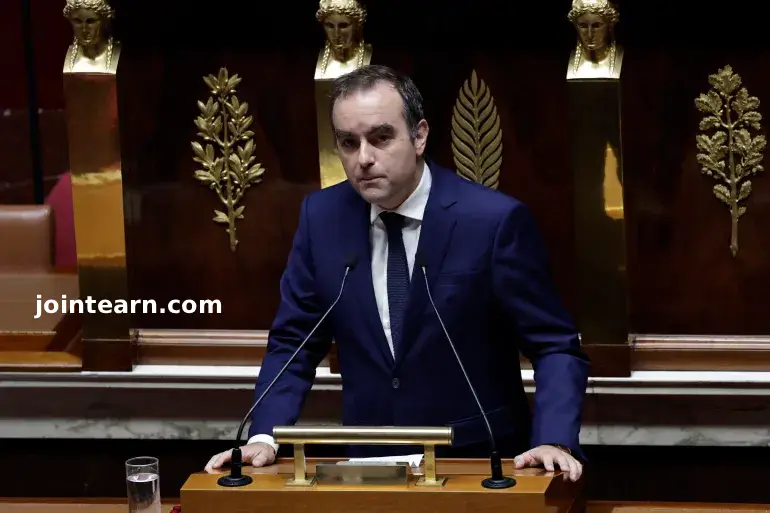
Paris, France – January 14, 2026 – French Prime Minister Sebastien Lecornu successfully survived two no-confidence votes in the National Assembly on Wednesday, allowing the government to focus on upcoming debates over the country’s 2026 budget. The motions, tabled by far-left France Unbowed (LFI) and far-right National Rally (RN), targeted the government’s support for the European Union-MERCOSUR trade agreement, a deal seen by opponents as compromising French interests.
No-Confidence Motions Sparked by MERCOSUR Deal
The European Union recently approved a long-debated trade pact with the Southern Common Market (MERCOSUR), which includes Argentina, Bolivia, Brazil, Paraguay, and Uruguay.
LFI and RN lawmakers argued that the deal humiliates France internationally and favors corporate interests over domestic concerns, especially for farmers and small businesses. Mathilde Panot, chief LFI lawmaker, criticized the government in parliament:
“Inside the country, you are a government of vassals serving the rich. Outside, you are humiliating our nation before the European Commission and the US empire.”
Despite the criticisms, neither motion garnered enough votes to pass. The LFI-led motion received 256 votes, falling 32 short of the required majority, while the RN-backed motion received 142 votes, also failing.
Political Reactions and Support
Key parties refused to support the motions:
- The Socialist Party declined to back the no-confidence votes
- The conservative Republicans also abstained, choosing not to challenge the government over MERCOSUR
Prime Minister Lecornu responded to the attempts, emphasizing that the motions distract from critical budget debates:
“You are acting like snipers lying in wait, firing into the executive’s back at the very moment when we must confront international disruptions.”
Government spokeswoman Maud Bregeon added that all options remain open to ensure the passage of the 2026 finance bill.
Upcoming Budget Showdown
Following the failed no-confidence votes, attention now turns to France’s 2026 budget, which faces ongoing challenges due to a hung parliament resulting from President Macron’s snap election in 2024.
Sources within the government noted that Lecornu could invoke Article 49.3 of the French Constitution, allowing the budget to pass without a parliamentary vote, though this could potentially trigger additional motions of no-confidence.
France has struggled to reduce its budget deficit, currently near 5 percent, and political instability has slowed progress. Since the 2024 election, three governments have fallen due to budget disputes, including former Prime Minister Michel Barnier, who lost a confidence vote over his finance bill.
MERCOSUR Deal Controversy
The EU-MERCOSUR trade agreement, decades in the making, aims to expand trade between Europe and South America, including agricultural products, industrial goods, and services. Critics in France argue the pact could undermine domestic agriculture, while proponents insist it will strengthen economic ties and foster investment.
The government maintains that it will continue negotiations with all parliamentary groups except LFI and RN to secure approval for the budget, ensuring economic stability while managing public discontent.
Key Takeaways
- French government survives two no-confidence votes over EU-MERCOSUR trade deal
- Far-left LFI and far-right RN opposed the pact, citing national and economic concerns
- Budget debates remain critical, with potential use of Article 49.3 to bypass parliamentary approval
- France continues to navigate political instability after Macron’s 2024 snap election


Leave a Reply