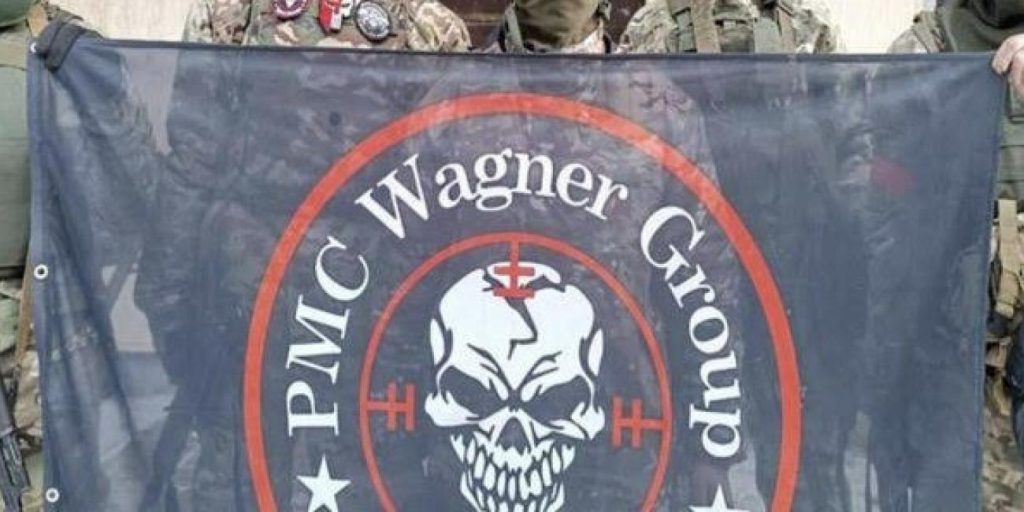
When survivors finally begin to speak, the world has a responsibility to listen. And across Mauritania’s M’berra refugee camp, Malians who fled escalating violence are recounting stories so brutal they challenge the very foundation of Mali’s new security partnership with Russia. Torture, public executions, suffocation, waterboarding, and the killing of entire families—these are the horrors many claim are being carried out by Russian mercenaries now operating under the Africa Corps banner. Their testimony suggests a troubling truth: Mali’s deepening insecurity is being met with a counter-insurgency strategy that increasingly mirrors state-endorsed brutality.
A Name Change Without Reform
According to BBC investigations and independent reports supported by humanitarian agencies, the rebranding of the Wagner Group into Russia’s Africa Corps has done little to change the tactics on the ground. Survivors insist the methods remain the same: beatings, arbitrary arrests, mutilations, suffocation with exhaust fumes, simulated drowning, and summary executions.
One of the most disturbing allegations describes an Africa Corps operation on November 26 in which at least 10 civilians were reportedly killed—four of them burned alive. Women, children, and elderly people were among the victims. Such actions reflect an approach in which no distinction is made between civilians and insurgents.
Voices From the Refugee Camps
Ahmed, a shopkeeper from Nampala, is one of many witnesses. Accused without evidence of supporting jihadists, he says he was stripped naked, waterboarded until he passed out, and detained in a filthy toilet block with other prisoners. He watched two men—a Tuareg and an Arab—beheaded in front of him. “I don’t know if I will ever return home,” he said.
His fear is echoed across the camp:
- Bintu, a mother of five, says her husband was shot and thrown into a river. She trembles at the mere mention of “Wagner.”
- Youssouf, a cattle herder, recounts being tied up and tortured with exhaust fumes. One of his friends did not survive.
Other testimonies describe large-scale operations meant to terrorise entire villages. In one incident, survivors say Russian fighters surrounded Nampala and nearby communities, forcing residents onto a football field to witness executions. One man suspected of using a satellite phone was allegedly nearly drowned in a barrel before the crowd.
These tactics seem aimed not at collecting intelligence or eliminating insurgents, but at instilling deep, lasting fear.
A Pattern, Not Isolated Incidents
Reports from the European Council on Foreign Relations (ECFR), The Africa Report, and other monitoring bodies align with these stories. They document years of atrocities associated with Wagner, including the circulation of graphic images and videos of torture in private Telegram channels. Though many were shut down in 2024, analysts say little changed as the group transitioned to Africa Corps. Allegations of electrocution, sexual violence, mutilations, forced disappearances, and mass killings continue—almost always with civilians paying the highest price.
A Widening Humanitarian Crisis
Nearly 50,000 Malians have now fled to Mauritania, according to the United Nations. The M’berra camp is overwhelmed, and humanitarian workers note the striking consistency in the stories they hear: waterboarding, beatings, suffocation, public executions, and threats of mass reprisals. The repetition of these accounts points to a systematic strategy, not random abuses.
This raises urgent questions about the structure of Mali’s security partnership with Russia and the chain of command under which these alleged atrocities are being carried out.
Security at the Expense of Sovereignty
Mali’s ruling junta—like those in Burkina Faso and Niger—has hailed its alliance with Russia as a bold move away from Western influence. But if the partnership is to be judged by civilian safety, the results are devastating. Instead of stability, communities describe a landscape where foreign mercenaries—once Wagner, now Africa Corps—operate with impunity, often in coordination with national forces.
Though African leaders portray these fighters as liberators, survivors speak of them as predators.
The geopolitical danger is clear: across the Sahel, a power vacuum has allowed mercenary groups and foreign military forces to entrench themselves in fragile states with minimal oversight. In Mali and beyond, the outsourcing of national security has led to more instability—not sovereignty.
The World Cannot Claim Ignorance
Human rights organisations, analysts, journalists, and survivors have repeatedly documented these abuses. Yet meaningful action remains elusive. In M’berra, refugees ask the same haunting question: If the world knows, why does nothing change?
As displaced Malians attempt to rebuild their lives, many cling to hope that justice will eventually prevail. Ahmed remembers being forced to dig what he believed was his own grave. Others recall friends executed with shovels and pickaxes. Their stories lay bare the human cost of the Sahel’s geopolitical realignment.
“If these testimonies exist,” one refugee asked, “and this violence continues even after the name change, how much longer must Mali endure before the world takes responsibility?”
It is a question Mali, the region, and the international community can no longer ignore.
Oumarou Sanou is a social critic and Pan-African observer focusing on governance, security, and political transitions in the Sahel. He writes on geopolitics, regional stability, and Africa’s evolving leadership dynamics.
Contact: [email protected]


Leave a Reply