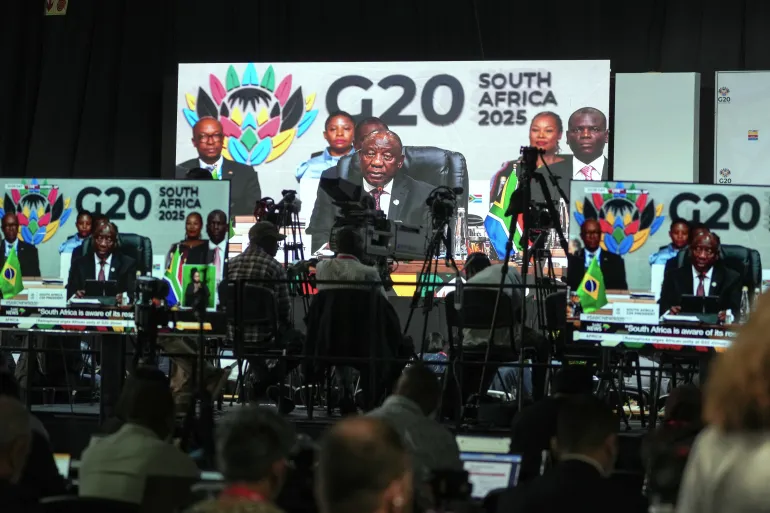
The G20 summit in Johannesburg, South Africa, concluded over the weekend without delivering meaningful solutions to the growing sovereign debt crisis in developing countries, despite record-high borrowing levels and rising economic pressure across the Global South.
Record Debt Levels in Developing Countries
According to the Institute of International Finance, total debt in developing nations reached a record $109 trillion by mid-2025, driven by COVID-19 relief, climate shocks, and rising food prices. Many African countries now spend more on servicing debt than on healthcare, while regional borrowing costs remain high—averaging 6.8% in Latin America and 9.8% in Africa in 2023.
Africa alone requires $143 billion annually in climate finance to meet Paris Agreement targets but received only $44 billion in 2022, while spending nearly $90 billion on debt repayment in 2024.
South Africa’s Push and G20 Inaction
South African President Cyril Ramaphosa emphasized debt relief as a central theme of the summit, warning that escalating repayment costs restrict governments’ ability to fund essential services like education and healthcare.
“While this year’s G20 has been put forward as an ‘African G20’, there is no evidence that any progress has been made on the debt crisis facing Africa and many other countries worldwide during the South African presidency,” said 165 global charities in a pre-summit letter.
Despite pledges in the summit declaration to “strengthen the implementation of the G20 Common Framework,” the meeting produced no concrete measures for easing fiscal constraints in indebted nations. US President Donald Trump skipped the summit, further diminishing the potential for multilateral action.
Flaws in Existing Debt Frameworks
The Common Framework, launched by the G20 five years ago, was designed to coordinate debt restructuring among all creditors, including the Paris Club, China, and private lenders. Yet the process has been slow and ineffective:
- Countries like Ethiopia, Zambia, Ghana, and Chad have yet to complete restructuring deals.
- Only 7% of debt costs for these nations have been relieved.
Experts argue that current frameworks favor Western creditors and are poorly suited to address rising debt vulnerabilities.
Calls for New Global Mechanisms
Civil society organizations and expert panels have proposed reforms, including:
- An IMF-backed special debt fund
- Creation of a debtors’ club for low-income nations
- Development of a neutral, international debt restructuring body
“Debt is now costlier and harder to resolve,” said Iolanda Fresnillo of Eurodad. “Protracted debt crises slow growth by squeezing public investment.”
UNCTAD head Rebeca Grynspan echoed the call, noting the lack of a permanent institution to manage debt restructuring, suggesting that new momentum is needed for global cooperation.
A Growing Global Challenge
Between 2020 and 2025, nearly 40% of external public debt repayments from low-income countries went to commercial lenders, while China emerged as the largest single creditor with over $472 billion lent via policy banks.
Experts warn that without independent mechanisms and international standards for debt relief and taxation, developing countries will remain trapped in cycles of debt, unable to invest in infrastructure, healthcare, or climate resilience.


Leave a Reply