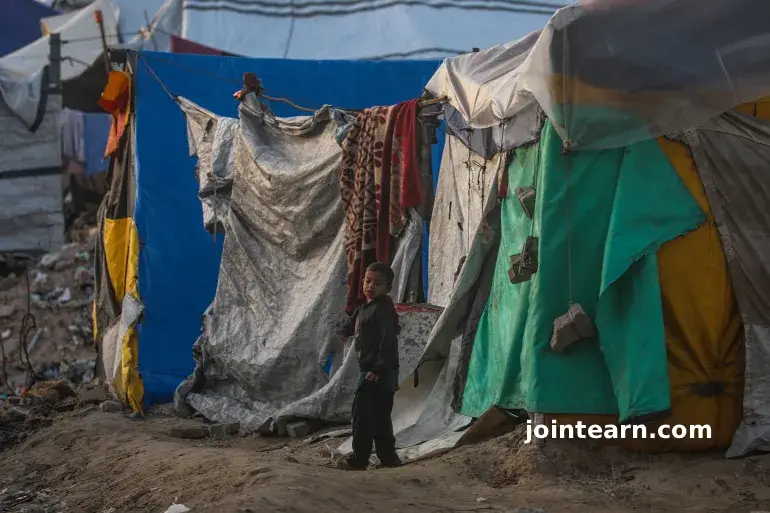
Humanitarian conditions in the Gaza Strip have reached a critical point as displaced Palestinian families struggle to survive in freezing winter temperatures. Doctors Without Borders (Médecins Sans Frontières, MSF) has reported that babies in Gaza are “suffering from severe cold” due to the lack of adequate shelter, as Israel continues to restrict the delivery of essential aid supplies.
Dire Conditions for Displaced Palestinians
Since the start of the Israel-Hamas conflict in October 2023, nearly 1.9 million people—approximately 90% of Gaza’s population—have been displaced, according to the United Nations. Many families now live in makeshift shelters or temporary tents, exposed to torrential rain, heavy winds, and freezing temperatures.
MSF and other aid organizations have repeatedly warned that the ongoing lack of shelter supplies is causing serious health problems, including respiratory infections, skin diseases, and other preventable conditions. Babies and young children are among the most vulnerable, facing life-threatening risks due to exposure to the cold.
“People are living in extremely unsafe conditions, with little protection from the harsh winter,” MSF stated in a social media post. “At the same time, Israel continues to block or delay critical aid deliveries such as tents, tarpaulins, and temporary housing units.”
Israeli Restrictions on Aid
Israel’s strict limitations on humanitarian assistance to Gaza have been a major barrier to relief efforts. Legal experts argue that these restrictions violate Israel’s obligations under international law as the occupying power in the Gaza Strip, which requires providing for the welfare of the civilian population under its control.
The restrictions also contravene a United States-brokered ceasefire agreement, effective since October 2023, which stipulated that 600 aid trucks must be allowed into Gaza daily. Despite repeated international pressure, Israel has continued to impede aid deliveries while also tightening operational restrictions on humanitarian organizations.
Recently, Israel revoked the operating licenses of 37 aid groups, including MSF and the Norwegian Refugee Council, citing new regulations that require organizations to provide extensive details about staff, funding, and operations. MSF condemned the move as “a cynical attempt to prevent organizations from providing services in Palestine” and a violation of international humanitarian law.
Humanitarian and Health Crisis
The harsh winter conditions combined with destroyed infrastructure have exacerbated the humanitarian crisis in Gaza. Hundreds of thousands of families are forced to live in poorly equipped tents or temporary shelters, with limited access to clean water, food, and medical care.
The Palestinian Health Ministry reports that Israeli military operations have continued even after the ceasefire, resulting in at least 424 deaths and 1,199 injuries since October 11, 2025. This ongoing violence, combined with the aid blockade, has created severe challenges for humanitarian workers trying to provide emergency services to the affected population.
Global Condemnation and Calls for Action
The international community, including the United Nations and human rights organizations, has repeatedly called on Israel to allow unrestricted humanitarian aid into Gaza. Despite these appeals, access remains limited, leaving vulnerable populations, particularly infants and children, exposed to life-threatening conditions.
Doctors Without Borders emphasizes that urgent measures are needed to protect Gaza’s civilians from the harsh winter and prevent further suffering. The situation highlights the urgent need for cooperation between international actors, humanitarian organizations, and Israel to ensure that aid reaches those who need it most.
Conclusion
Gaza’s humanitarian crisis continues to worsen as Israel maintains restrictions on essential aid supplies. With freezing temperatures threatening the lives of infants and young children, and displaced families living in temporary shelters, urgent international intervention is necessary. The ongoing blockade not only violates humanitarian law but also exacerbates the physical and psychological suffering of Gaza’s civilian population. Immediate action is critical to prevent further loss of life and to provide the basic necessities for survival in the war-torn enclave.


Leave a Reply