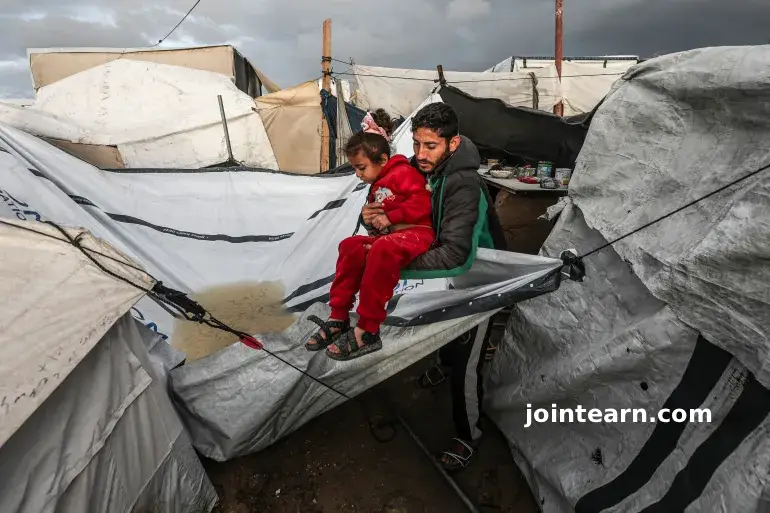
Gaza Storm Kills Eight as Extreme Cold and Building Collapses Compound Humanitarian Crisis
Gaza – A deadly storm has swept through the Gaza Strip, claiming the lives of at least eight Palestinians and worsening the humanitarian crisis in the war-torn enclave. Harsh weather, including torrential rain, freezing winds, and strong gusts, has caused flimsy shelters to collapse and toppled buildings already weakened by previous Israeli airstrikes and military attacks.
Civil Defence officials warn that the storm’s impact could be catastrophic, particularly for the tens of thousands of displaced Palestinians living in inadequate shelters. Aid and emergency supplies remain blocked from entering Gaza due to ongoing Israeli restrictions, which violate the ceasefire that began on October 10, 2025.
Deaths from Cold and Collapsed Buildings
According to Gaza’s Civil Defence, four Palestinians died directly from exposure to extreme cold, including children living in temporary tents. Al-Aqsa Martyrs Hospital reported one victim as a one-year-old child who succumbed to the freezing temperatures in a tent before reaching medical care.
UNICEF spokesperson James Elder confirmed the tragic pattern, noting that six children have died of hypothermia in Gaza this winter alone. “We’ve had children die of hypothermia again in the last few days,” he said.
Four additional deaths occurred when storm-damaged buildings, weakened by previous conflict, collapsed. In Gaza City, a building collapse killed three people, including a 15-year-old girl, while another building fell in a separate incident, claiming one more life.
Hospitals Overwhelmed as Cold-Related Illnesses Surge
Hospitals across Gaza are experiencing a surge in patients, particularly children, suffering from cold-related illnesses. Emergency services have reported hundreds of calls for support due to the storm. Many shelters and tents have been blown away or rendered unsafe by the extreme weather, leaving families increasingly exposed.
Amjad Shawa, director of the Palestinian NGO Network in Gaza, described the storm’s impact as the worst since winter began. He reported that roughly 10,000 families along Gaza’s coast face heightened risk of displacement and exposure due to the damaged shelters.
Gaza City Mayor Yahya al-Sarraj echoed these concerns, warning that many Palestinians remain trapped in “tragic” conditions, living in tents and shelters at risk of collapse, with insufficient medical supplies to treat the sick or injured.
International Response and Calls for Aid
Qatar’s Ministry of Foreign Affairs condemned the crisis as a “man-made humanitarian catastrophe”, urging Israel to allow the entry of emergency aid and shelter supplies. Majid Al-Ansari highlighted the importance of advancing the Gaza agreement without linking humanitarian assistance to political conditions or delays at border crossings.
UNICEF has also stressed the ongoing vulnerability of Gaza’s children. Since the ceasefire in early October, more than 100 children have been killed, many from air strikes, drone attacks, tank shelling, and live ammunition. Elder emphasized that roughly one child dies every day during the ceasefire due to the ongoing conflict.
Humanitarian Crisis Exacerbated by Blockade
The storm has compounded the effects of Israel’s blockade of Gaza, which restricts access to essential goods, shelter materials, and medical supplies. Aid organizations report that these restrictions are severely hampering relief efforts, leaving the civilian population particularly exposed to the dangers of extreme weather.
Civil Defence spokesperson Mahmoud Basal warned that the situation could worsen if the storm continues, stressing the urgent need for international pressure to allow aid into the territory.
Forecast and Continuing Risks
Meteorologists expect the low-pressure system to continue bringing freezing temperatures and strong winds until at least Tuesday evening. The combination of extreme cold, storm damage, and ongoing conflict has left Gaza’s population vulnerable, with families struggling to protect themselves and their children from both environmental and man-made threats.
The humanitarian situation in Gaza remains dire, with international organizations calling for urgent action to prevent further loss of life and to provide safe shelter, medical care, and essential supplies to those affected by both conflict and natural disaster.


Leave a Reply