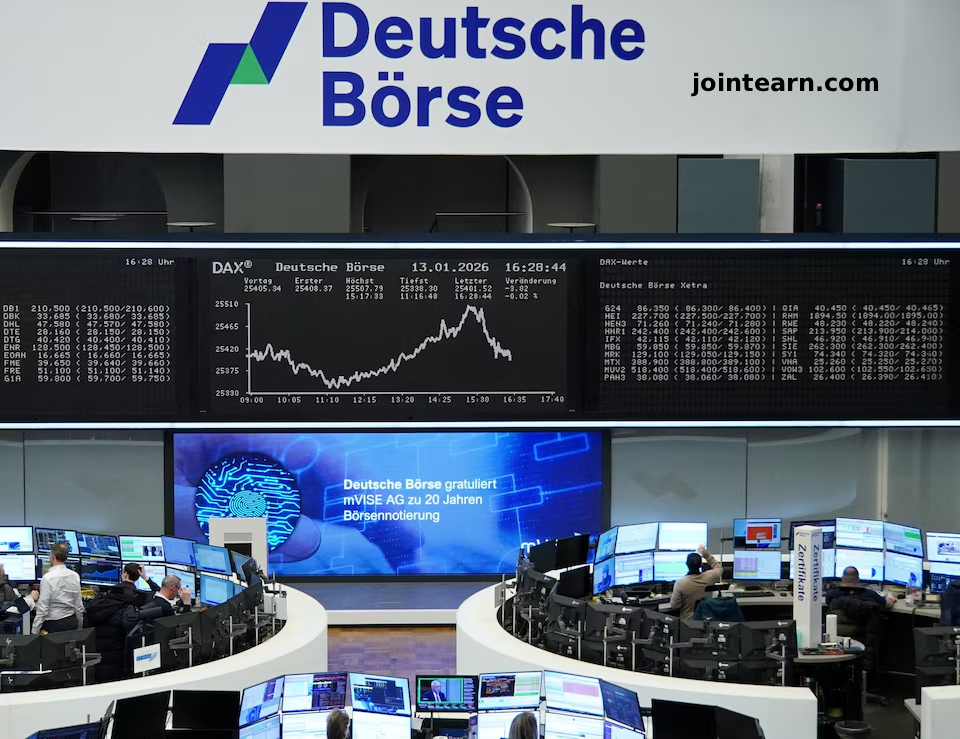
LONDON/SINGAPORE – Global equity markets hovered around record highs on Wednesday, as investors sought ways to justify optimism despite a complicated mix of economic, political, and geopolitical concerns. Meanwhile, the rally in precious metals and industrial commodities continued unabated, reflecting safe-haven demand and supply pressures.
Traders navigated a complex backdrop, including U.S. corporate earnings reports, Federal Reserve commentary, potential Supreme Court rulings on tariffs, and geopolitical tensions in Europe, Asia, and the Middle East.
Asia and Europe Hit New Peaks
Broad share indexes in Asia and Europe rose to all-time highs. In Japan, the Nikkei 225 surged over 1% following reports that Prime Minister Sanae Takaichi may call a snap lower house election on February 8, boosting expectations for fiscal stimulus.
European equities also advanced, buoyed by positive investor sentiment and the perception that ongoing global economic uncertainties were unlikely to derail corporate earnings.
By contrast, U.S. share futures fell slightly by 0.2%, reflecting cautious positioning ahead of a busy schedule of earnings releases from major banks and companies.
Ben Laidler, head of equity strategy at Bradesco BBI, noted:
“We are starting the year as we left off last, people are very positive towards equities. However, policy uncertainty in the U.S. has spiked, generating headlines around ‘sell America.’ Meanwhile, we are seeing this incredible rally in metals.”
Precious Metals and Commodity Surge
The metals market continued its historic rally. Silver topped $90 per ounce for the first time ever, up from under $30 at the start of 2025, marking a 27% rise in the first nine trading days of the year. Gold hit record highs, up 7% in just the first two weeks of 2026. Meanwhile, copper prices also reached unprecedented levels, reflecting strong industrial demand.
The metals rally is partly fueled by geopolitical tensions, including concerns over Federal Reserve independence, global energy security, and broader supply chain disruptions. Oil prices, meanwhile, dipped slightly to $64.90 a barrel for Brent crude after hitting a two-month high on Tuesday.
U.S. Market Highlights
U.S. equities ended slightly lower on Tuesday, with the Dow Jones Industrial Average dropping 0.8%, while the S&P 500 and Nasdaq edged down fractionally. Investors were preparing for earnings reports from major banks, including Citigroup, Wells Fargo, and Bank of America, and monitoring potential Supreme Court rulings on President Donald Trump’s tariffs.
JPMorgan Chase recently reported higher-than-expected profits as traders capitalized on market volatility, though its shares fell due to weaker investment banking revenue. Additionally, high-end U.S. department store Saks Global filed for bankruptcy protection, underscoring challenges in the retail sector.
Focus on Japan and the ‘Takaichi Trade’
Japan remained in the spotlight as markets reacted to the prospect of a snap election. The Nikkei surged over 1%, while Japanese government bonds (JGBs) fell, reflecting the so-called “Takaichi trade”. The Japanese yen weakened to 159.29 per dollar, its lowest level since July 2024, prompting warnings from authorities that market intervention may be necessary to halt its slide.
China, meanwhile, saw a minor pullback in equities after exchanges unexpectedly tightened margin requirements to cool a surging market. Despite this, China reported a record trade surplus of nearly $1.2 trillion in 2025, driven by strong exports to non-U.S. markets.
Outlook for Global Investors
Investors continue to balance optimism in equities with caution in commodities and currencies, factoring in monetary policy uncertainty, geopolitical risks, and fiscal developments. The record highs in stocks and metals highlight a divergence in market sentiment: while equities reflect confidence in corporate earnings and stimulus measures, metals signal ongoing concerns over inflation, supply chain risks, and geopolitical instability.


Leave a Reply