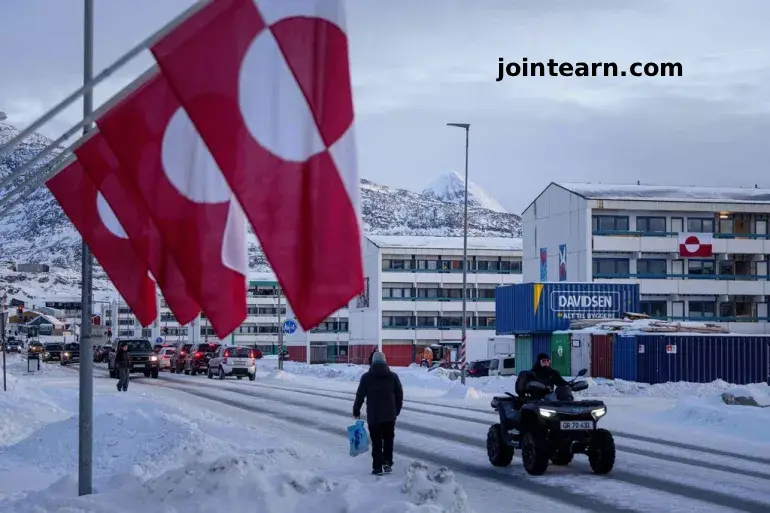
Washington, D.C. – January 14, 2026 – The foreign ministers of Denmark and Greenland traveled to the United States to meet with officials from President Donald Trump’s administration, aiming to ease tensions over the future of Greenland, a self-governing Danish territory.
Despite their diplomatic efforts, the meeting made little progress, with Danish Foreign Minister Lars Løkke Rasmussen warning that Trump remains determined to assert American control over the island.
“We didn’t manage to change the American position,” Rasmussen told reporters. “It’s clear that the president has this wish of conquering over Greenland.”
The High-Stakes Meeting
Rasmussen and Greenlandic Foreign Minister Vivian Motzfeldt met with US Secretary of State Marco Rubio and Vice President JD Vance in Washington. Their goal was to address disputes over Greenland’s governance, security, and the Arctic’s strategic importance.
However, the discussions failed to resolve key disagreements. Both Greenlandic and Danish officials announced the formation of a working group tasked with:
- Addressing US security concerns
- Respecting Denmark’s sovereignty and red lines
- Facilitating cooperation on Arctic defense
Motzfeldt emphasized that while Greenland seeks collaboration with the US, it does not want to be “owned” by the United States. A Greenlandic government social media post highlighted the islanders’ opinion:
“Why don’t you ask us, kalaallit? Last time a poll was done only 6% of Greenlanders/kalaallit were in favour of becoming a part of the US.”
Trump Doubles Down on Greenland
Despite diplomatic overtures, Trump reiterated his stance during an Oval Office appearance on Wednesday, claiming that the US must own Greenland for national security reasons.
“Greenland is very important for the national security, including of Denmark. And the problem is there’s not a thing that Denmark can do about it if Russia or China wants to occupy Greenland, but there’s everything we can do,” Trump said.
He stressed that the United States already has a military presence on the island and suggested it could expand. Currently, about 150 US personnel are stationed in Greenland under existing agreements.
European Allies and Arctic Security
European nations, including Denmark, have offered to expand security cooperation in the Arctic to address perceived threats from Russia and China.
However, these offers have not changed Trump’s insistence that Greenland should come under American control. Analysts say the situation highlights rising geopolitical tensions in the Arctic, where climate change and strategic resources are increasing global interest.
Al Jazeera correspondent Alan Fisher noted:
“Donald Trump says that unless Greenland is under US control, anything less is unacceptable, and he’d like to see the US move into Greenland sooner rather than later.”
Sovereignty and Indigenous Voices
Greenland’s government has repeatedly stressed that any decisions regarding the island must involve Kalaallit (Greenlandic) voices, reflecting the territory’s self-governing status.
The ongoing diplomatic stand-off underscores the delicate balance between:
- US national security ambitions
- Danish sovereignty
- Greenlandic self-determination
Greenlandic Prime Minister Nielsen has firmly stated that the territory prefers Denmark over US annexation, signaling that a majority of residents oppose any transfer of control.
Implications for US-Arctic Relations
The dispute over Greenland could have lasting consequences for:
- US-Denmark bilateral relations
- Arctic security and defense policy
- Indigenous rights and self-governance in Greenland
Experts warn that continued US insistence on controlling the territory could spark diplomatic friction with Europe and complicate ongoing Arctic security collaborations.


Leave a Reply