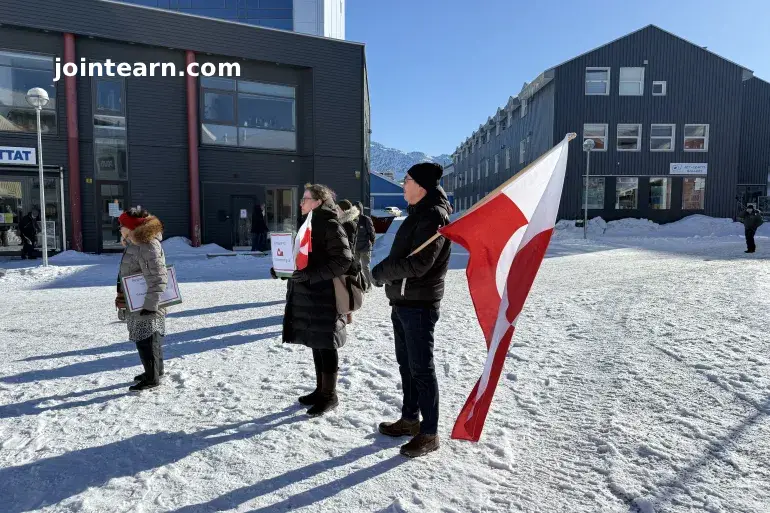
Copenhagen, Denmark – Greenland is once again at the center of a geopolitical storm as US President Donald Trump reiterates his controversial desire to acquire the Arctic island. The prospect of Greenland, a self-governing territory within the Danish kingdom, being purchased—or even annexed—by the United States has sent shockwaves through Nuuk, Copenhagen, and the international community.
Greenlandic Politicians Warn: “We Do Not Want to Be Americans”
Aaja Chemnitz, one of Greenland’s two members of the Danish parliament, told Al Jazeera that Greenlanders’ identity and sovereignty are non-negotiable. “Greenland is not for sale, and Greenland will never be for sale,” she said. Chemnitz emphasized that Greenlanders value their culture, language, and independence, and any attempt to alter this by becoming American citizens would be deeply unwelcome.
Aki-Matilda Hoegh-Dam, the other Greenlandic MP, added, “All Greenlandic parties have stated that we do not want to be Americans—and that we also do not want to be Danish. We want to be Greenlanders. We already have one colonizer; we do not need a new one.”
With a population of roughly 56,000, Greenland is confronting an unprecedented period of international scrutiny and diplomatic pressure, leaving many citizens feeling anxious and exposed.
Trump’s Greenland Proposal Sparks Foreign Relations Crisis
President Trump has repeatedly signaled interest in acquiring Greenland, a move first suggested during his first term in 2019. While the proposal is framed around US national security interests, particularly due to Greenland’s strategic Arctic location, critics argue that Trump may also be motivated by its untapped natural resources, including rare minerals and potential oil reserves beneath the ice.
Greenland has been self-governing since 2009, yet Denmark retains control over foreign affairs and defense. Trump’s remarks about potentially using military force to acquire Greenland have intensified fears in Nuuk and Copenhagen, marking the worst foreign relations crisis for Denmark since World War II, according to political commentator Hans Engell.
Historical Context: Greenland and US Acquisition Attempts
The United States has attempted to acquire Greenland before. In 1868, following the Alaska purchase, Secretary of State William Seward considered offering $5.5 million in gold to Denmark for Greenland and Iceland. After World War II, President Harry Truman offered Denmark $100 million in gold—approximately $1.66 billion today—to secure the island due to its strategic importance during the early Cold War. Both offers were rejected.
Chemnitz and Hoegh-Dam emphasize that any modern acquisition would require Greenlandic consent, making the idea of a “purchase” far from straightforward. Trump, however, has made statements implying that if negotiations fail, the US may pursue the “hard way,” heightening Greenlanders’ concerns.
Greenlanders Respond to Threats
Many Greenlanders are disturbed by the prospect of US military intervention, especially in light of recent international incidents such as the abduction of Venezuela’s President Nicolas Maduro by US forces. “Some refuse to take the threat seriously, but others are worried and can’t sleep at night,” Hoegh-Dam said.
Despite the pressures, Greenlandic politicians stress the resilience of their people. “Greenlanders are a very proud and rock-steady people—we will hold on to that belief no matter who is trying to colonize us,” Chemnitz said.
Copenhagen and Nuuk Seek Diplomatic Solutions
In response to the escalating tensions, Denmark’s foreign relations committee convened a high-security meeting, attended by Greenlandic MPs and officials. Denmark, Greenland, and Greenland’s foreign affairs minister have requested a meeting with US Secretary of State Marco Rubio, scheduled for Wednesday, which could shape the next steps in the dispute.
Hoegh-Dam hopes the discussions will clarify the US’s intentions and reinforce Greenlandic sovereignty. “I hope that our foreign minister, beyond rejecting any idea of being ‘bought,’ can also get a clearer picture of what the US actually wants,” she said.
Strategic Importance of Greenland
Greenland’s location in the Arctic makes it a critical hub for military, climate, and trade considerations. Its proximity to North America, combined with its mineral wealth, has long attracted the interest of global powers. Analysts argue that Greenland is more than a landmass; it represents geopolitical leverage, resource potential, and strategic positioning in the Arctic region.
As Greenland navigates this moment in history, politicians and citizens alike are united in their stance: preserving Greenlandic autonomy, protecting cultural identity, and resisting any foreign attempt at annexation or purchase.


Leave a Reply