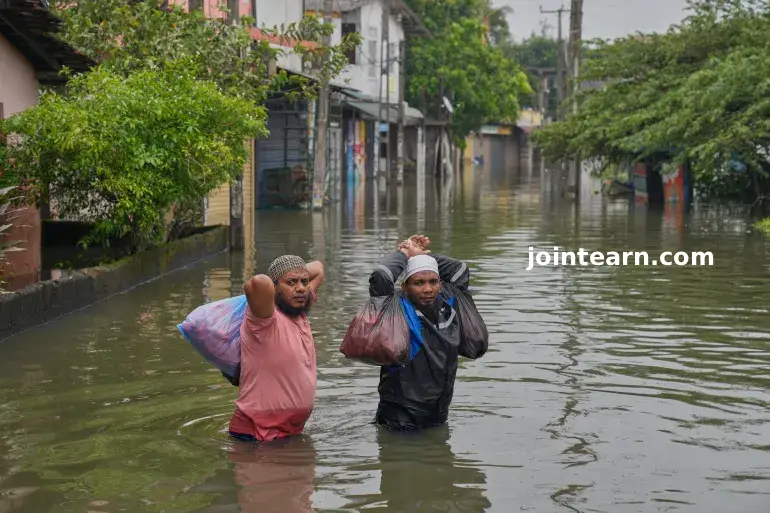
Sri Lanka continues to struggle with the aftermath of Cyclone Ditwah, as intense rainfall hampers ongoing recovery and rescue operations. The cyclone, which struck last week, caused widespread devastation, killing hundreds, displacing tens of thousands, and triggering the island’s worst floods in a decade.
Torrential Rains Hamper Recovery Efforts
Authorities reported that over 130mm (5.1 inches) of rain fell across southern Sri Lanka in just 15 hours on Thursday, with additional heavy downpours expected in southern and southwestern regions on Friday. The relentless rain has slowed cleanup, reconstruction, and relief distribution, compounding the challenges left by Cyclone Ditwah.
The Disaster Management Centre (DMC) and local officials reported:
- 607 confirmed deaths and 214 missing persons.
- More than 50,000 homes damaged and 170,000 people displaced into relief centres.
- Landslides and flooding affecting central hill regions, leaving mountainsides unstable and dangerous for returning residents.
President Anura Kumara Dissanayake called the cyclone and its aftermath the most challenging natural disaster in Sri Lanka’s history:
“We also recognise that what we are undertaking is the most difficult rescue operation in our nation’s history.”
Residents Struggle Amid Floods and Landslides
In the hardest-hit areas, displaced residents face severe uncertainty. Prasanna Shantha Kumara, staying in a relief centre, shared his distress with Reuters:
“I have lost my house, and my crop … What are we going to do? How can we live like this? We need help.”
Evacuated communities, particularly in landslide-prone central hills, have been advised not to return home immediately, even if their properties were initially unaffected. The unstable terrain continues to pose a serious risk to life and property.
Government Response and International Aid
Authorities are providing financial assistance to help citizens recover. Prabath Chandrakeerthi, Commissioner-General of Essential Services, confirmed that:
- House cleaning is subsidized at 25,000 rupees (~$81 USD) per home.
- Initial reconstruction costs are estimated at $6–7 billion USD, with an additional 2.5 million rupees (~$8,100 USD) allocated per household to begin rebuilding.
Electricity restoration has progressed, with nearly 75% of the national supply restored, but some remote parts of the Central Province remain without power and telecommunication services.
President Dissanayake declared a state of emergency last Saturday and pledged that reconstruction would proceed with the support of international aid agencies.
Regional Context: Widespread Flooding in Asia
Cyclone Ditwah is part of a broader pattern of devastating weather events affecting Asia in recent weeks. Neighboring countries, including Indonesia, Thailand, and Malaysia, also experienced catastrophic floods and landslides, which collectively claimed approximately 1,500 lives. Many villages, especially in Indonesia, remain buried under mud and debris, echoing the severe destruction faced by Sri Lankan communities.
Ongoing Threats and Weather Warnings
Sri Lanka’s Daily News reported that southern and southwestern regions, including Colombo, the commercial capital, could receive an additional 75mm (3 inches) of rain today. Authorities continue to monitor flood-prone zones and advise residents to remain vigilant.


Leave a Reply