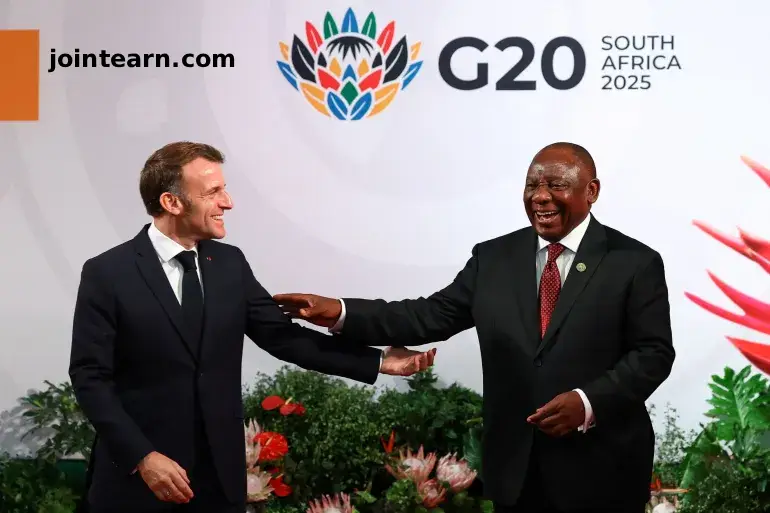
In a landmark moment for Africa, the first-ever G20 summit on the continent concluded with a declaration emphasizing support for developing nations, climate action, and debt relief. Held in Johannesburg near the historic Soweto township, the summit was marked by the absence of the United States, which boycotted the gathering over political disputes.
Focus on Developing Nations and Global Challenges
The G20 summit declaration, finalized on November 22, 2025, underlined the group’s commitment to easing the burden on developing countries and working toward peaceful resolutions of ongoing conflicts. Key areas highlighted in the declaration included Sudan, the Democratic Republic of the Congo, the occupied Palestinian territories, and Ukraine, where the organization pledged to promote comprehensive and lasting peace.
The summit also addressed the pressing issue of climate change, signaling a clear rejection of US President Donald Trump’s skepticism of climate science. The document stressed that natural disasters disproportionately impact vulnerable populations, exacerbating poverty and inequality, and that high national debt remains a barrier to inclusive growth in many low-income nations.
“We are committed to strengthen the implementation of the G20 common framework for debt treatments in a predictable, timely, orderly, and coordinated manner,” the declaration read, highlighting global financial fairness as a key priority.
Advancing Africa’s Agenda
South African President Cyril Ramaphosa, host of the summit, emphasized that Africa’s priorities—particularly development, climate action, and economic inclusivity—were central to the discussions. He stated that while the G20 represents the world’s largest economies, it must also reflect the needs of the Global South.
Ramaphosa rejected US demands that no declaration be made, insisting that the summit must speak to the challenges faced by developing nations. Among other highlights, the declaration called for using critical minerals for value-added development rather than mere raw material exports, aiming to foster broader economic growth in resource-rich countries.
US Boycott and Geopolitical Implications
The Trump administration’s boycott stemmed from allegations that South Africa was implementing anti-white policies, particularly against its Afrikaner minority—a claim widely dismissed by other summit participants. US Secretary of State Marco Rubio had earlier skipped G20 foreign ministers’ meetings, criticizing the agenda as overly focused on diversity, equity, inclusion, and climate change.
Despite the absence of the United States, leaders from France, China, India, Japan, Russia, and other major economies remained engaged. French President Emmanuel Macron expressed regret over the US absence but stressed that the summit must continue its work on critical global issues.
The Role of the G20
The G20, comprising 19 countries, the European Union, and the African Union, was formed in 1999 as a platform for bridging rich and poor nations to confront global economic crises. Representing approximately 85% of the world’s economy and over half the global population, the bloc operates by consensus rather than binding resolutions, which can make negotiations complex.
The South Africa summit showcased the G20’s potential to prioritize development, climate action, and debt relief even amid political tensions. The declaration is seen as a milestone in giving a voice to Africa and the Global South in global economic decision-making.


Leave a Reply