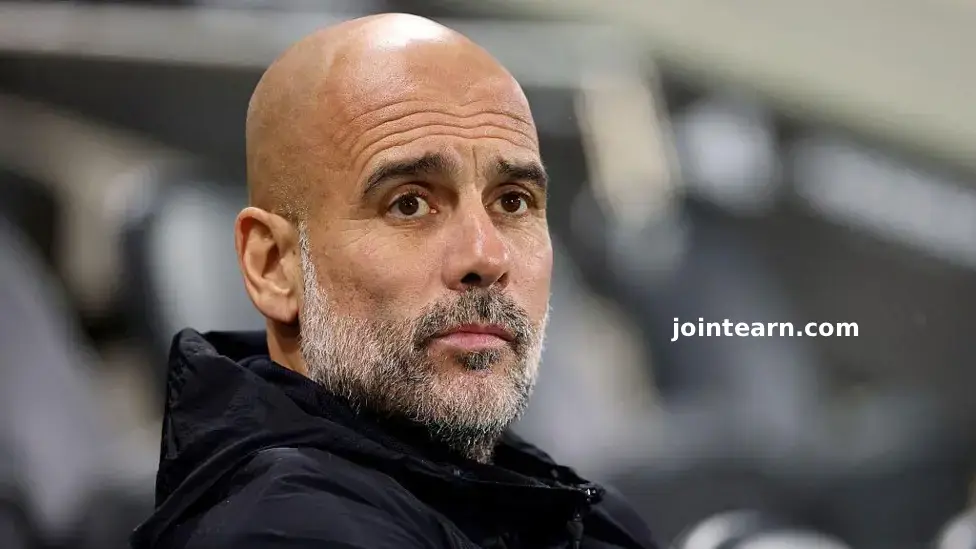
Midway through the Premier League season, Manchester City are firmly back in the title race, sitting just two points behind leaders Arsenal, with both clubs having won 12 of their opening 17 league matches. After a turbulent previous campaign and a stuttering start to this season, Pep Guardiola has once again demonstrated his tactical genius by reinventing City’s playing style.
Last season was widely regarded as a disappointment by City’s extraordinary standards. The club that had lifted six Premier League titles in seven years could only manage third place, and early defeats in the current campaign fuelled doubts about whether Guardiola’s side were entering a period of decline. Instead, City have adapted, evolved, and surged back into contention.
While Guardiola teams are often stereotyped as possession-heavy and rigidly structured, history shows that every league title he has won has been achieved with a different tactical blueprint. This season’s Manchester City may be the most radical reimagining yet.
Manchester City’s New Tactical Shape Explained
Over recent weeks, Guardiola has settled on a relatively consistent starting XI that reflects his new ideas. In possession, City resemble a fluid 4-2-3-1 system, with Gianluigi Donnarumma in goal, Matheus Nunes and Nico O’Reilly operating as highly advanced full-backs, and Ruben Dias and Josko Gvardiol anchoring the defence.
In midfield, Bernardo Silva and Nico Gonzalez provide balance, while Phil Foden, Rayan Cherki, and Jeremy Doku rotate freely behind Erling Haaland.
The most notable tweak occurs when Tijjani Reijnders replaces Doku, with Foden shifting wide and Reijnders taking up a central attacking role. This flexibility underlines Guardiola’s commitment to building systems around players rather than forcing players into rigid roles.
Why Guardiola Uses Midfielders at Full-Back
One of the most striking changes has been Guardiola’s decision to deploy natural midfielders as full-backs. While City have traditional options like Nathan Aké, Rico Lewis, and Rayan Aït-Nouri, Guardiola has instead favoured Nunes and O’Reilly.
Their inclusion is based on physical output, tactical intelligence, and comfort on the ball. Both players can cover large distances, dominate defensive duels, and recover quickly during transitions. Crucially, they allow City to attack with greater flexibility.
When City have possession, these full-backs either:
- Hold wide positions, allowing wingers to drift inside and overload central areas, or
- Underlap into the box, arriving late in dangerous shooting positions that are difficult for opposition defenders to track.
O’Reilly, in particular, has developed a knack for timing his runs into the area, exploiting the fact that opposition wingers are often tasked with tracking him defensively.
Their attacking-midfield backgrounds give City extra creativity and unpredictability in the final third — a hallmark of Guardiola’s most successful teams.
Central Overloads and Roaming Wingers
Another major shift has been how City use their wingers. Instead of hugging the touchline, players such as Doku, Cherki, and Foden are encouraged to drift into central areas, often operating close together.
This narrow positioning creates multiple advantages:
- It allows technically gifted players to combine quickly in tight spaces
- It draws defenders inward, opening space for overlapping full-backs
- It improves City’s ability to counter-press immediately after losing possession
As Bournemouth manager Andoni Iraola noted after his side’s defeat, Cherki and Foden’s ability to play one-touch football makes them almost impossible to contain, even in crowded areas.
Defensively, this central congestion also limits opposition counter-attacks by blocking the most dangerous passing lanes. Offensively, it gives Erling Haaland nearby options when City play long balls into him, improving their ability to attack quickly after regaining possession.
Manchester City’s New Counter-Attacking Threat
Traditionally, Guardiola’s City have prioritised control through possession, slowing games down to limit risk. This season, however, City have embraced a more direct and transitional approach.
By utilising the pace and power of players like Haaland, Foden, Reijnders, and O’Reilly, City have become one of the league’s most dangerous counter-attacking teams.
Statistics underline the shift:
- City have recorded 27 fast breaks, more than any Premier League side this season
- They have scored more goals in transition than across the previous two campaigns combined
This evolution appears partly driven by the rise of aggressive, man-to-man pressing across the league. Playing longer and quicker allows City to bypass pressure and exploit space behind opposition lines.
The arrival of Rayan Cherki has been particularly significant, adding elite passing range and creativity from deeper areas — qualities City lacked after Kevin De Bruyne’s departure.
Guardiola’s Relentless Standards Remain
Despite City winning seven of their last eight league games, Guardiola has made it clear that improvement is still required. After a comfortable 3-0 victory over West Ham, he criticised his side’s positional discipline.
Guardiola hinted at a desire to reintroduce more structure in certain matches, saying:
“If the players were in their positions, we could create more and concede less.”
He also acknowledged City’s increased running output but suggested it is not a long-term solution:
“I love how much we run… but it’s not enough. We have to play better so we can run less.”
City currently cover more distance than any other Premier League team, but Guardiola ultimately wants efficiency to replace sheer intensity.
What’s Next for Manchester City?
Guardiola appears to be searching for the perfect balance between control and chaos — blending the structure of past title-winning sides with the dynamism of this new approach.
With Rodri set to return from injury and potential reinforcements such as Antoine Semenyo reportedly on the radar, City may not yet have reached their peak.
Given Guardiola’s track record and the tactical flexibility now embedded in the squad, Manchester City look well positioned to challenge Arsenal all the way in what promises to be a gripping title race.


Leave a Reply