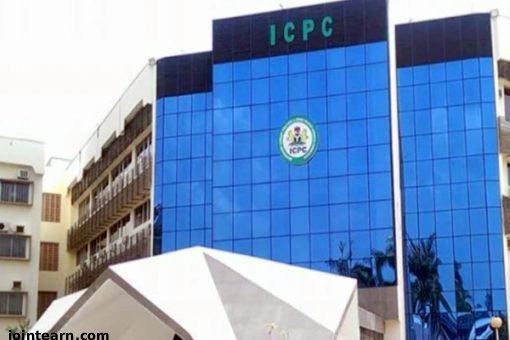
Nigeria’s Independent Corrupt Practices and Other Related Offences Commission (ICPC) has launched a nationwide monitoring exercise of road contracts valued at ₦36 trillion across the 36 states and the Federal Capital Territory, described as the largest such initiative in the country’s history.
ICPC Chairman, Dr. Musa Adamu Aliyu (SAN), raised concerns over widespread procurement corruption, noting that without transparency, Nigeria’s development will remain stagnant. He highlighted that public procurement, which accounts for 10–25% of GDP, is the point where budgets either materialize into projects or disappear into private pockets.
Speaking at a one-day Special Engagement for Directors and Heads of Procurement in MDAs in Abuja, Aliyu revealed early findings showing gaps that enable inflation, substandard execution, and project abandonment. Common corrupt practices include contract splitting, over-invoicing up to 300%, phantom projects, round-tripping, and collusion between officials and contractors.
Aliyu referenced the Constituency and Executive Projects Tracking Initiative (CEPTI), launched in 2019, which physically monitors community projects. CEPTI has successfully restored schools, health centers, water facilities, and illuminated rural communities with solar streetlights, while also exposing structural corruption hidden in official documents.
The ICPC chief emphasized that transparency is the key antidote to procurement fraud. MDAs are urged to adopt disclosure mechanisms such as publishing annual procurement plans, bidding criteria, list of bidders, contract awards, progress reports, and final handover certificates. He also recommended open competitive bidding, multi-stakeholder evaluation panels, contractor capacity verification, standardized contracts, and enforceable penalties.
Aliyu described e-procurement as a transformative tool capable of creating immutable audit trails and enabling real-time monitoring, but cautioned that technology alone cannot eradicate corruption without political will, funding, capacity building, and effective change management.
Supporting ICPC’s efforts, Dr. Adebowale Adedokun, Director-General of the Bureau of Public Procurement (BPP), announced a new Debarment Policy allowing agencies to blacklist contractors who abandon or deliver substandard projects. Prof. Samson Duna, DG of the Nigerian Building and Road Research Institute, and Hon. Kayode Akiolu, Chairman of the House Committee on Anti-Corruption, praised the Commission’s preventive approach and called for enhanced capacity-building and quality assurance.
Aliyu concluded: “Corruption thrives in darkness; let us flood the system with light. Millions of Nigerians waiting for roads, water, healthcare, and electricity depend on our collective action.”


Leave a Reply